





Light curtain: what it is, where to use it, and how to create one using Ledpoint LEDs
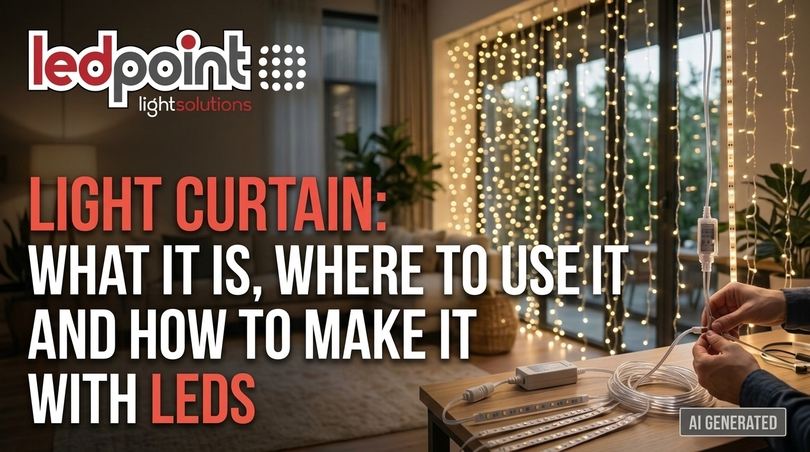
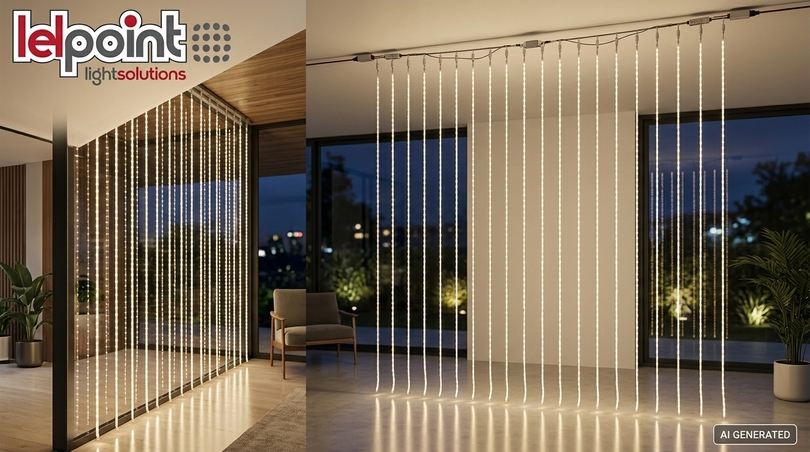
A light curtain is a vertical surface composed of multiple parallel strands of light – threads, LED strips, or Neon Flex tubes – suspended from a top bar, creating a fixed or animated "curtain" of light. It is used to decorate windows, balconies, storefronts, stages, and events, especially from November to January, but also year-round in shops, hotels, and recording studios.
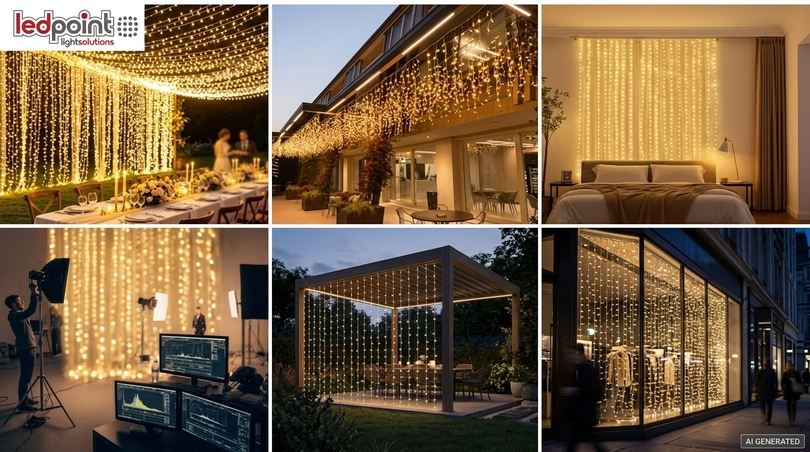
Those who search for "light curtain" on Google, in most cases, think of classic Christmas curtains to hang on the window. This is a correct starting point, but it is only the surface of a much wider world. Today, the light curtain has become a true lighting design element: it is found as a backdrop in content creators' sets, as a scenic element in weddings, as a visual draw in storefronts, as a dynamic cascade of light in hotel lobbies, and, of course, as the protagonist of Christmas decorations on balconies and facades.
In this guide, written by the technical team at Ledpoint in Faenza, you will find everything you need to know: what a light curtain is, how the LED technology that makes it possible works, in which contexts it is applied, why it is so requested and in which months of the year, how to choose a truly durable outdoor light curtain, and, above all, how to build a professional, custom one with LED strips, Neon Flex, controllers, and accessories available in the Ledpoint.it catalog. At the end, you will also find an example of a project calculated with real consumption and costs, and an FAQ section with the most frequent questions.
In this article...
1. What is a light curtain: definition and operation
Before talking about products, wattages, and mounting, it is useful to clarify the concept well. The term "light curtain" is used quite freely: it indicates both the Christmas gadget sold in supermarkets and architectural installations of tens of square meters. Understanding what unites them and what distinguishes them helps you choose the right solution from the start, without spending twice.
The technical definition of a light curtain
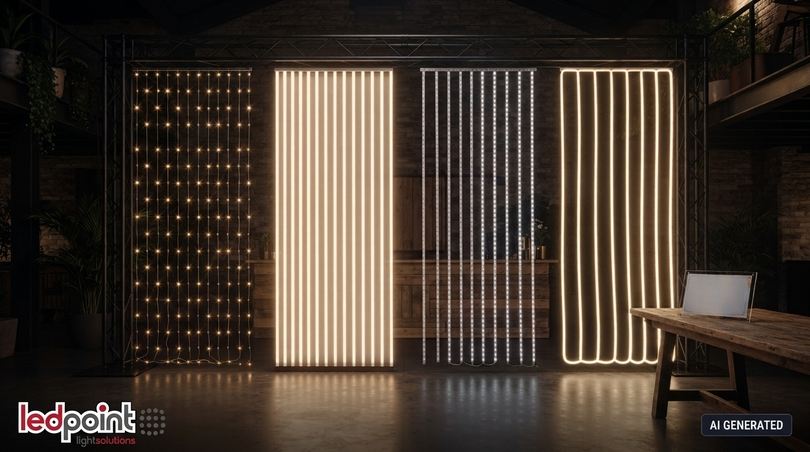
From a lighting design perspective, a light curtain is a system composed of three elements: a top bar (bar, cable, or profile) that acts as support and power line, a series of vertical luminous strands, and a power and control system. The strands can be wires with micro-LEDs, LED strips mounted on a flexible support, or silicone tubes like Neon Flex. The perceived result is that of a curtain of light: a transparent and lightweight surface made of luminous lines rather than fabric.
In consumer versions, the classic ready-made LED light curtains purchased for Christmas, the system is closed: length, number of strands, color, and light shows are fixed. In professional versions, however, every parameter is designable: strand height, distance between strands, color temperature, luminous flux, protection rating, animated effects, and smart home integration.
Curtain of lights, curtain lights, light curtain: are they the same thing?
Yes, in substance. "Curtain of lights", "curtain lights", "light curtain", "LED curtains", and "LED light curtains" are synonyms used by different users to search for the same object. In the professional field, the English term light curtain or "cascade of light" is often used. There are only two nuances to know:
- Curtain lights (or curtain of lights): usually indicates the decorative product with thin threads and micro-LEDs, typical of the Christmas period.
- Light cascade or scenic light curtain: indicates more structured, often dynamic installations, with a rain or vertical flow effect.
There is also a third, less frequent meaning: a motorized fabric curtain integrated into a smart lighting system. It does not emit light, but moves in sync with the room's lights. We discuss this in the chapter dedicated to smart control, because this scenario is also realized with products available in the Ledpoint catalog.
What is a curtain for (and what is a light curtain for)
A traditional curtain serves to filter natural light, ensure privacy, and decorate an environment. A light curtain flips the concept: instead of filtering light, it produces it, and transforms an empty surface (a window, a wall, a niche, a balcony) into a focal point. The main functions are four:
- Decorative and emotional: creates atmosphere, especially in the evening hours and during festive periods.
- Communicative: in a storefront or at an event, it attracts attention from afar and communicates the brand or the season.
- Scenic: separates spaces, acts as a backdrop for stages, photo and video sets, and gives depth to an environment.
- Architectural: emphasizes verticality, entrances, stairs, and facades, becoming part of a building's nocturnal identity.
How a light curtain works, in simple terms
The principle is simple. A power supply converts the 230 V mains voltage into a low continuous voltage, normally 5, 12, or 24 V. This voltage is distributed along the top bar and from there "drops" into each strand. If the curtain is static, each strand lights up with the same color and intensity; if it is dynamic, a controller sends a digital signal that commands each segment independently, creating a rain, cascade, or flow effect. Operating at low voltage is what makes an LED light curtain safe to touch and suitable even for homes with children, provided certified power supplies and an adequate protection rating are used.
2. The LED technology behind light curtains
Modern light curtains would not exist without LEDs: no other light source is as small, cool, efficient, and controllable. It is worth understanding how this technology works, because the same characteristics that make it perfect for a light curtain are those that allow you to choose the right product and make it last a long time.
What is an LED and what LED light means
LED is the acronym for Light Emitting Diode. The LED is a semiconductor electronic component that emits light when crossed by current, thanks to the recombination of electrons and holes in the junction. Saying "LED light" therefore means talking about light produced by electroluminescence, without incandescent filaments and without gas, unlike old light bulbs or neon tubes.
How LED lights work in a strip
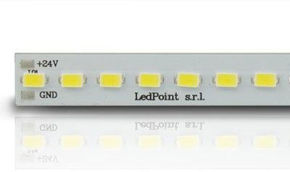
In an LED strip, dozens or hundreds of small chips are soldered onto a flexible printed circuit (PCB), grouped into segments with resistors or integrated circuits that limit the current. Each segment is an autonomous electrical unit: this is why LED strips can only be cut at the indicated cut points, which on Ledpoint products range from 0.75 cm to 8.33 cm depending on the model. The luminous flux is measured in lumens per meter (lm/m), consumption in watts per meter (W/m), the color of white light in kelvin through the color temperature, and the fidelity of illuminated colors with the Color Rendering Index (CRI).
SMD, COB, and pixel LEDs: the three families useful for an LED light curtain
- SMD LEDs (2835, 5050, 0807): discrete chips distributed along the strip. They are efficient and versatile; at close range, the classic "dotted" effect is visible.
- COB (Chip On Board) LEDs: hundreds of closely spaced micro-chips covered by a continuous phosphor. They produce a homogeneous line of light without dots, ideal when the curtain strands are viewed up close.
- Pixel or addressable LEDs: strips equipped with integrated circuits (WS2811, WS2812, WS2814, 1903) that allow each pixel to be controlled separately. They are the heart of dynamic light curtains with a rain effect.
Which produces more light, xenon or LED?
This is a frequent question, often linked to the automotive world. Discharge xenon lamps produce a very high flux from a single point source, which is why they have long been used in headlights and cinema projectors. In decorative and architectural lighting, however, the comparison does not make sense in favor of xenon: it requires high-voltage power supplies, has warm-up times, heats up a lot, and cannot be distributed along a line. The LED, for the same amount of light, consumes less, turns on instantly, is dimmable, changes color, and can be cut to size: all indispensable characteristics for a light curtain.
Why LEDs are the mandatory choice for light curtains
| Criterion | LED | Incandescent bulbs (traditional mini-lights) | Glass neon |
|---|---|---|---|
| Luminous efficiency | From 50 to over 150 lm/W (e.g., 155 lm/W on Ledpoint 2835 240 LED/m strips) | About 10–15 lm/W | Variable, lower than modern LEDs |
| Operating voltage | Low voltage 5/12/24 V | Often in series on 230 V | High voltage (kV) with transformer |
| Heat emitted | Reduced, manageable | High | Moderate |
| Flexibility and cutting | Yes, in steps of a few cm | No | No, glass shaped by heat |
| Color and effect control | RGB, CCT, addressable pixels | Limited | Fixed color |
| Robustness | High, no glass parts | Low | Low, fragile |
In summary: an LED light curtain consumes a fraction of the energy of old solutions, is safer because it operates at low voltage, and offers creative possibilities unthinkable just a few years ago.
3. Types of light curtains compared
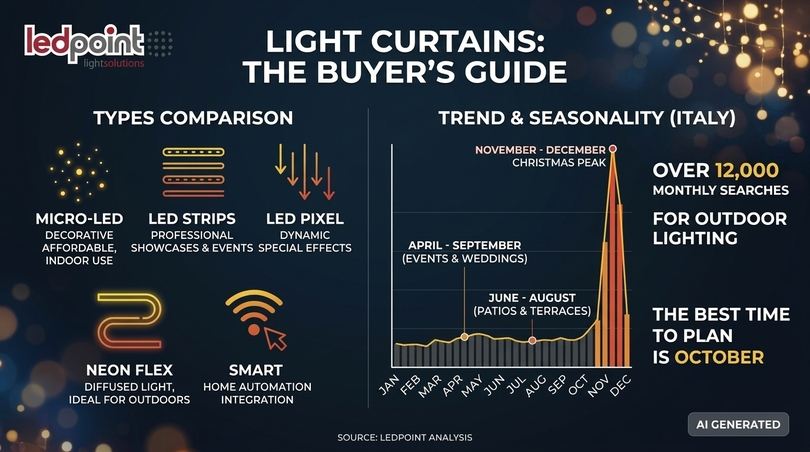
There is not just one light curtain: there are different families, designed for budgets, environments, and aesthetic results that are very far apart. Knowing them avoids the most common mistake, which is buying an indoor Christmas curtain for a rain-exposed balcony or, conversely, designing a professional system when only a decorative touch for a window was needed.
Decorative micro-LED light curtain (ready to use)
This is the classic curtain of lights found in stores around Christmas: a top cable with thin strands of copper or PVC wire and micro-LEDs every few centimeters, often powered by a small plug-in or battery transformer. It is economical and immediate, but has precise limits: fixed lengths, low luminous flux, preset effects, and, in cheaper versions, barely sufficient water protection. It is suitable for indoor windows, kids' rooms, and small temporary setups.
Static light curtain with LED strips
Here the strands are made with LED strips cut to size and applied to a support that keeps them straight, such as flexible steel tapes. The light is continuous and of professional quality, with certified color temperature and color rendering. It is the ideal solution when an elegant and constant effect is sought: luxury storefronts, receptions, event backdrops, scenic headboards.
Dynamic light curtain with pixel LEDs (waterfall and rain effect)
This is the most spectacular version. Each strand is an addressable LED strip and an SPI controller commands the individual pixels: the light can "fall" from top to bottom like rain, flow, pulse, or compose simple matrix animations. The dynamic light curtain is today the most requested trend for storefronts, venues, and events, because movement captures attention much more than a fixed light.
Light curtain with Neon Flex
The strands are silicone tubes with an integrated LED strip, which return a diffused, soft line of light without dots, similar to traditional neon but flexible and shatterproof. It is the most suitable choice for a monochromatic outdoor light curtain, thanks to the high protection rating and UV resistance of the silicone.
Smart motorized curtain integrated into lighting
This is not a light source, but a fabric curtain with a smart home motor that opens and closes in scenarios coordinated with the lights. We include it because many users, searching for "curtains with lights", mean exactly this: an environment where curtains and lighting respond to the same command, from an app or by voice.
Comparative table of types
To make the comparison objective, we evaluated each type with explicit criteria: light quality, customization possibilities, outdoor suitability, dynamic effects, expected lifespan, and installation complexity.
| Type | Light quality | Customization | Outdoor use | Dynamic effects | Expected lifespan | Complexity | Ideal for |
|---|---|---|---|---|---|---|---|
| Ready-to-use micro-LED | Basic | None | Only if IP44 or higher | Preset | 1–3 seasons | Very low | Windows, kids' rooms |
| Static LED strips | Professional (CRI up to Ra>90) | Total | With IP65–IP68 strips | Dimmer, CCT, RGB | Multi-year | Medium | Storefronts, receptions, backdrops |
| Pixel LED strips | Professional | Total | With silicone IP65 versions | Rain, cascade, flow | Multi-year | Medium-high | Shops, venues, events, scenic Christmas |
| Neon Flex | Diffused, homogeneous | High | Excellent (IP65–IP67) | Dimmer, fixed color | Multi-year | Medium | Facades, balconies, signs |
| Smart motorized curtain | Does not emit light | Smart home scenarios | Depends on the motor | Percentage opening | Multi-year | Medium | Smart homes, offices, hotels |
4. 2026 Trends, search data, and seasonality
Why is the light curtain so requested? And when? Answering with numbers helps both the private individual, who wants to understand when to buy to have choice and availability, and the professional – window dresser, event planner, installer – who must plan setups weeks in advance.
How much "light curtain" is searched in Italy: the data
From the analysis of keywords conducted by Ledpoint on the main competitors in the sector (average monthly search volume data in Italy), a very concrete interest emerges. "Light curtain" alone gathers about 1,600 searches per month, and around it moves an entire ecosystem of related queries:
| Keyword | Average monthly volume (Italy) | Prevailing intent |
|---|---|---|
| decorative outdoor lights | 12,100 | Purchase |
| outdoor Christmas lights | 14,800 | Purchase |
| outdoor string lights | 2,900 | Informational |
| professional outdoor Christmas lights | 2,900 | Purchase |
| Christmas curtains | 1,900 | Purchase |
| light curtain | 1,600 | Purchase / informational |
| curtains with lights | 720 | Purchase |
| outdoor Christmas luminaries | 720 | Purchase |
| Christmas light curtains | 480 | Purchase |
| Christmas light curtain | 390 | Purchase |
| outdoor light curtain | 390 + 390 | Purchase |
| outdoor light cascade | 390 | Purchase |
| cascading lights | 390 | Purchase / informational |
Source: Ledpoint content gap analysis on organic positioning data of competitors, average monthly volumes Italy.
The most interesting data is the sum of the variants: those searching for an outdoor light curtain, a cascade of lights, or cascading lights are looking for the same product with different words. Adding these variants exceeds several thousand monthly searches concentrated in a few weeks, sign of a strong and seasonal demand.
In which periods of the year is the light curtain most requested
Demand follows a very precise trend. The absolute peak is recorded between mid-November and the first week of December, when families and shopkeepers set up Christmas decorations; interest remains high until Epiphany and then drops. However, there are other times of the year, less known but very relevant for professionals:
| Period | Occasion | Who requests it | Recommended type |
|---|---|---|---|
| October | Halloween, Christmas window planning | Shops, window dressers, installers | RGB Pixel, dynamic effects |
| November – December | Christmas, Black Friday | Private individuals, shops, municipalities, condos | Outdoor light curtain warm white, pixel cascade |
| December – January | New Year's Eve, Epiphany | Venues, hotels, restaurants | RGB+white Pixel, animated scenarios |
| February | Valentine's Day, Carnival | Restaurants, retail | Red or pink Neon Flex, colored curtains |
| April – September | Weddings, communions, outdoor events | Wedding planners, venues | Warm white light curtain at 2700–3000 K |
| June – August | Outdoor seating, terraces, beach clubs | Bars, beach establishments | IP65/IP67 Neon Flex, silicone strips |
| All year round | Video sets, backdrops, trade fairs, retail | Content creators, setup designers, architects | COB strips CRI>90, pixel, CCT |
Practical advice: those who want a custom light curtain for Christmas should design it and order the components by October, to have time for testing, effect programming, and installation without the rush of December.
What type of curtains are used in 2026 and what curtains are in fashion now
Speaking of fabric furnishing curtains, in recent years (from 2024 to today) the preference for natural fabrics such as linen and cotton, neutral and warm colors, light and transparent curtains that let light filter through, package or wave systems, and, increasingly often, motorization has consolidated. In 2026, the real novelty is the convergence between curtain and light: the curtain is no longer just an object that filters natural light, but an element that dialogues with artificial lighting. The main trends we observe are:
- Warm and "natural" light: 2700–3000 K tones have almost replaced cool white in home decorations, because they convey welcome.
- Continuous lines without dots: COB and Neon Flex are replacing strings of lights, because the result appears more "architectural" and less like a market stall.
- Slow movement: in dynamic light curtains, slow rain effects and soft gradients are preferred over aggressive flashing.
- Smart control: apps, voice commands, timers, and scenarios are now requested even for seasonal decorations.
- Reuse and sustainability: investment in quality systems that are dismantled and reassembled for multiple seasons, rather than buying disposable products every year.
- Motorized curtains integrated into smart homes: curtains and lights that respond to the same scenario, such as "cinema" or "good night".
To the question "what curtains are used now?" we therefore answer like this: light, motorized curtains coordinated with lighting; and, for the atmosphere, LED light curtains with warm light, preferably dynamic and controllable from a smartphone.
5. Where a light curtain applies: contexts, ideas, and use cases
The beauty of the light curtain is that it does not belong to a single environment. The same logic (vertical strands of light suspended from a top bar) works in a living room as in a restaurant, on a pergola as on a video set. Dimensions, color, protection rating, and type of control change. Below you will find the most requested contexts, with concrete indications designed for those who organize events, manage a venue, design interiors, create content, decorate a home, or welcome guests outdoors.
Light curtain for weddings, parties, and corporate events
For event organizers, the light curtain is one of the scenic tools with the best ratio between visual impact and installation simplicity. A warm white light curtain behind the newlyweds' table, at the entrance of a marquee, or as a photocall backdrop transforms the space in a few minutes, and appears in almost all the photos of the day.
Which light curtain to choose for a wedding
For an elegant reception, the best choice is a curtain with dense strands and warm light between 2700 K and 3000 K, preferably without a dotted effect. COB strips and warm white Neon Flex return a soft and "ceremonial" light, which enhances fabrics, flowers, and complexions. Flash effects and strobes should be avoided or limited to the dancing moment; for themed parties, however, an RGB pixel light curtain allows you to switch from the warm light of dinner to the colors of the evening with a tap on the app.
How to choose the correct size for an event
The practical rule is simple: the curtain must cover at least two-thirds of the width of the backdrop and drop down to 20–30 cm from the ground, so as not to obstruct passage and not get dirty. For a standard photocall, 2–3 m in width by 2.5–3 m in height is enough; for a hall wall or marquee entrance, you can easily reach 6, 10, or 20 linear meters, composing multiple modules side by side. The distance between strands determines the density: 5–10 cm for a "wall of light" effect, 15–25 cm for a more airy and elegant effect.
Are light curtains also suitable for outdoor events?
Yes, provided that all exposed components have an adequate protection rating – at least IP44 for sheltered areas, IP65 or higher where direct rain arrives – and that power supplies and connections are placed in a protected position. We discuss this in detail in the chapter dedicated to outdoors.
Light curtain for restaurants, halls, and outdoor seating areas
For a restaurateur, light is part of the experience as much as the menu. A well-designed light curtain makes the venue recognizable from the street, visually separates areas of the room without closing them, and creates an intimate atmosphere that invites guests to stay.
- In the dining room: a dimmable warm white light curtain at 2700 K, positioned in front of a dark wall or a window, creates depth without glaring. The dimmer allows you to lower the light during dinner.
- As a room divider: strands of Neon Flex or COB strips on tape, suspended from the ceiling, delimit a private area or lounge while maintaining lightness.
- In the outdoor seating area: IP65–IP67 waterproof components are required, in UV-resistant silicone, protected power supplies, and cables securely fixed against the wind. Silicone Neon Flex is the most resistant solution for an outdoor seating area, because it does not fear rain, sun, and temperature swings.
Light curtain in interior design
For the interior designer, the light curtain is a true design element, not a decoration. A design light curtain must guarantee clean lines of light, durable materials, intensity and color temperature regulation, and invisible fixing. The most effective applications are:
- Headboard in the bedroom, with short strands and dimmable warm light.
- Accent wall in the living room, behind an open bookshelf or a sofa, to give depth.
- Windows and stairwells, where the verticality of the curtain emphasizes the architecture.
- Reception and showrooms, where a light curtain with a slow cascade effect becomes a brand element.
CCT strips, with adjustable temperature from 3000 to 6500 K, allow you to adapt the same installation to day and evening; those with CRI Ra>90 ensure that surrounding materials – woods, fabrics, marbles – are perceived with faithful colors.
Light curtain as a background for videos, live streams, and photos
Content creators use the light curtain as a background because it gives depth to the frame and creates a pleasant bokeh when out of focus. However, there are three technical aspects to take care of.
Does the light curtain cause flickering in recordings?
It can happen. Flickering in recordings depends on the frequency with which power supplies and controllers regulate brightness, via PWM. Cheap curtains with low-quality transformers often produce dark bands in videos, especially with fast shutter speeds or in slow motion. To avoid them, it is advisable to use high-quality stabilized power supplies, controllers with high PWM frequency, and, in the camera, shutter speeds compatible with the mains frequency (1/50 or 1/100 in Italy).
Size, brightness, and mounting in a home studio
For a home studio, a curtain of 1.5–2 m in width by 2 m in height is sufficient. Brightness must be adjustable, because the background must never be brighter than the subject. To avoid damaging the wall, you can use a pole or a profile resting on two supports, or a cable suspension system from the ceiling, which requires only two small fixing points. Controllers with an app or remote control allow you to change color or effect without getting up from the workstation.
Light curtain for children's bedrooms
To decorate a child's room, the absolute priority is safety. The safest light curtain for the home is one that operates at extra-low voltage (5–24 V), has a CE-certified power supply out of children's reach, and fixed, non-dangling cables. The most suitable light is a low-intensity warm white, which accompanies the bedtime moment without disturbing the circadian rhythm. Avoid flash effects, which are not recommended in bedrooms, and prefer a timer that turns off the curtain after an hour. Battery-powered light curtains are convenient for occasional use, but require frequent battery changes and have battery compartments that must be screw-closed.
Light curtain for farm stays, pergolas, and ceremony areas
Pergolas, terraces, and lawn ceremony areas are demanding contexts: nighttime humidity, rain, summer sun, wind, and frequent use. For a farm stay, a professional-grade outdoor light curtain is required, with IP65–IP67 silicone strands, a robust top bar, and protected centralized power.
How to light a pergola with a light curtain
The most effective way is to fix the top bar along the perimeter beam of the pergola and let the strands drop for 1.5–2 m, leaving the passage height clear. On wooden pergolas, stainless steel screw clips are used; on metal structures, UV-resistant nylon zip ties. The side strands create a "room of light" that delimits the space without closing it, ideal for dinners and aperitifs.
Is it possible to connect multiple curtains for a large area?
Yes. With ready-made curtains, "extendable" modules are connected up to the limit indicated by the manufacturer. With a custom Ledpoint system, you can go further: multiple segments powered by distributed power supplies and a single controller, possibly with signal amplifiers, allow you to cover tens of meters with synchronized effects.
Light curtain for shops and storefronts
In a storefront, the light curtain has a precise task: to stop passersby. A slow cascade effect across the entire height of the window is perceived even in the peripheral vision, and works as a frame for the displayed products. During sales or holiday periods, colors and effects are changed from the app, without rearranging.
Light curtain for the Christmas tree
The light curtain for a Christmas tree – also called "cascade" or "mantle" – has all the strands starting from a single ring at the top. To put curtain lights on the tree, fix the ring on the tip, distribute the strands radially evenly, and fix them to the branches every 30–40 cm, twisting them slightly in a spiral to avoid empty spots. For ready-made lighted trees, Ledpoint also offers LED trees in the catalog.
And plants? How to light them with LED lights
A decorative light curtain is not suitable for growing plants: its light is designed for the human eye, not for photosynthesis. To light plants, LEDs with a dedicated spectrum are needed, rich in blue and red, like the strips in the Ledpoint Growing line, positioned 20–40 cm from the canopy and turned on for 12–16 hours a day depending on the species.
6. Light curtain for indoors and outdoors: IP protection and light choice
The difference between a light curtain that lasts ten Christmases and one that fails after two weeks outdoors almost always lies in a four-character code: the IP protection rating. In this chapter, we will see how to read it, how to tell if a light is for outdoors, and which light to choose for outdoors.
What is the IP protection rating
The IP (Ingress Protection) rating, defined by the IEC/EN 60529 standard, indicates how much a product is protected from the ingress of solid objects (first digit, from 0 to 6) and liquids (second digit, from 0 to 8). The higher the numbers, the more resistant the light curtain is to dust and water.
| IP Rating | Water protection | Recommended use for a light curtain |
|---|---|---|
| IP20 | None | Dry interiors only (living room, bedroom, indoor storefront) |
| IP42 | Drops at an angle up to 15° | Interiors, even in environments with occasional condensation |
| IP44 | Splashes from any direction | Sheltered outdoors: covered balcony, porch, under eaves |
| IP65 | Water jets | Exposed outdoors: facades, railings, outdoor seating, pergolas |
| IP67 | Temporary immersion up to 1 m | Highly exposed outdoors, areas with pooling, areas near pools |
| IP68 | Prolonged immersion | Extreme applications, fountains, marine environments |
How to tell if lights are for indoor or outdoor use
To understand if Christmas lights or a light curtain are suitable for outdoors, check four elements:
- The IP rating on the label or packaging: for outdoors, at least IP44 is required. If there is no indication, the product is to be considered for indoor use only.
- The "indoor use only" symbol (a stylized house) or the wording "indoor use only": excludes any outdoor use.
- The transformer: it must also be for outdoors, or placed in a covered and dry place. Many curtains with IP44 strands have an IP20-only power supply.
- The materials: rubber or silicone sheaths and screw connectors with gaskets indicate an outdoor product; bare copper wire, thin PVC, and push connectors do not.
Are IP44 Christmas lights really for outdoors?
Yes, but with a limit. IP44 means protection from splashes, not from driving rain or pooling. An IP44 Christmas light curtain is fine on a covered balcony or under a canopy; on an exposed railing, facade, or in a garden, it is advisable to go up to IP65. Decorative light chains are regulated by the IEC/EN 60598-2-20 standard, which specifies the requirements for outdoor use.
What light to use for outdoors
For outdoors, the choice depends on the desired effect and context:
- Warm white (2700–3000 K): the most loved light for residential decorations, welcoming, elegant, integrates with street lighting.
- Cool white or ice (6000 K and above): evokes snow and ice, ideal for "icicle" effects, but should be dosed as it can appear cold.
- Blue, red, single colors: perfect for events, brands, and specific occasions.
- RGB / RGBW / multicolor: maximum flexibility, ideal for commercial activities that change scenarios throughout the year.
Golden rule for outdoors: less glare, more atmosphere. Orient and dim the curtain so that it does not disturb neighbors or drivers, and avoid rapid flash effects facing the street.
How to choose outdoor lights in general
In addition to the IP rating, for all outdoor lights – curtains, strings, floodlights – evaluate UV resistance (silicone does not yellow), operating temperature (which must cover winter minimums), the presence of a low-voltage power supply, the possibility of using a timer or twilight sensor, and, for those lighting facades, the availability of floodlights complementary to the light curtain.
7. How to choose a light curtain: dimensions, LEDs, colors, effects, and power supply
Faced with hundreds of models, the question "which light curtain to buy?" is legitimate. The answer is not a product, but a method: define five parameters before looking at any technical sheet. In this chapter, we will see them one by one, with reference values you can use immediately, both for a ready-made curtain and for a custom project.
1. Dimensions: from 1 to 30 meters
Light curtains come in very different formats: from the small 1-meter curtain for a window, to the classic 2, 3, 5, and 6 meters for balconies and storefronts, up to 10, 12, 15, 20, and 30-meter outdoor light curtains for facades, fences, and large setups. Width is measured on the top bar, height on the longest strand.
| Application | Recommended width | Strand height | Spacing between strands |
|---|---|---|---|
| Home window | 1–2 m | 1–1.5 m | 8–15 cm |
| Kids' room, headboard | 1.5–2 m | 1–2 m | 10–20 cm |
| Video / streaming background | 1.5–2 m | 2 m | 5–10 cm |
| Balcony, railing | 3–6 m | 0.5–1 m (icicle) | 10–20 cm |
| Shop storefront | 2–6 m | Full window height | 5–15 cm |
| Photocall, newlyweds' table | 3–6 m | 2.5–3 m | 5–10 cm |
| Pergola, outdoor seating | 6–20 m | 1.5–2 m | 15–25 cm |
| Facade, fence | 10–30 m | 0.5–3 m | 15–30 cm |
Advice: always measure the real space and subtract 20–30 cm from the ground, so the strands do not touch wet floors or pots and do not become an obstacle.
2. The number of LEDs and light density
The number of LEDs alone says little. What matters is the combination of density (LEDs per meter) and luminous flux (lumens per meter). For a decorative effect, 200–400 lm/m is enough; for a light curtain visible from afar, on a facade or in a daylight-lit storefront, 800–1500 lm/m is required. COB strips, with hundreds of chips per meter, guarantee a continuous line; SMD strips at 60 or 120 LEDs/m have a more "dotted" effect, which in some setups may be desired.
3. Light color: warm, cool, colored, or RGB
| Color | Temperature / type | Perceived effect | Ideal contexts |
|---|---|---|---|
| Warm white | 2700–3000 K | Welcoming, intimate, elegant | Weddings, restaurants, homes, farm stays |
| Neutral white | 4000 K | Clean, modern | Shops, showrooms, offices |
| Cool white | 6000–6500 K | Bright, "ice", wintry | Snow effect, icicles, winter storefronts |
| Blue / red / single colors | Monochromatic | Thematic, impactful | Brands, occasions, sports events |
| CCT (adjustable white) | From 3000 to 6500 K | Adaptable | Interior design, video sets |
| RGB / RGBW / multicolor | Millions of colors | Dynamic, festive | Venues, parties, storefronts, scenic Christmas |
For an elegant reception or a restaurant, warm white remains the safest choice; for those who want total flexibility, RGB+white strips allow you to have both souls in the same curtain.
4. Effects: static, flash, rain, snow, stars
Consumer market light curtains offer preset effects: static light, flashing (the so-called curtains with flash or "total flash", where some LEDs emit an intermittent white flash), falling snow effect, rain effect, curtains with stars or hanging decorative elements, staggered strands of different lengths. With pixel LED strips and an SPI controller, all these effects become customizable: speed, direction, color, and length of the "drop" can be adjusted, and multiple curtains can be synchronized.
- Rain or cascade effect: a luminous segment travels down each strand, with staggered starts. It is the most elegant effect.
- Snow effect: white dots falling slowly and randomly.
- Flash effect: brief flashes on a static base, very Christmas-like, to be used with moderation and never in kids' rooms or near the street.
- Staggered effect: strands of different lengths (icicles) that make the curtain less geometric.
5. Power supply: mains, battery, USB, or solar
The energy source conditions where the curtain can be used, for how long, and with what brightness.
| Power supply | Advantages | Limitations | When to choose it |
|---|---|---|---|
| Mains (230 V → 5/12/24 V power supply) | Maximum brightness, continuous operation, large systems | Requires an outlet or electrical line | Always, when there is an outlet: it is the professional choice |
| Battery | No cables, free positioning | Reduced brightness, lasts a few evenings, battery changes | Small decorations, tables, points without outlets |
| USB (5 V) | Powered by power bank or charger | Limited power, small dimensions | Desks, kids' rooms, small video sets |
| Solar | No grid consumption | Depends on the sun: in winter, autonomy drops significantly | Summer gardens, light decorations |
Beware of the paradox of solar Christmas light curtains: precisely in December, when they are needed most, sunlight hours are minimal and autonomy can reduce to a few hours. For serious and continuous use, low-voltage mains power remains unbeatable.
6. Extendable, timer, remote control, and app
Other details make a difference in daily use. An extendable light curtain allows you to connect multiple modules in series, but only up to the maximum number indicated by the manufacturer: exceeding it overloads the transformer. The timer turns off the curtain automatically and reduces consumption and risks. Remote control and app allow you to change effects without touching the curtain, useful when it is mounted high or outdoors.
8. Consumption, costs, and prices of a light curtain
"Does a light curtain consume a lot?" It is one of the most frequent questions, and the answer, with LEDs, is almost always reassuring. Let's look at some real calculations, which you can redo with your numbers, and the factors that determine the price.
How to calculate consumption
The formula is always the same: energy (kWh) = power (W) × hours of operation ÷ 1000. Multiplying the kWh by the cost of energy (in the example we use 0.25 €/kWh, an indicative value to be adapted to your bill) gives the cost. For LED strips, the power is obtained by multiplying the W/m by the total meters of strands.
Calculation examples developed by the Ledpoint technical team
| Scenario | Configuration | Power | Usage | Energy | Indicative cost |
|---|---|---|---|---|---|
| Micro-LED Christmas curtain for window | Ready-made model 2×1.5 m | about 5–8 W | 6 h × 40 evenings | 1.2–1.9 kWh | 0.30–0.48 € |
| Wedding: newlyweds' table backdrop | 10 strands × 2.5 m Neon Flex 24 V 11 W/m = 25 m | 275 W | 1 evening × 7 h | 1.93 kWh | about 0.48 € |
| Christmas balcony | 20 strands × 1 m Neon Flex 11 W/m = 20 m | 220 W | 6 h × 40 evenings | 52.8 kWh | about 13.20 € per season |
| Restaurant: dimmed dining room curtain at 50% | 25 strands × 2.5 m 2nd gen. Neon Flex 7 W/m = 62.5 m | 437 W (about 220 W at 50%) | 5 h × 300 days | about 330 kWh | about 82 € per year |
| Storefront with pixel cascade | 12 strands × 2 m pixel COB RGB 19 W/m = 24 m | 456 W max (typical effects 30–50%) | 8 h × 60 days | 65–110 kWh | 16–27 € |
Theoretical calculations based on the nominal power indicated in Ledpoint technical sheets and an energy cost of 0.25 €/kWh. Real consumption varies with dimming, effects, and power supply efficiency.
As you can see, even a 20-meter professional light curtain costs just a few euros a month in energy: the real investment is in the quality of the components, which pays off with longevity.
How much does a light curtain cost: what determines the price
The price of a light curtain varies greatly, from inexpensive mass-market curtains to custom professional installations. The factors that have the most impact are:
- Dimensions and meters of strands: the cost grows almost proportionally.
- Type of source: micro-LED on wire, SMD strips, COB, Neon Flex, or pixel, in increasing order of performance.
- Protection rating: IP65–IP68 silicone versions cost more but last many seasons outdoors.
- Control: a simple power supply costs little; pixel controllers, apps, and smart integration add value.
- Certifications and warranty: CE marking, compliance with standards, traceable components.
Economical or professional light curtain? For occasional home use, a good ready-made model with CE marking is sufficient. For a commercial activity, a farm stay, or an event organizer who uses it dozens of times a year, a custom curtain with professional components has a much lower cost per use, because it can be repaired, expanded, and reused for years.
9. Ledpoint components to build a custom light curtain
We arrive at the practical heart of the guide. A professional light curtain is not bought "finished": it is composed, like custom furniture, by choosing four families of products: light sources, controllers, suspension structures, and power supply. All components mentioned below are available in the Ledpoint.it catalog and can be combined based on the project, from a small light curtain for a video background to a 20 or 30-meter outdoor light curtain.
A. Light sources: pixel strips, static strips, and Neon Flex
Pixel LED strips for the dynamic cascade light curtain
Addressable LED strips (Pixel LED) are the basis of any light curtain with a rain or cascade effect. Each pixel is controlled independently via an SPI controller, and this allows the light to "fall" along each strand. In the catalog, you will find solutions for every need.
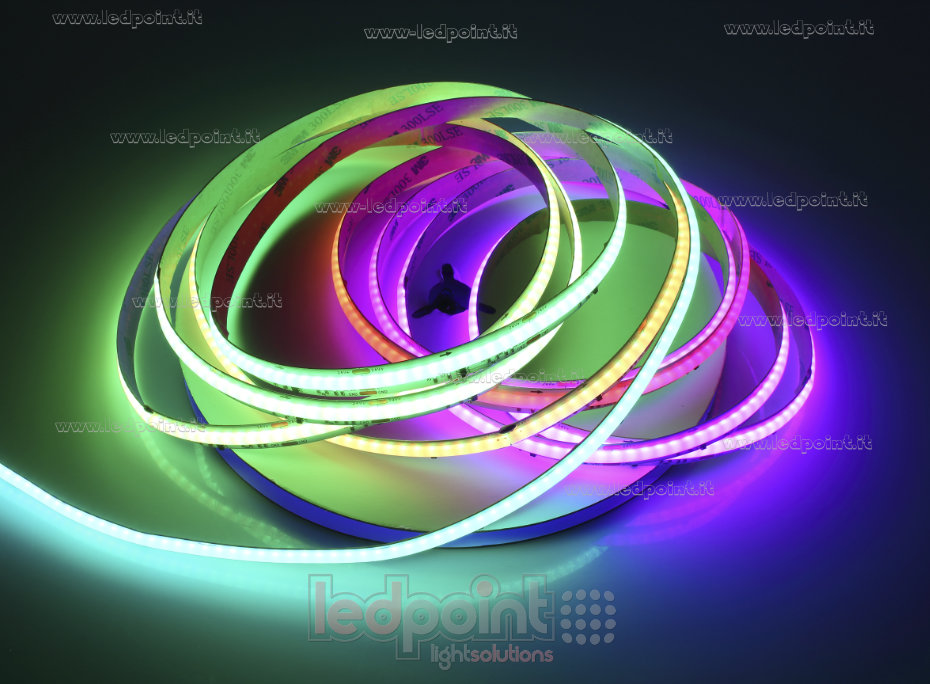
COB RGB WS2811 strip 720 LED/m 24 V (F52-CoRGB-720OR2): continuous color line without dots, 20 pixels/m, 19 W/m, cut every 5 cm. It is the ideal choice for an elegant indoor RGB light curtain.
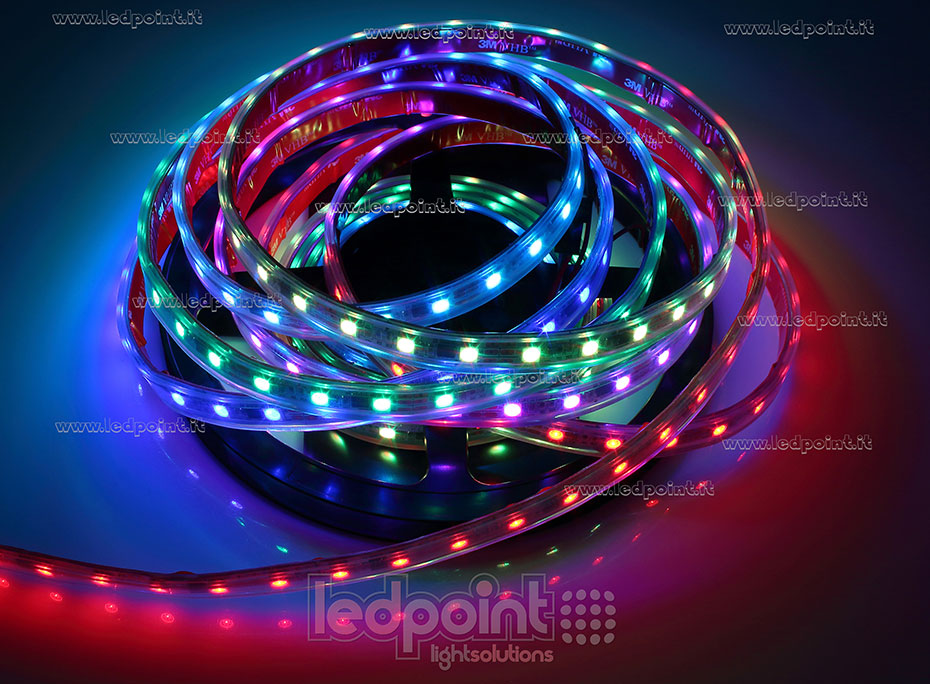
IP65 silicone tube RGB 5050 pixel strip (K52-CoRGB-060511): 12 V, 13 W/m, 20 pixels/m. It is the basis for an outdoor cascade light curtain in areas sheltered from driving rain.

COB RGB + warm white 3000 K WS2814 pixel strip CRI Ra>90 (F52-CoR300-784OR2): combines dynamic colors and a true high-quality warm white light, to switch from party to dinner with the same system. The RGB + white 4000 K (F52-CoR400-784OR2) version also exists, and, for outdoors, the IP65 RGB + warm white 3000 K (K52-CoR300-784OR2) version, ideal for sheltered outdoor seating and pergolas.
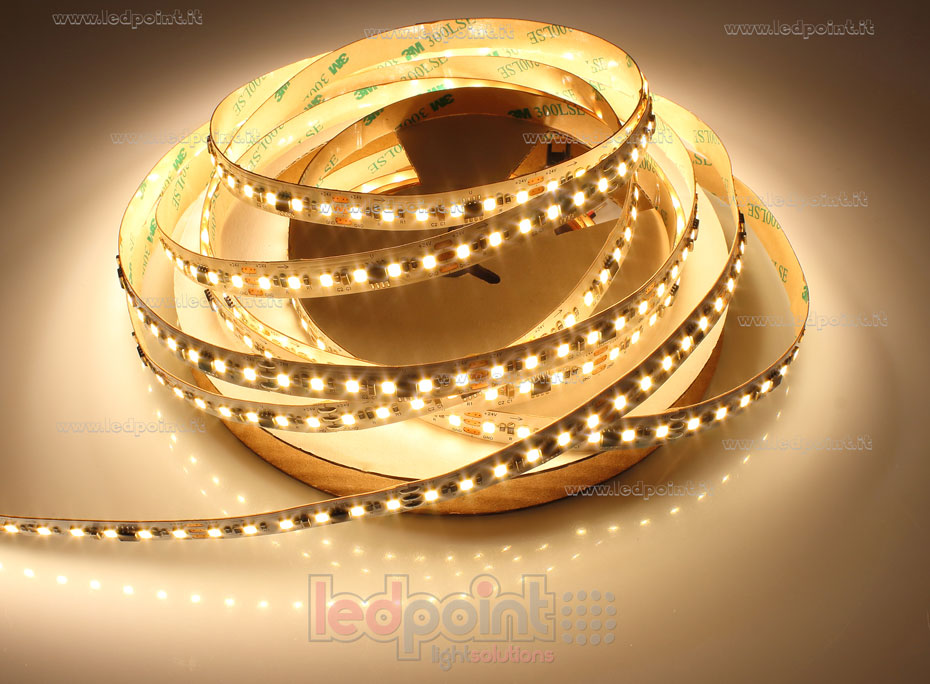
Warm white 3000 K 2835 pixel strip (F52-Co300-120812): 1060 lm/m, 100 lm/W, 20 pixels/m. Perfect for a warm light rain effect, highly requested for weddings and luxury storefronts.
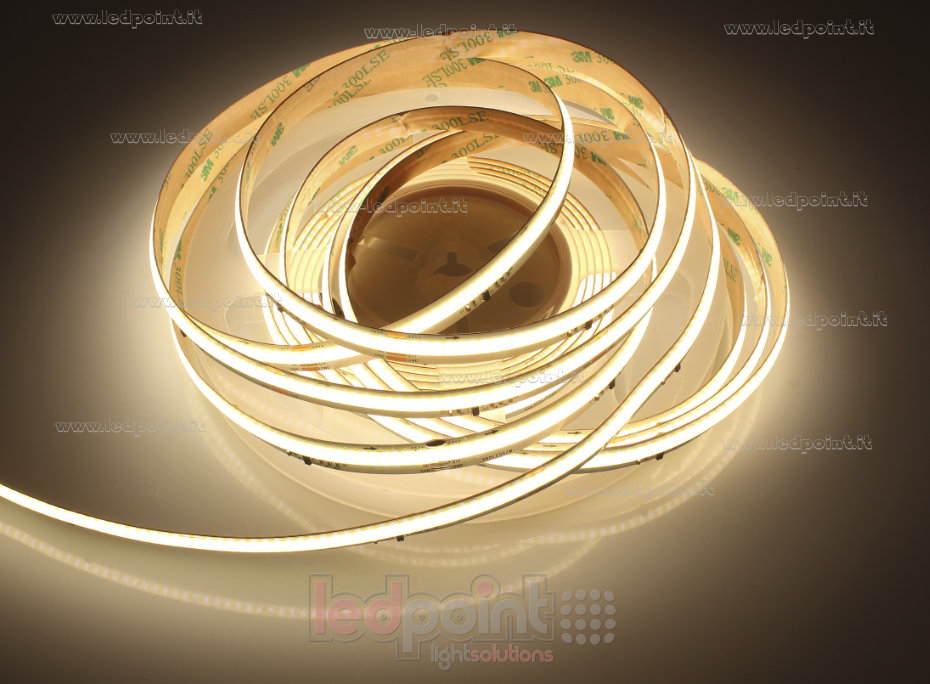
COB 3000 K CRI Ra>90 pixel strip (F52-Co300-360OR2): 530 lm/m, 11 W/m, homogeneous line, ideal for video sets and interior design.

CCT 3000–6500 K pixel strip (F52-CoCCT-120812): cascade effect in adjustable white, from warm to cool.
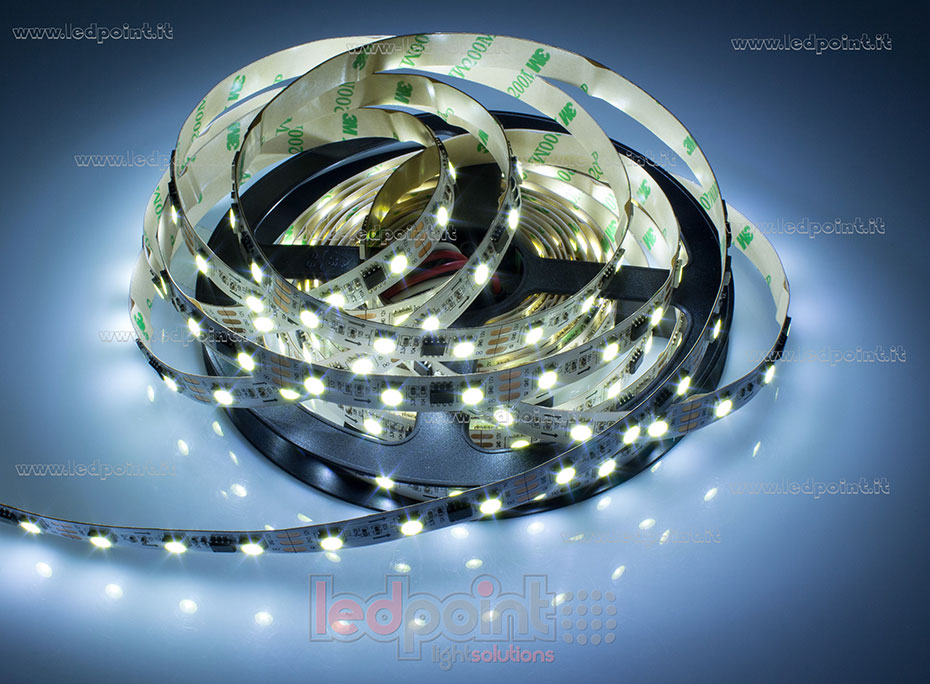
Cool white 6000 K pixel strip (F52-Co600-60511): for ice, snow, and icicle effects.
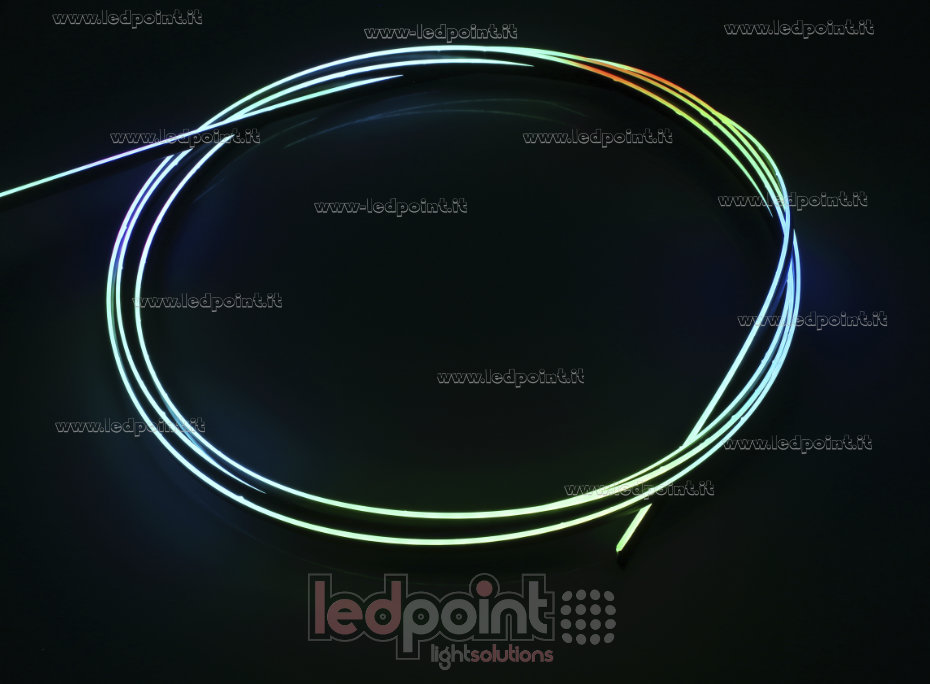
2 mm wide RGB WS2812 light blade (F52-CoRGB-133011s): 133 pixels/m, cut every 0.75 cm. With only 2 mm in width, it creates almost invisible strands when off, perfect for a design light curtain. The version with 2.6 mm PCB is also available.
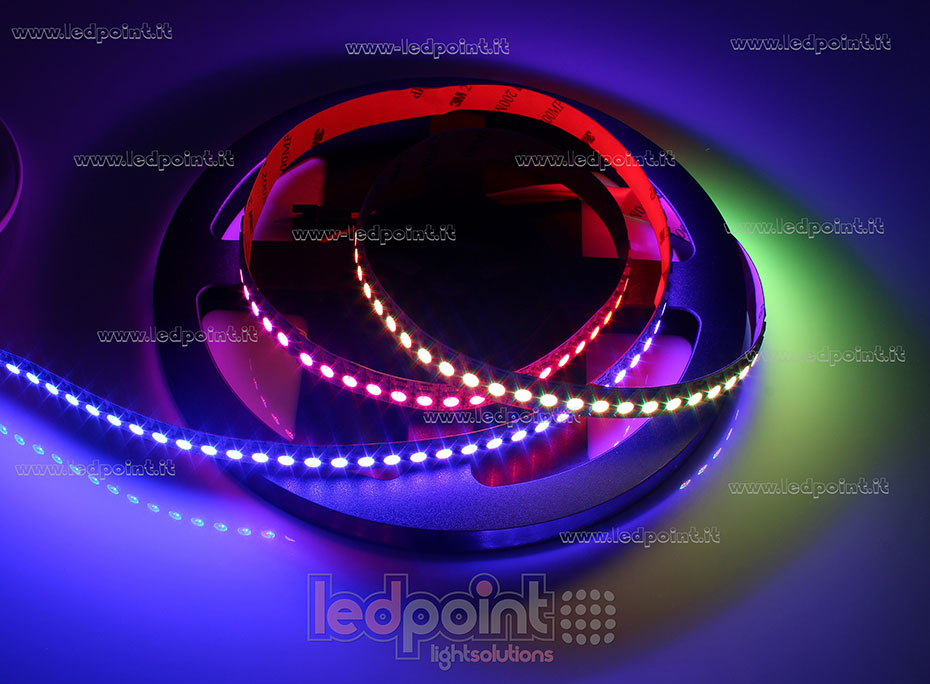
5 V 144 LED/m RGB pixel strip 1 m (F12-CoRGB-144510): ultra-high resolution, for small scenic curtains and compact video backgrounds.
To learn more about programming pixels, read our guide Addressable pixel LEDs: how to program them.
Neon Flex for the outdoor light curtain and soft strands
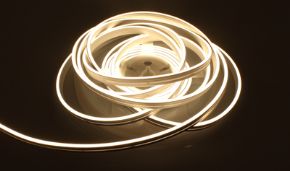
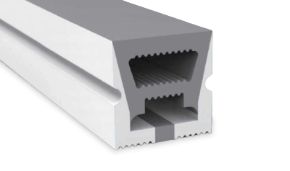
Ledpoint Neon Flex is an extruded silicone tube with an integrated LED strip. Silicone guarantees durability, UV resistance, and better heat dissipation; outdoor versions do not yellow in the sun. A typical example for a curtain: 6×12 mm 24 V 11 W/m IP65 warm white Neon Flex (NS04 series), with diffused light without dots, cut every 5 cm, and a minimum bending radius of 3 cm.
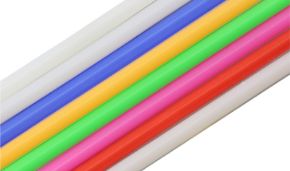
For indoors, there is the 2nd generation Neon Flex, such as the 12 V 7 W/m in a 50 m reel, IP42, bendable in all directions and cuttable every 2.5 cm, available in many colors: warm white, cool white, ice, red, green, blue, yellow, and pink. The range is completed by Neon Flex tubes and Neon Flex accessories (end caps, clips, connectors).
IP67/IP68 silicone waterproof strips for the harshest conditions
For vertical strands with high mechanical resistance and protection from atmospheric agents, Ledpoint offers solid silicone strips like the Ix2-400W-1208C2/9.6 (IP68), L52-270W-120822/14.4 (IP67), or LA2-600-070322A-BH3 (IP67) series. They are the safest choice for an outdoor light curtain exposed to driving rain. You can find them in the LED strips section, filtering by protection rating and voltage, for example among 24 V LED strips or warm white LED strips. For static indoor curtains, COB LED strips are the most refined choice.
B. Controllers: the "brain" of the light curtain
A static curtain requires only a dimmer; a dynamic curtain needs an SPI signal controller, which generates the digital data for the individual pixels. In the SPI controllers category you will find:
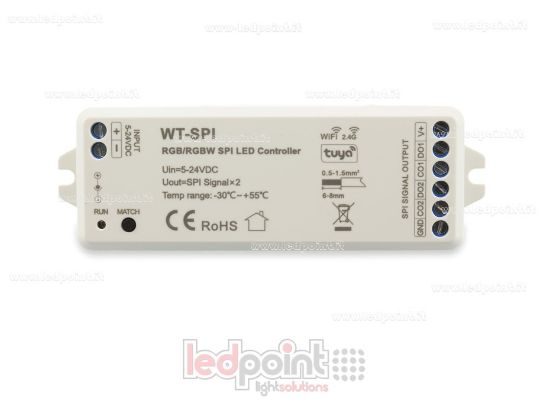
Skydance WT-SPI – Wi-Fi and RF 2.4 GHz controller for SPI (SK-WT-SPI): manages up to 1000 pixels, is compatible with 47 types of chips (including WS2811, WS2812, and WS2814), works from 5 to 24 V, and is controlled from the Tuya Smart / Smart Life app, with an RF remote or by voice via Alexa. It allows you to choose cascade effects, adjust speed and colors, and schedule on/off times.
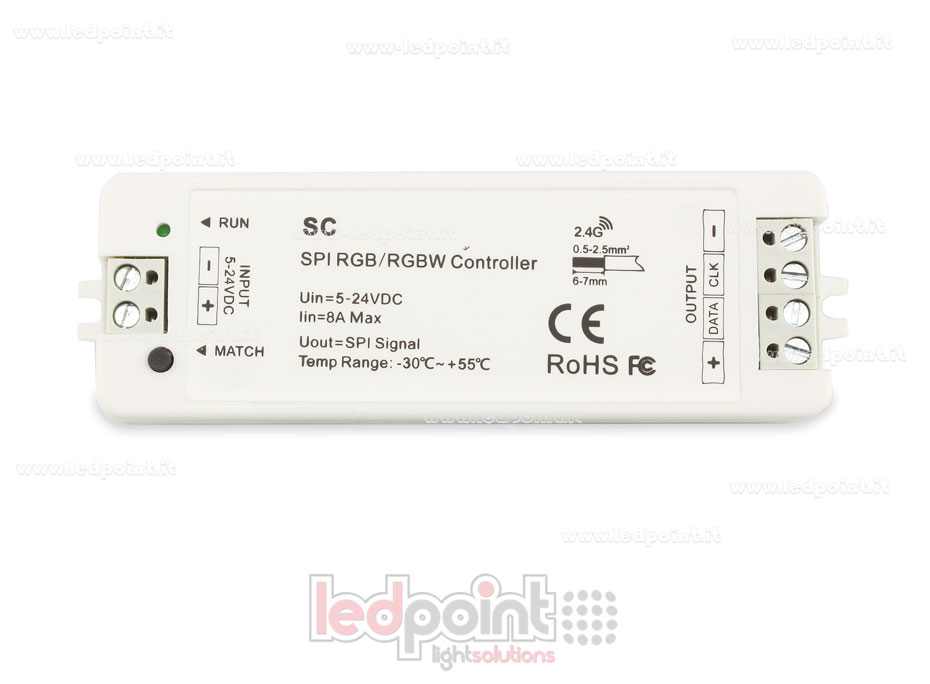
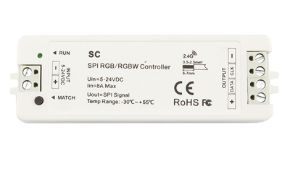
5–24 V RF 2.4G SPI controller receiver (SK-SC): up to 1024 pixels, 32 dynamic modes, compatible with 32 types of IC, to be combined with the RGB/RGBW and SPI remote control SK-R9. Ideal when the app is not needed, for example for venue staff.
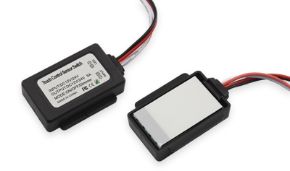
SPI LED controller (LSS-CTC-SPI) for simple installations. To turn on the curtain when people pass by, for example at the entrance of a farm stay, there is the Dual PIR sensor with SPI controller (SK-ES-D).
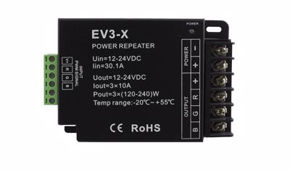
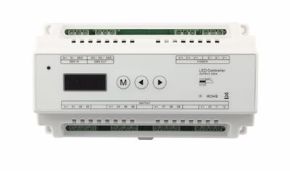
For static curtains, monochromatic, CCT, or RGB controllers and dimmers are used; for large systems and integration with stage lighting mixers, there are DMX and DALI decoders, based on the DMX512 protocol; for long distances, signal amplifiers.
C. Suspension structures and accessories
A light curtain is beautiful only if the strands are straight, parallel, and stable. To achieve this, specific supports are needed, designed to give the strips a continuous base even where there is no wall to stick them to.
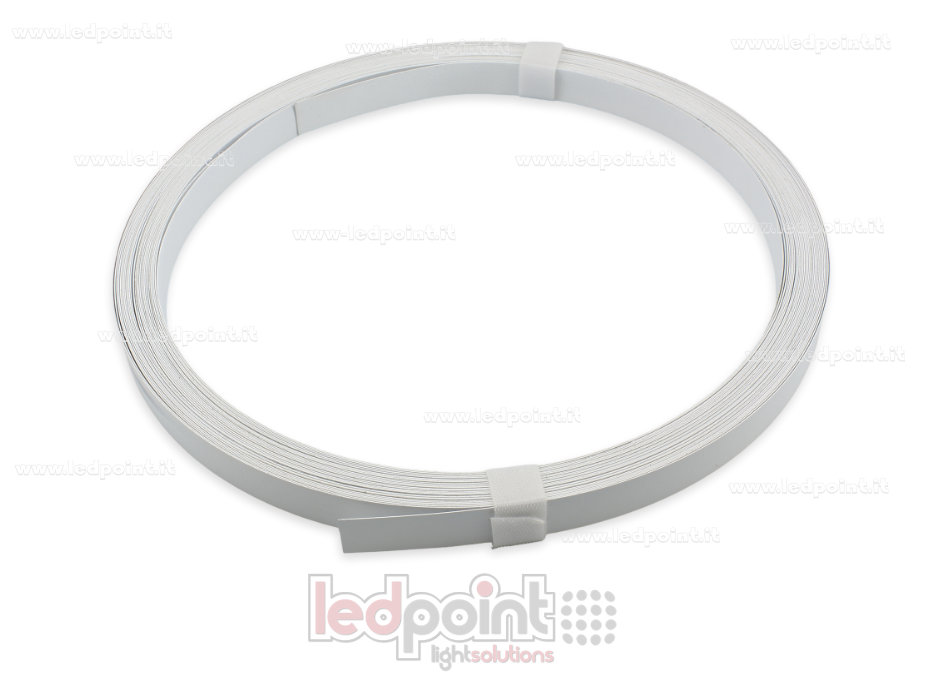
20 m white flexible steel profile tape (RB-01-20W) and 20 m black steel tape (RB-03-20B): the LED strip is applied to the tape, which gives it a continuous base and keeps it taut and vertical. The black tape disappears on dark backgrounds.
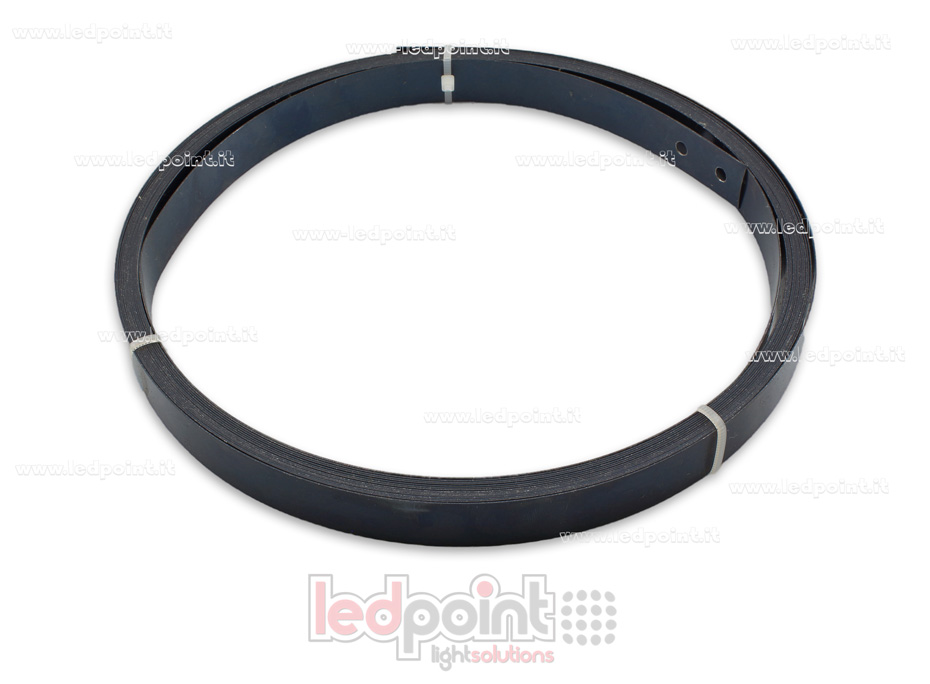
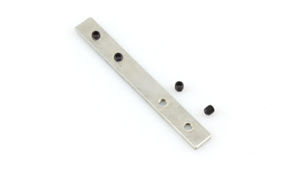
10 m black reinforced plastic flexible tape (RB-02-10B): lighter, for short strands. To connect multiple sections, there are joints for black steel tape (RBJ-0204-B). All models are in the LED strip tapes category.
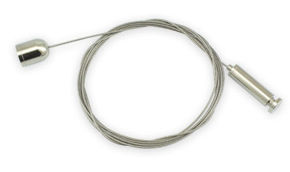
Suspension cables, such as the PRM-CL01-M / PRM-CL02-M kits with a 2 m steel cable and micrometric height adjustment: to hang the top bar from the ceiling in a clean and professional way.
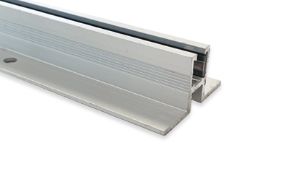
Aluminum profiles, including round profiles PR-NE02-15-S2 (Ø 30 mm) and PR-NE04-19-S2 (Ø 50 mm), usable as a suspended beam from which to start wiring and strands.
D. Power supply, cables, and connections
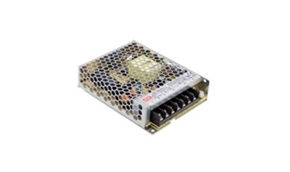
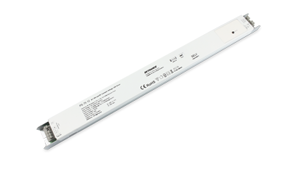
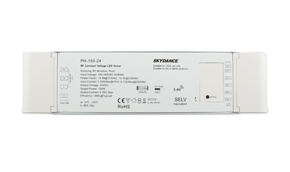
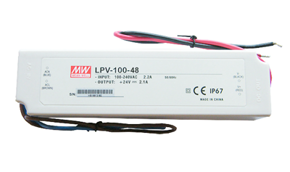
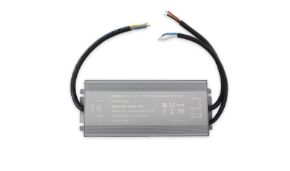
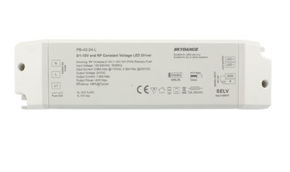
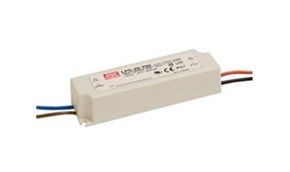
Every light curtain needs 24 V power supplies, 12 V, or 5 V, consistent with the strip voltage; smart power supplies add app control. For outdoor light curtains, a waterproof power supply is advisable, such as the Mean Well 200 W 24 V IP67 (MW-XLG200-24A).
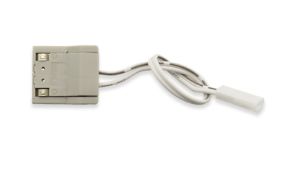
The system is completed by connectors, cables, and end caps for LED strips, essential to close the ends of the strands and maintain the protection rating.
Summary table: which combination for which light curtain
| Objective | Source | Control | Support | Power supply |
|---|---|---|---|---|
| Warm white outdoor light curtain (balcony, facade) | 24 V IP65 warm white Neon Flex | Dimmer or timer | Steel rope/cable + clips | 24 V IP67 power supply |
| RGB cascade curtain for storefront | COB RGB WS2811 strip | Skydance WT-SPI | Black steel tape | 24 V power supply |
| Warm light rain effect for wedding | 3000 K 2835 Pixel | WT-SPI or RF SPI receiver | White steel tape + suspension cables | 24 V power supply |
| Almost invisible design curtain | 2 mm WS2812 light blade | SPI controller | Suspension cables + round profile | 12 V power supply |
| Video background | COB 3000 K CRI>90 or RGB+3000 K pixel | WT-SPI with app | Profile + tape | High-quality 24 V power supply |
| Farm stay pergola | IP65/IP67 Neon Flex, IP67 silicone strips, or IP65 RGB+3000 K pixel | Smart dimmer, timer, or PIR sensor | Stainless clips on beam | 24 V IP67 power supplies |
10. How to build a light curtain with Ledpoint products: step-by-step project
Now that you know the components, let's see how to put them together. This chapter is designed as a worksheet: it follows the real order in which a professional installer tackles the project of a custom light curtain. At the end, you will find a fully calculated example, with quantities of material, wattages, and number of pixels.
Step 1: define surface, density, and effect
Measure the available width and height and decide the spacing between strands. Number of strands = width ÷ spacing + 1. A 3 m wide curtain with a 20 cm spacing will have 16 strands; with a 10 cm spacing, 31 strands. Then decide if the curtain will be static (dimmable fixed light) or dynamic (cascade effect), because this choice determines the type of strip and controller.
Step 2: choose the source based on the environment
- Indoor, continuous and refined effect: COB strips or 2nd generation Neon Flex.
- Indoor, cascade effect: COB or 2835 pixel strips, or the 2 mm light blade.
- Sheltered outdoor: IP65 silicone pixel strip or IP65 Neon Flex.
- Exposed outdoor: IP65/IP67 Neon Flex or IP67/IP68 solid silicone strips.
Step 3: calculate total meters and power
Total meters = number of strands × strand height. Multiply the total meters by the W/m of the chosen strip to get the system's power. Consider that strips can only be cut at the intended points, so round the height to the nearest cut multiple (5 cm for many Ledpoint models) and check how many strands you can get from each 5 m reel to reduce waste.
Step 4: size the power supply
The professional rule is to leave a 20% margin: power supply power ≥ curtain power × 1.2. For large systems, it is better to use multiple power supplies, each dedicated to a group of strands, rather than a single very powerful one: this reduces cable gauges and, in case of failure, only a part of the curtain turns off. Also remember voltage drop: along a 24 V strip, brightness drops after a few meters, which is why each strand must be powered from the top bar via a distribution line (bus) with adequately sized cables, and strands over 5 m should be powered from both ends.
Step 5: design the signal for the cascade effect
In dynamic curtains, the data signal must reach each strand. There are two schemes, with different results:
Parallel scheme: all strands do the same effect
The controller's signal is duplicated and sent simultaneously to the beginning of each strand (if necessary via signal amplifiers and splitters). This is the simplest scheme: all "drops" fall together and the controller only has to manage the pixels of one strand. Great for an orderly and rhythmic rain effect.
Series scheme: staggered effect and animations across the entire curtain
The signal travels down the first strand from top to bottom, returns with a return cable, and starts again from the top of the second, and so on. In this way, the controller "sees" the curtain as a single long strip and the effects flow from one strand to another, with a more natural and less mechanical result. The total number of pixels must remain within the controller's limit: up to 1000 pixels for the Skydance WT-SPI, 1024 for the RF SPI receiver.
Step 6: choose top bar and supports
The top bar can be an aluminum profile suspended with cables, a 30 or 50 mm round profile, a taut steel rope, or the beam of a pergola itself. The strands are made by applying the strip to the flexible steel tape, which keeps it straight; Neon Flex, being heavier and stiffer, can hang free if the strands are short or be anchored at the bottom with a thin steel wire to avoid oscillations.
Calculated project example: rain effect light curtain for a wedding
Here is a typical case our technical office often receives from event organizers: newlyweds' table backdrop, 3 m wide and 2.5 m useful height, warm white light with a slow rain effect, indoor or under marquee use.
| Item | Choice / calculation | Result |
|---|---|---|
| Spacing between strands | 20 cm on 3 m | 15 strands (16 with ends; we choose 15 to center the composition) |
| Strand height | 2.5 m (exact multiple of the 5 cm cut) | 2.5 m |
| Meters of strip | 15 × 2.5 m | 37.5 m |
| Source | 3000 K 2835 pixel strip, 14.4 W/m, 20 pixels/m (F52-Co300-120812) | 2 strands per 5 m reel → 8 reels |
| Power | 37.5 m × 14.4 W/m | 540 W at maximum brightness |
| Power supply | 540 W × 1.2 | at least 650 W, e.g., two 24 V 350 W power supplies, one every 7–8 strands |
| Total pixels (series scheme) | 37.5 m × 20 pixels/m | 750 pixels: within the 1000 limit of the WT-SPI |
| Strand support | RB-01-20W white steel tape | 2 rolls of 20 m |
| Top bar | 3 m aluminum profile suspended with 2–3 suspension cables | Height adjustable to the millimeter |
| Evening consumption | Rain effect, 50% average brightness for 7 h | about 1.9 kWh, less than 0.50 € in energy |
The advantage over a ready-made curtain is evident: the organizer obtains professional-quality light with certified color rendering, an app-adjustable rain effect, and a modular system that, at the end of the event, can be dismantled and reassembled in another location with different dimensions.
11. How to mount, fix, and hang a light curtain
A well-chosen but poorly mounted light curtain loses half its charm: crooked strands, visible cables, fixing points that give way in the wind. In this chapter, we answer the most searched questions - how to hang a light curtain, how to attach it to a window or curtains, how to fix lights on a balcony and outdoors – with indications valid for both ready-made models and custom systems.
Before starting: three checks
- Test the curtain lit on the ground before mounting it: discovering a defect after hanging it 3 meters up is frustrating.
- Check the outlet position and the length of the power cable: the power supply must remain in a dry and accessible place.
- Prepare the upper support: pole, rail, rope, or profile must support the weight without bending.
How to hang a light curtain on a window
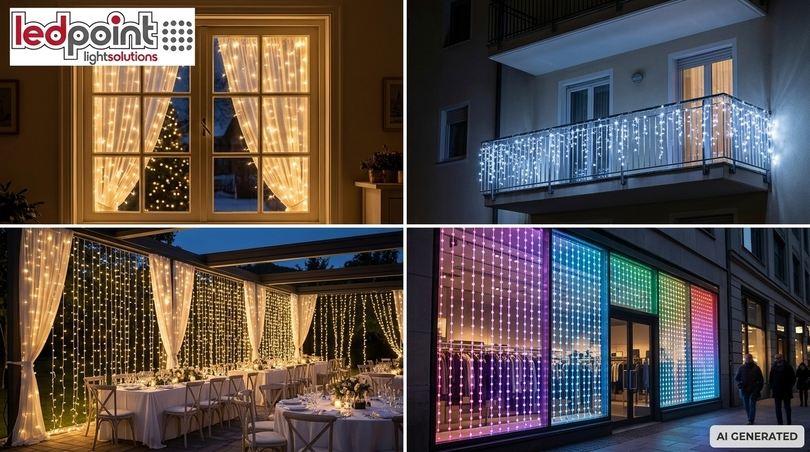
This is the most common installation. The simplest method is to hang the top bar on the existing curtain pole or rail, with rings or small clips. If there is no pole, transparent adhesive hooks can be used on the window frame (on smooth, clean surfaces), a telescopic tension rod between the jambs, or glass suction cups. The strands should be a few centimeters away from the glass, to avoid condensation and to create a slight depth effect.
How to put lights in curtains (and on curtains)
To combine a light curtain with a fabric curtain, there are two techniques:
- Behind the curtain: the light curtain is hung on the same rail, in the rear track. The light fabric filters the light and creates a very elegant diffused effect, ideal for bedrooms and living rooms.
- In front of the curtain: the strands remain visible and the fabric acts as a backdrop, increasing contrast.
Warning: fabric curtains must never touch power supplies or transformers, and it is advisable to use only low-voltage LED light curtains, which heat up very little.
How to fix a light curtain to the wall without damaging it
To avoid drilling: removable adhesive hooks sized for the weight, tension rails, or a floor-standing support with two vertical poles and a crossbar. For permanent design installations: aluminum profile fixed to the wall or ceiling with suspension cables, which requires only two or three small wall plugs and guarantees a perfectly aligned result.
How to put a light curtain on a balcony
The balcony is the symbolic place for Christmas lights. The two most beautiful configurations are:
- Icicle effect under the ceiling of the balcony above or under the eaves: short 50–100 cm strands, fixed with screw clips or outdoor hooks.
- Curtain on the railing: the top bar is tied to the handrail with UV-resistant nylon zip ties every 30–40 cm, and the strands drop towards the outside or inside of the parapet.
How to safely fix Christmas lights outdoors
Outdoors, the main enemy is wind: free strands bang against walls and railings and can be damaged. Also fix the lower end of the longest strands, use only outdoor zip ties and hooks, do not force cables into tight curves, do not crush them in window and door closures, and keep connections off the ground, facing downwards, so that water does not pool. Plugs and extension cords must be for outdoors (at least IP44) and protected by a residual current device (RCD).
How to make an outdoor light curtain on a pergola or facade
For stable outdoor installations, a stainless steel rope is stretched between two solid points or the existing beam is used as a top bar. Neon Flex or silicone strands are fixed with dedicated clips; power supplies are enclosed in a waterproof box under a shelter; all cut ends are closed with end caps and sealant to restore the IP rating.
How Christmas lights are connected
Traditional cheap chains and curtains were often connected in series: if one bulb burned out, everything went out. Modern LED light curtains instead have segments connected in parallel, powered at low voltage: a fault remains localized in a small section. In dynamic curtains, in addition to power cables, there is a data cable that carries the signal from one pixel to the next.
How to properly put lights on the tree
For the Christmas tree, the rule is to start from the bottom with traditional strings, wrapping them from the inside to the outside of the branches, or, with a light curtain for a tree, start from the tip and distribute the strands radially. Count about 100 LEDs for every 30 cm of tree height for a full effect, and hide the cables along the trunk.
12. Dynamic effects, smart control, and motorized curtains
The modern light curtain does not just turn on with a switch: it is programmed, synchronized, controlled from a smartphone, and dialogues with other devices in the home or venue. In this chapter, we will see what smart control allows and how to integrate motorized fabric curtains into light scenarios.
App, remote, and voice control
With a controller like the Skydance WT-SPI, the light curtain is managed from the Tuya Smart / Smart Life app: you choose cascade effects, adjust speed and brightness, "paint" with your finger the colors on individual segments, and schedule on/off times. The RF remote is convenient when multiple people need to use the system (e.g., restaurant staff), while compatibility with Alexa and Google Assistant allows voice commands like "turn on the curtain".
Adjustable intensity and color
Yes, light curtains with adjustable intensity and color exist, and it is one of the most requested features by interior designers and content creators. With CCT strips, white is adjusted from warm to cool; with RGB+white, you switch from colors to high-quality white light; with dimmers, intensity is adapted to the time and activity. For a restaurant, this means being able to have a bright dining room at lunch and an intimate one at dinner with the same installation.
Sensors, timers, and automatic scenes
To reduce consumption and forgetfulness, you can add presence or twilight sensors and time programming. A typical example: the storefront light curtain turns on at sunset and turns off at 1 AM, while the one at the entrance of a farm stay activates when guests arrive.
Smart motorized curtains: when the fabric curtain enters the light scene
There is a second way to understand "curtains with lights": motorized furnishing curtains that move in sync with the lighting. With home automation, you create the "evening" scenario: the curtains close, the main lights dim, and the light curtain turns on in warm white. In the ZigBee category at Ledpoint you will find the devices to do this:
- Skydance CM(WZ): Zigbee 3.0 motor for smart curtains, with "pull-to-start" (just pull the curtain slightly), obstacle stop, and opening percentage control from the Tuya / Smart Life app.
- Skydance CM-SS(WT) and CM-SS(WZ): Wi-Fi or Zigbee flush-mount modules that make traditional AC tubular motors for curtains and shutters smart and voice-controllable (Alexa, Google Assistant).
In this way, fabric curtains, light curtains, and room lights respond to the same command, from the app, by voice, or from a scheduled time.
13. Safety, maintenance, and storage of the light curtain
A light curtain is an electrical appliance, often mounted near fabrics, in environments frequented by children, or outdoors. A few rules are enough to use it in total safety and make it last many seasons. Let's see them together, along with the most common mistakes our technical support encounters.
The safest light curtain to use at home
The safest choice is an LED light curtain at low voltage, compliant with standards and with CE marking, powered by a quality power supply positioned away from water, fabrics, and children's hands. 5–24 V systems fall under Safety Extra-Low Voltage (SELV) when powered by adequate sources: contact with the strands does not pose a risk of electric shock.
Precautions for safe cables with children
- Run cables along baseboards and door frames, fixing them with clips or trunking.
- Do not leave loops of dangling cable at children's height.
- Use protected outlets and place the power supply and controller high up or behind furniture.
- Choose curtains without small detachable decorative elements for kids' rooms.
- Use a timer to avoid leaving the curtain on all night.
Certifications to check
Before purchasing, verify the CE marking, compliance with the IEC/EN 60598-2-20 standard for light chains, an IP rating consistent with the use, and manufacturer and importer information. Ledpoint LED strips also report the energy class according to the ErP regulation and, in many models, compliance with LM-80 tests on LED lifespan.
Risks of a defective light curtain
A low-quality product may present insufficient insulation, connectors that let water in, overheating transformers, and annoying flicker. Warning signs: burning smell, power supply hot to the touch, cables with cracked sheathing, LEDs flashing without being set to do so. In these cases, disconnect the curtain immediately.
The most common mistakes to avoid
| Mistake | Consequence | Solution |
|---|---|---|
| Using an indoor curtain outdoors | Infiltration, short circuits, failures in a few days | At least IP44 if sheltered, IP65 if exposed |
| Undersized power supply | Overheating, flickering, shutdowns | 20% margin on power |
| Connecting too many extendable curtains in series | Transformer overload | Respect the maximum number indicated |
| Powering long strands from one side only | Weaker light at the bottom of the strand | Distribution line and dual power |
| Exceeding the controller's maximum pixels | Incomplete or erroneous effects | Stay within 1000 pixels (WT-SPI) or split the system |
| Cutting outside the cut points | Dead segment | Cut only on the indicated markers |
| Leaving ends open outdoors | Loss of IP rating | End caps and sealant |
How to clean a light curtain
Always disconnect the curtain before cleaning it. For indoor versions, a dry microfiber cloth or duster is enough; for outdoor Neon Flex and silicone strips, a damp cloth with water and a little neutral soap, avoiding solvents and pressure washers. In a restaurant's outdoor seating area, monthly cleaning keeps the light brilliant and removes smog and pollen that dull the silicone.
How to store decorative lights at the end of the season
Curtains get damaged more in storage than on the balcony. Wrap the strands around a rigid cardboard or a spool, without tight bends, separate them with tissue paper, store the curtain in a labeled box in a dry place away from heat sources. For custom systems, photograph the connections and number the strands before dismantling: reassembly will be a matter of minutes.
Can a light curtain be repaired?
Cheap curtains are rarely repairable. A custom system with LED strips, however, is completely repairable: the single strand, connector, or power supply can be replaced, and strands can be added to expand the curtain. This is one of the reasons why, in the long term, the professional solution costs less.
How long does an LED light curtain last
Quality LEDs have a useful life of tens of thousands of hours. A light curtain turned on for 6 hours a day for 40 days a year works 240 hours a season: in theory, the LEDs would last over a century. In practice, the actual lifespan depends on the power supply, connections, protection rating, and care in storage: with professional components and frequent outdoor use, such as in a farm stay, many seasons of service can be obtained.
14. Light curtain, string lights, or cascade: comparison and alternatives
Before deciding, it is useful to compare the light curtain with the most common alternatives. Each has a precise role, and often the best result comes from combining multiple solutions.
Difference between light curtain and string lights
A string light is a single horizontal or wrap-around line of light; a light curtain is a surface composed of many vertical lines. The string is ideal for outlining, wrapping trees, and following profiles; the curtain is ideal for filling a surface, creating backdrops, and giving verticality.
Light curtain or light cascade?
In substance, they are the same product: we speak of a "cascade" when the strands are dynamic or when they start from a single point, as in the Christmas tree curtain.
Table of advantages and disadvantages of alternatives
| Solution | Advantages | Disadvantages | When to prefer it |
|---|---|---|---|
| Light curtain | Fills surfaces, scenic effect, verticality | Requires an upper support | Windows, backdrops, storefronts, pergolas |
| String lights | Versatile, economical, easy to wrap | Linear effect, less "full" | Trees, railings, hedges |
| Profiled Neon Flex | Continuous lines, design, signs | Less "festive" | Facades, signs, architectural outlines |
| Decorative floodlights | Cover large surfaces without diffuse wiring | Less three-dimensional effect | Facades, tall trees |
| Fiber optics | Very thin light points, starry sky effect | Lower brightness, higher costs | Starry ceilings, theatrical setups |
| LED wall | High-resolution video and graphics | High cost, opaque, heavy | Corporate events, stages |
The unique advantage of the light curtain is transparency: when off it almost disappears, when on it fills the space without closing it. No other solution combines lightness, impact, and contained cost in such a balanced way.
15. Frequently asked questions about light curtains
We have collected the questions that private customers, event organizers, restaurateurs, designers, and hospitality managers most frequently ask our team. Click on each question to read the answer.
What is a light curtain?A light curtain is a set of vertical strands of light – wires with micro-LEDs, LED strips, or Neon Flex – suspended from a top bar. It creates a lightweight and transparent surface of light, static or animated, used to decorate windows, balconies, storefronts, events, and photo sets, especially during the Christmas period. |
How does a light curtain work?A power supply converts 230 V mains voltage into low voltage (5, 12, or 24 V) and distributes it along the top bar down to the strands. In static curtains, all LEDs turn on together; in dynamic ones, a controller sends a digital signal that commands each pixel, creating rain, snow, or cascade effects. |
Can a light curtain stay outdoors?Yes, if it is designed for outdoors. At least IP44 is required for sheltered areas like covered balconies, and IP65 or higher where direct rain arrives. The power supply and connections must also be protected. Curtains with silicone strands, like Neon Flex, withstand rain, sun, and temperature swings for many seasons. |
How to tell if Christmas lights are for outdoors?Check the label: the IP rating must be at least IP44. If it is missing or the wording "indoor use only" appears, the curtain should not be used outside. Verify that the transformer is also for outdoors or placed in a sheltered spot, and that cables and connectors have gaskets and rubber or silicone sheaths. |
Does a light curtain consume a lot?No. A micro-LED Christmas curtain for a window consumes a few watts, a few cents per season. Even a professional curtain with 20 meters of 11 W/m Neon Flex, turned on for 6 hours for 40 evenings, consumes about 53 kWh: about 13 euros in energy at a cost of 0.25 €/kWh. |
How long does an LED light curtain last?Quality LEDs last tens of thousands of hours, much longer than a decorative curtain is turned on in years of use. The actual lifespan depends mainly on the power supply, protection rating, connection quality, and storage. Custom systems are repairable: only the faulty part is replaced. |
How to hang a light curtain without drilling?You can hook it to the existing curtain pole or rail, use removable adhesive hooks suitable for the weight, a telescopic tension rod between the jambs, or suction cups on the glass. For video backgrounds and mobile setups, a freestanding structure with two vertical poles and a crossbar works well. |
How to attach curtain lights to fabric curtains?Hang the light curtain on the rear track of the same rail, behind the light fabric, for a diffused light; or in front, to highlight the strands. Use only low-voltage LED curtains, which heat up very little, and always keep power supplies and transformers away from the fabric. |
Which light curtain to choose for a wedding?A curtain with dense strands in warm white 2700–3000 K, preferably COB or Neon Flex for a dot-free line, at least two-thirds the width of the backdrop. A slow rain effect adds elegance; it is better to avoid flashes during dinner. RGB+white pixel strips allow you to change the atmosphere for dancing. |
Does the light curtain cause flickering in videos?This can happen with low-quality power supplies and controllers, which regulate light with low PWM frequencies. Use stabilized power supplies, controllers with high PWM, and, in the camera, shutter speeds compatible with the 50 Hz mains, such as 1/50 or 1/100. Keep the background less bright than the subject. |
What is the safest light curtain for a kids' room?A low-voltage LED curtain, with CE marking, power supply positioned out of children's reach, cables fixed along walls and baseboards, low-intensity warm white light, no flash effects, and a shutdown timer. Avoid models with small detachable decorative elements. |
Can multiple light curtains be connected?Yes. Ready-made "extendable" curtains can be connected up to the maximum number indicated by the manufacturer. In custom Ledpoint systems, multiple distributed power supplies, a single SPI controller, and possibly signal amplifiers are used, covering tens of meters with synchronized effects. |
How to make a cascade light curtain with Ledpoint products?Choose addressable pixel LED strips (e.g., COB RGB WS2811 or 3000 K 2835), an SPI controller like the Skydance WT-SPI, flexible steel tape to keep the strands straight, an aluminum profile top bar with suspension cables, and 24 V power supplies sized with a 20% margin. |
Which light is best for an outdoor light curtain?For homes, restaurants, and farm stays, warm white 2700–3000 K is the most welcoming choice and integrates with the nighttime environment. Cool white evokes snow and ice; single colors and RGB are ideal for shops and events. Avoid rapid flash effects facing the street. |
How to clean a light curtain installed outdoors?Disconnect the power, then wipe the silicone strands with a damp cloth and neutral soap, without solvents or a pressure washer. Periodically check end caps, connections, and fixings. In outdoor seating areas, monthly cleaning removes smog and pollen and keeps the light brilliant and uniform. |
16. The right light curtain starts with a good project
The light curtain has come a long way: from a simple Christmas decoration, it has become a design tool for homes, shops, restaurants, farm stays, events, and recording studios. The right choice stems from a few precise questions: where it will go, how big it will be, what light it should make, whether it should move, and how it will be powered. For a window at home, a quality ready-made curtain is enough; for a business or a setup that needs to amaze, last, and adapt, the custom solution with pixel LED strips, Neon Flex, SPI controllers, and professional supports offers results that no standard product can match.
If you are designing a light curtain for your venue, an event, or your home, explore the catalog of pixel LED strips, Neon Flex, and SPI controllers, download the Ledpoint catalogs or contact our technical office: we will help you calculate meters, wattages, power supplies, and pixels to get exactly the effect you have in mind. For other practical guides, visit the Ledpoint blog.
This article was developed with the support of artificial intelligence and subsequently reviewed, corrected, and validated by the Ledpoint.it technical team, which guarantees its reliability and compliance with official sources.