






In this article, we will systematically address everything that revolves around fast renovation with LED profiles: regulatory definitions, differences between light and heavy building renovation, necessary permits, tax incentives and 2026 bonuses, materials and technologies, product choices with precise technical specifications, real use cases, and answers to the most frequent questions we receive from our professional and private audience. We will do this by citing reference standards (UNI EN 12464-1, IEC 60598, CEI regulations) and making available the data collected on supplies for the projects followed.
In this article...
1. What is meant by fast renovation and why it is changing the market
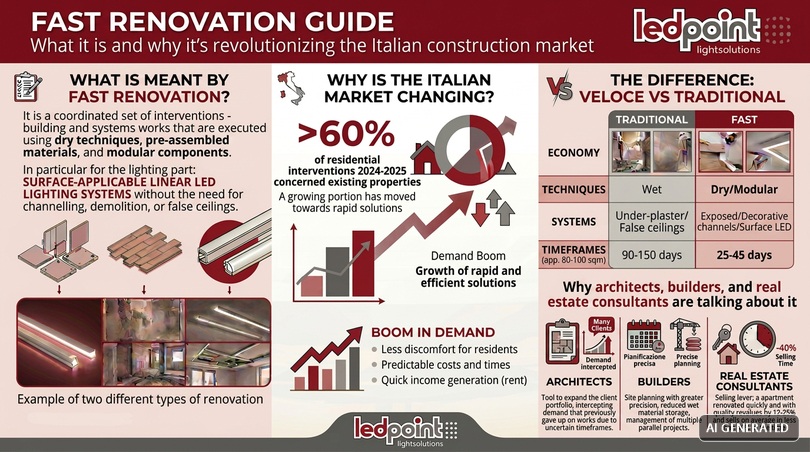
When we talk about fast renovation, we refer to a coordinated set of construction and plant engineering interventions that, while producing an architectural result equivalent to a traditional renovation, are carried out with dry techniques, preassembled materials, modular components and particularly for the lighting part linear lighting systems applicable to surfaces without the need for chases, demolitions or false ceilings. It is a concept close to, but not identical to, that of "light building renovation" defined by the Consolidated Building Act (DPR 380/2001), which identifies interventions that do not alter volumes, shapes and intended uses.
The Italian market has changed pace: according to sector surveys, over 60% of residential interventions started in the 2024-2025 biennium concerned existing properties, and of these a growing share has oriented towards rapid solutions. The demand for easy renovations, predictable in terms of time and costs, has exploded also for demographic and financial reasons: short construction sites mean less discomfort for those living in the property, less exposure to the risk of exceeding the budget, possibility of relocating the apartment on the rental market in very short times.
The difference between fast renovation and traditional renovation
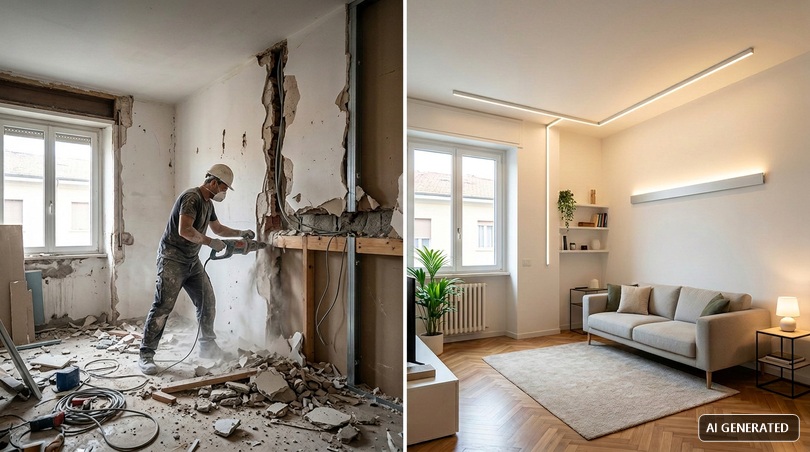
Traditional renovation typically involves demolitions, screed replacement, chases for electrical systems, plastering, drywall false ceilings, wet finishes. Fast renovation, on the contrary, is based on three technical pillars: dry processing (floating floors, wall panels, adhesive coverings), exposed or decorative trunking systems, and surface-applied linear LED lighting. The result is a construction site that, for an 80-100 sqm apartment, can close in 25-45 days instead of the traditional 90-150.
Why architects, construction entrepreneurs and real estate consultants talk about it
Architects see in fast renovation a tool to expand their client portfolio, intercepting demand that previously gave up on work for fear of uncontrollable times and costs. Construction entrepreneurs appreciate it because it allows planning the construction site with greater precision, reducing the warehouse of wet materials, managing more projects in parallel. Real estate consultants, finally, use it as a sales lever: an apartment renovated quickly and with quality increases in value by 12-25% and sells on average in times 40% shorter.
2. Building renovation: regulatory definition, types and permits
To approach a renovation with full awareness, it is necessary to start from the regulatory framework. Building renovation, according to article 3 paragraph 1 letter d) of DPR 380/2001 (Consolidated Building Act), includes the systematic set of works that can lead to a building organism completely or partially different from the previous one. The definition of building renovation therefore includes both conservative interventions and more radical transformations, and this determines different permits.
What permits are needed to renovate a house
The main enabling titles for building renovations are:
| Type of intervention | Enabling title | Average times |
|---|---|---|
| Ordinary maintenance (painting, finish replacement) | Free building (no permit) | Immediate |
| Light extraordinary maintenance | CILA | Immediate start |
| Light building renovation (no volume/shape modification) | CILA or SCIA | 0-30 days |
| Heavy building renovation | SCIA or Building Permit | 30-90 days |
| Structural modifications or extensions | Building Permit | 60-120 days |
For a fast renovation with surface LED profiles, in the vast majority of cases a CILA is sufficient, since load-bearing structures, volumes or intended uses are not modified. However, it is always recommended to verify with a qualified technician (surveyor, architect, engineer) the correct procedure for your Municipality.
Required documentation
The building permit for renovation typically requires: certified technical report, graphic elaborations (existing state, project, comparative), declaration of conformity of systems, possible acoustic and thermal report for significant interventions. For a standard apartment, the CILA practice closes in 7-15 working days technical.
3. Light vs heavy renovation: practical differences
The distinction between light building renovation and heavy building renovation is crucial for planning costs, times and permits. The former includes interventions that do not alter volumes, shapes, facades and surfaces: bathroom and kitchen renovation, floors, systems, internal space distribution. The latter includes shape modifications, demolition and faithful reconstruction, increase in housing units, significant perspective modifications.
Practical examples of light building renovation
Fall under light building renovation: bathroom renovation (even complete), floor and covering replacement, modification of internal distribution with movement of non-load-bearing partitions, electrical and hydraulic system renovation, installation of new lighting systems. All typical interventions of fast renovation fall into this category, which is why bureaucratic times are compatible with short construction sites.
When heavy renovation is inevitable
Heavy building renovation becomes necessary when the project provides for: division into multiple housing units, structural modifications (demolition of load-bearing walls, opening of new spaces in load-bearing walls), change of intended use (from office to residential, from warehouse to habitation), demolition and reconstruction. In these cases, times lengthen and costs rise proportionally.
Tax incentives, 2026 renovation bonus and reduced VAT
Tax incentives are the real economic engine of building renovations in Italy. The 2026 renovation bonus confirms the possibility of deducting a portion of expenses incurred for extraordinary maintenance and building renovation interventions on homes. The rate and spending ceilings are subject to annual revision: it is therefore always recommended to consult the Revenue Agency or an accountant for percentages updated at the time of the construction site.
How the renovation bonus works
The basic mechanism provides for an IRPEF deduction in ten equal annual installments on documented expenses. Works eligible for deduction include construction works, electrical, hydraulic, air conditioning and integrated technical lighting systems, provided that they are part of a comprehensive documented renovation intervention and paid with speaking bank transfer.
Reduced VAT at 10% on building renovations
On building renovations of properties with prevalent private residential use, VAT at 10% applies both to service provisions and to so-called "significant goods" within precise value limits. LED profiles, strips and power supplies, if supplied as part of a renovation intervention, fall under the facilitated regime.
Furniture bonus and other related incentives
Those undertaking a renovation can also access the furniture bonus for the purchase of furnishings and large appliances intended for the renovated property. There are also specific incentives for energy efficiency (Ecobonus) when the intervention includes improvements to the building's energy performance.
5. Why eliminate drywall and wall chases with LED profiles
For decades, drywall false ceilings with LEDs have been the de facto standard for achieving indirect light effects or ceiling light cuts. Drywall false ceilings with LEDs, however, require a sequence of operations that heavily impacts the construction site: metal framing, drywall sheets, plastering, smoothing, primer, painting. To this are added wall chases for cable passage, with relative breaking, laying, plaster restoration and repainting.
The problem of drywall in fast renovation
Drywall, although an excellent material, is incompatible with the philosophy of fast renovation: it requires specialized labor, drying times between one coat and another of plastering, produces fine dust that invades the entire environment, and typically extends the construction site by 7-15 days just for its execution and finishing.
The problem of wall chases
Wall chases are invasive, noisy, dusty and (especially in historic buildings or condominiums) subject to constraints and structural risks. Breaking a chase in a load-bearing wall may require specific authorizations and reinforcement calculations. Eliminating chases means eliminating one of the most unpredictable cost items in a renovation.
The solution: surface LED profiles
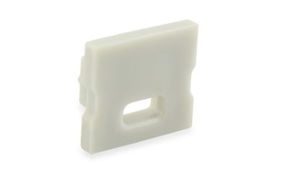
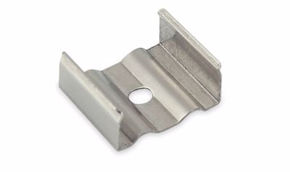
Aluminum profiles applicable to ceiling and wall, with cables running inside the profile itself or in coordinated trunking, simultaneously eliminate drywall and chases. They are applied with structural double-sided tape, snap clips or spot screws and only require a power supply hidden in a subframe, inside a piece of furniture or in an existing cavity. The result is a clean, architectural line of light, perfectly integrated, with a construction site reduced to a few hours.

6. Ultra-slim aluminum profiles: the complete technical guide
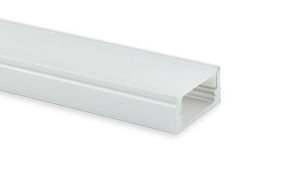
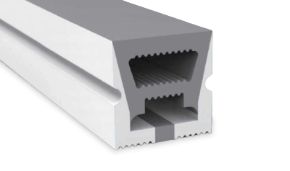
Aluminum profiles are the mechanical, thermal and aesthetic supporting system of LED strips. In fast renovation the choice of profile must respond to four criteria: minimum height (to visually disappear), dissipative capacity (to ensure LED useful life), fixing method (to not require chases), and quality of the diffuser screen (to avoid the dotted effect).
Ultra-slim surface profiles
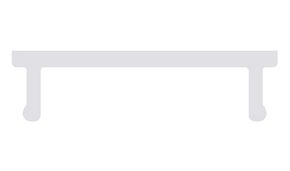
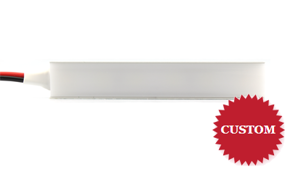
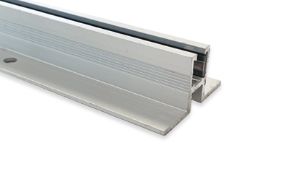
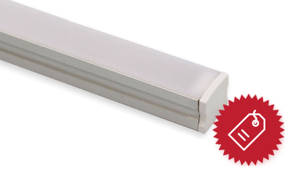
For discreet integration on ceilings, wooden walls or under-cabinets, the PR-SL13-02 profile, only 5 mm high, represents the state of the art. A practically invisible line of light, applicable with double-sided tape or clips, perfect above shelves, inside niches, along decorative skirting boards. For slightly more structured applications, the PR-SL08-03 profile with 8 mm height offers an ideal compromise between visual discretion and thermal dissipation for medium power strips.
Wall profiles for wall-washing effects
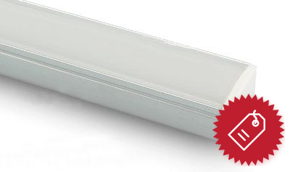
When you want to achieve a decorative wall-washing effect or an architectural light cut on the wall, the PR-WL01-03 profile with 18x48 mm section offers a solid structure, optimal dissipation for high power strips, and a geometry designed precisely to be applied on surface without recessing. It is the typical choice for living rooms, entrances, corridors, hotels and showrooms.
Technical criteria for profile selection
| Criterion | Recommended value | Why |
|---|---|---|
| Profile height | 5-10 mm for surface | Visual invisibility |
| Material | Extruded aluminum | Thermal dissipation |
| Screen | Opal UGR <19 | Visual comfort |
| Fixing | Structural double-sided tape or clips | Zero chases |
| Module length | 2 m with coordinated joints | Line continuity |
7. COB LED strips: the luminous soul of fast renovation
COB LED (Chip On Board) technology has revolutionized linear lighting. Unlike traditional SMD strips, where individual LEDs are distinguishable as separate light points, COBs present a continuous, homogeneous luminous surface, completely free of the unsightly "dotted effect" that betrayed the presence of LEDs in shallow profiles. For a quality renovation, COB is today the reference standard.
LED density and quality of the luminous line
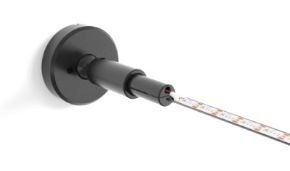
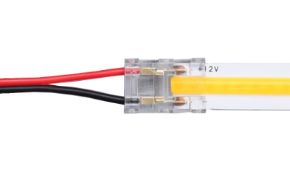
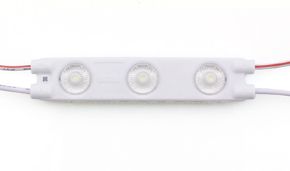
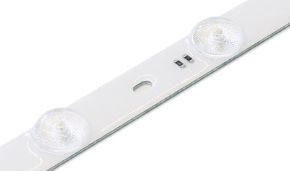
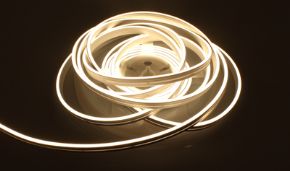
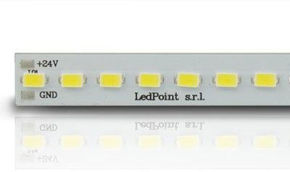
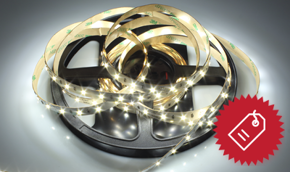
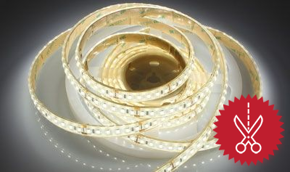
The F52-300-480OR2 strip with 480 LEDs/m guarantees absolute luminous uniformity, ideal for ultra-slim profiles where the LED point would not have space to blend before reaching the opal screen. For applications where greater luminous flux is needed without compromising uniformity, the F52-300-600OR2 with 600 LEDs/m is the natural choice: lots of light, zero dots, perfect integration in 5-8 mm profiles.
Integrated current control: goodbye voltage drops
One of the historical limitations of 12V/24V LED strips was the voltage drop along the strip, which resulted in final meters being less bright than initial meters. The F52-300-384OR2 strip with integrated current control solves this problem: it guarantees identical brightness from the first to the last meter, a fundamental technical feature in a renovation where light lines can exceed 10-15 meters of continuous development.
Strip selection table by environment
| Environment | Recommended type | Indicative flux |
|---|---|---|
| Bathroom (ambient light) | COB 480 LED/m 24V | 900-1100 lm/m |
| Kitchen (under-cabinet) | COB 600 LED/m IP65 | 1300-1500 lm/m |
| Living room (light cut) | COB 480 LED/m CRI 97 | 900-1100 lm/m |
| Corridor (wall-washing) | COB 384 constant current | 700-900 lm/m |
| Attic (under-beam) | COB 600 LED/m 24V | 1300-1500 lm/m |
8. Mean Well SLD linear power supplies: how to hide them without construction work
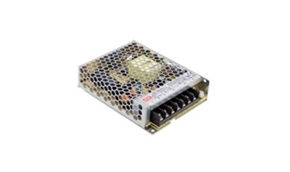
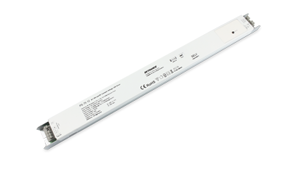
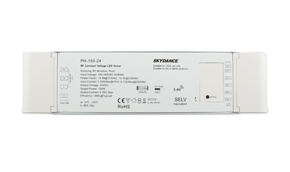
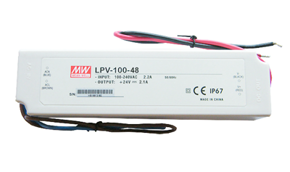
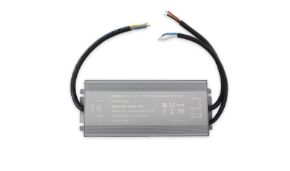
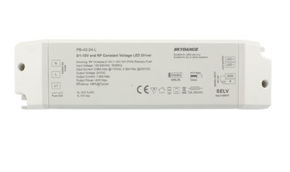
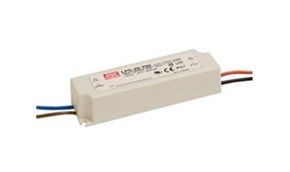
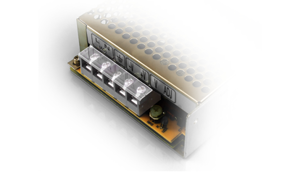
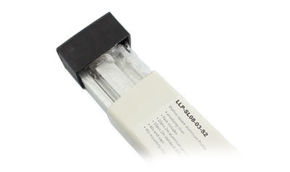
The power supply is the real aesthetic bottleneck of an LED system in a fast renovation. Traditional power supplies, with their parallelepiped shape of 40-50 mm height, required dedicated niches, technical compartments, false ceilings. Mean Well SLD series (Slim Linear Design) power supplies completely change the game: designed with a linear and ultra-thin shape, they hide in millimeter cavities, behind furniture, inside existing cabinets, along decorative skirting boards.
Technical characteristics of SLDs
Mean Well power supplies guarantee flicker-free output (absence of flicker perceptible by the eye and cameras), high efficiency, dimmability on multiple protocols (DALI, 0-10V, push, TRIAC depending on the model), and a form factor that makes them installable without structural modifications. They are the ideal complement for any easy renovation where aesthetics count as much as function.
Strategic positioning of the power supply
In a fast renovation, the power supply should be positioned as close as possible to the load (the LED strip), to minimize voltage losses and simplify wiring. Typical positions are: inside the existing electrical box (if of adequate size), above a kitchen wall cabinet, inside the bathroom cabinet, in a compartment above the door, inside the coordinated skirting board.
9. Color rendering CRI >90 and Sunlike: the detail that makes the difference
Color rendering is the parameter that, more than any other, separates an economical renovation from a quality renovation. Measured by the CRI (Color Rendering Index) on a scale from 0 to 100, it describes how faithfully a light source reproduces colors compared to natural light.
Why CRI matters in a renovation
In a renovation, every finish (the parquet wood, the bathroom marble, the sofa fabric, the burnished metal of a handle) has been chosen for its appearance under natural light. An LED source with low CRI (70-80) impoverishes these materials, makes them flat, dull, sometimes shifts tones towards the unpleasant. A source with CRI >90, and even more with CRI >97 of the Sunlike series, returns materials with the same fidelity as the sun.
Color temperature: the design choice
| Kelvin | Appearance | Recommended use |
|---|---|---|
| 2700K | Intense warm white | Bedroom, relaxation |
| 3000K | Warm white | Living room, entrance, bathroom |
| 4000K | Natural white | Kitchen, study, work |
| 5000K+ | Cool white | Technical use, laboratories |
10. Real costs of fast renovation with LED profiles
We now address one of the most recurring questions: how much does fast renovation with LED profiles cost compared to traditional renovation with drywall false ceiling? The following data derive from projects actually followed by professionals who rely on Ledpoint for LED supply.
Cost comparison for a typical living room (25 sqm)
| Item | Drywall + traditional LED | Surface LED profiles |
|---|---|---|
| Structural material | €450-700 | €180-280 |
| Installation labor | €900-1400 | €250-400 |
| Plastering and finishes | €350-550 | €0 |
| Chases and restorations | €300-500 | €0 |
| Strips + power supplies | €200-350 | €250-400 |
| Total | €2,200-3,500 | €680-1,080 |
| Construction time | 10-15 days | 1-2 days |
Cost per square meter
For a 100 sqm apartment, a complete traditional renovation with drywall false ceilings and wall chases stands between €900 and €1,600/sqm. The same renovation in fast mode with surface LED profiles typically drops to €600-1,100/sqm, with a 25-35% saving and construction times reduced by over 60%.
What can be renovated with 50,000 euros
With a budget of 50,000 euros, in fast renovation mode, it is realistically possible to undertake the complete renovation of a 70-90 sqm apartment, including bathroom, kitchen, floors, electrical and hydraulic systems exposed or in trunking, painting and a professional linear lighting system.

11. Average times: how long does fast renovation really take
Time is the most underestimated variable in a renovation. A well-planned fast renovation, on an 80-100 sqm apartment, closes in 25-45 days of actual construction site, compared to 90-150 days of a traditional renovation. The weeks saved translate into recovered rental income, less discomfort for the family, less exposure to disputes and delays.
Typical schedule
| Phase | Duration |
|---|---|
| Dismantling and light demolitions | 2-4 days |
| Electrical and hydraulic systems | 5-8 days |
| Floors and coverings | 6-10 days |
| Painting | 3-5 days |
| Surface LED profile installation | 1-2 days |
| Sanitary ware and finishes assembly | 3-5 days |
| Cleaning and delivery | 2 days |
12. Use cases by environment: bathroom, kitchen, living room, terrace, attic
We now move on to address how fast renovation with LED profiles lends itself to all environments, with specific considerations for each.
Complete bathroom renovation without construction work
A complete bathroom renovation in fast mode starts with quick-adhesive coverings or decorative panels, wall-hung sanitary ware with metal frame, ultra-slim LED profiles above the mirror and along the shower. For fast bathroom renovation, an IP65 profile is recommended in areas subject to steam, with 3000K COB strips to faithfully reproduce skin tones.
Kitchen
Under-cabinet, backsplash, countertop, island: every surface can host a surface LED profile. The kitchen is one of the environments where fast renovation gives the most spectacular results, because it eliminates the need to drill wall cabinets to bring cables.
Terrace and outdoor renovation
For terrace renovation, IP65/IP67 LED profiles with outdoor strips allow transforming railings, planters, flooring into luminous elements without construction work. The effect is scenic and the investment contained.
Attic and loft renovation
Attic renovations benefit enormously from under-beam LED profiles: continuous lines of light that enhance the geometry of the sloped roof, without having to intervene on wooden beams with chases or invasive brackets.
Basement and cellar renovation
In cellar renovation and basement renovation, where natural light is scarce or absent, COB LED profiles with high color rendering allow recreating comfortable visual conditions, transforming technical environments into livable spaces.
Entrance and hallway renovation
In entrance renovation, LED profiles recessed in the floor or on the wall along the perimeter create a welcome effect that guides the gaze and illuminates without encumbrance. For hallways and narrow corridors, linear ceiling or skirting board profiles visually expand the space and solve passage lighting without having to break walls for new electrical chases, ideal for fast and economical corridor renovation.
Bedroom renovation
For bedroom renovation, LED profiles find space in the headboard, under the bed or along the perimeters of the false ceiling: indirect light adjustable in intensity and color temperature (from 2200K for relaxation to 3000K for reading) that transforms the room's atmosphere without the need for construction work, with simple surface fixing or recessing on existing drywall.
Study and home office renovation
In study renovation, desk or monitor LED profiles (with clip attachment) guarantee targeted and anti-fatigue lighting, while ceiling profiles with asymmetric optics eliminate shadows on work surfaces. Installation is very fast: just fix the profile with the snap system or with 3M double-sided tape, without tracing new electrical lines.
Staircase renovation
In staircase renovation, LED profiles recessed under each step or along the handrail ensure safety and aesthetic impact, with motion sensors for automatic activation. The absence of invasive work (they are fixed with structural glue or screws on existing surfaces) makes the intervention achievable in a few hours, even on wooden or marble stairs.
13. Renovation and real estate value: how much light matters
A datum often underestimated by real estate consultants: the quality of integrated lighting affects 5-12% of the sale value of a renovated property. An apartment with well-designed architectural LED profiles is perceived as a "quality turnkey renovation", regardless of the actual cost of materials.
Which renovations increase value the most
In order of impact: completely redone bathroom, new concept kitchen, compliant electrical system with architectural lighting, homogeneous floors throughout the apartment, high-performance windows. Light, alone, is one of the items with the best investment/revaluation ratio.
14. Sustainability, energy efficiency and sustainable building renovation
Sustainable building renovation is no longer a niche, it is an expected standard. Quality COB LEDs exceed 160 lm/W of luminous efficiency and have an L70 useful life beyond 50,000 hours. Replacing traditional lighting with an LED system during renovation reduces lighting consumption by 80-90%.
Sustainable building renovation and bio-building
Aluminum profiles are 100% recyclable, LEDs do not contain mercury, the absence of drywall eliminates the production of construction waste at end of life. All this translates into a low-impact construction site and a building with better performance in the life cycle.
15. Mistakes to avoid: checklist
Here are the most common mistakes we observe in fast renovation construction sites and that should be avoided, let's see what they are.
- Undersizing the power supply: the rule is to load it at 70-80% of its nominal power to ensure useful life.
- Choosing SMD strips instead of COB in ultra-slim profiles: the dotted effect is inevitable.
- Neglecting CRI: a quality renovation cannot go below Ra 90.
- Installing the profile without structural double-sided tape: risk of detachment over time.
- Forgetting dimmability: providing for it during design costs very little, adding it later requires redoing everything.
- Not agreeing with the electrician on the exact position of the power supplies before laying finishes.
FAQ — Frequently asked questions about fast renovation
What permits are needed to renovate a house?For most light building renovation interventions, CILA is sufficient, submitted by a qualified technician. For more significant interventions that modify shape, volumes or intended use, SCIA or Building Permit are required. Fast renovation with surface LED profiles almost always falls under CILA. |
What is meant by fast renovation?Fast renovation is a set of construction interventions carried out with dry techniques, modular materials and surface LED linear lighting, which produce a result equivalent to traditional renovation but in times reduced by 60% and with costs 25-35% lower, eliminating drywall and wall chases. |
What VAT applies to renovation work?On building renovations of properties with prevalent private residential use, reduced VAT at 10% applies to services and, within certain limits, also to significant goods supplied as part of the intervention. For non-residential properties, the ordinary rate applies. |
What incentives are there for home renovation in 2026?The renovation bonus confirms the IRPEF deduction in ten equal annual installments on documented expenses for extraordinary maintenance and building renovation interventions. Rates and ceilings are subject to regulatory updates: always verify with an accountant or on the Revenue Agency website. |
How much does renovation of a 100 sqm apartment cost?A complete traditional renovation of 100 sqm stands between €90,000 and €160,000. The same renovation in fast mode with surface LED profiles drops to €60,000-110,000, with a construction site of 30-45 days instead of 90-150. |
Which renovation work can be done by yourself?Painting, sanitary ware replacement, installation of adhesive or floating floors, assembly of surface LED profiles with 24V low voltage power supply can be carried out by the owner. 230V electrical systems must be carried out by a qualified electrician with declaration of conformity. |
Is home renovation convenient in 2026?Yes, especially in fast mode. The real estate value of a quality renovated apartment grows by 12-25%, tax incentives cover a significant portion of the investment, and reduced times contain indirect costs such as renting a transitional home. |
Why avoid drywall false ceiling with LED?Drywall false ceiling with LED involves metal framing, sheets, plastering, smoothing, painting: 7-15 additional days of construction site, fine dust, high costs. Surface LED profiles produce the same architectural effect in a few hours, without dust and with 60-70% savings. |
What can be renovated with 50,000 euros?With 50,000 euros, in fast renovation mode, you can undertake the complete renovation of a 70-90 sqm apartment: bathroom, kitchen, floors, systems, painting and professional linear lighting. With traditional renovation, the same budget typically covers 40-55 sqm. |
Why choose COB LED strips instead of SMD?COB LED strips offer a continuous luminous line without the unsightly dotted effect of SMDs. In ultra-slim profiles 5-8 mm high, where the distance between LED and screen is minimal, only COB technology guarantees absolute uniformity and quality renovation quality. |
Fast renovation: a matter of method.
Modern renovation is no longer a matter of masons and drywall installers: it is a matter of method, of component selection, of planning. An easy, fast, economically predictable renovation is today possible thanks to the combination of dry techniques and surface linear lighting. Ultra-slim aluminum profiles, high-density COB LED strips, hidden power supplies, CRI >90 or Sunlike sources: this is the operational kit that transforms any renovation into a quality renovation. Discover the full range of Ledpoint products and request a personalized quote for your next renovation construction site.