





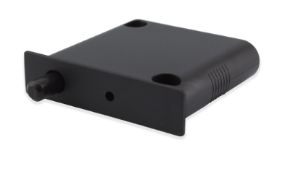
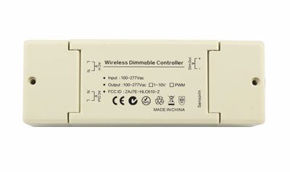
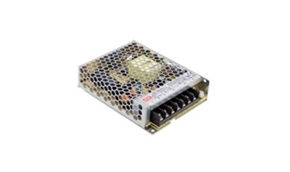
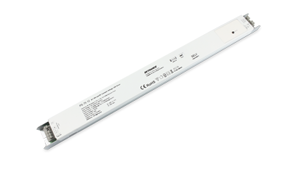
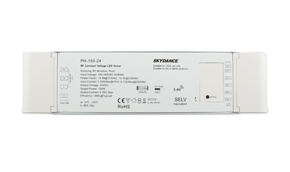
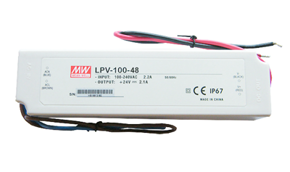
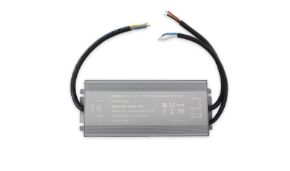
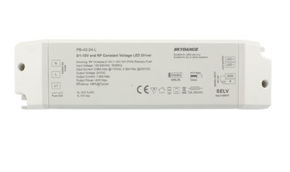

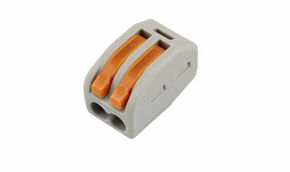
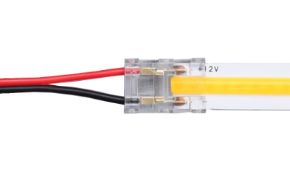
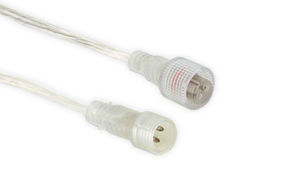
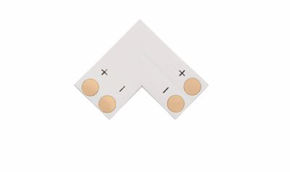
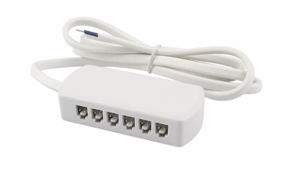

Custom LED panels are lighting solutions designed to measure based on a drawing, layout, or prototype provided by the client. Ledpoint transforms that project into a finished, wired, and installation-ready product, maintaining the requested dimensions, geometry, and light source arrangement, with double quality control before and after arrival at the warehouse.
When a lighting project goes beyond standard formats, the real question is no longer which product to buy, but who is capable of manufacturing exactly what I have designed. This is where the logic of catalog LED panels gives way to made-to-measure manufacturing. A retailer, an interior designer, a construction company, or an industrial technical office needs the light to adapt to the space, and not the other way around. This article explains, step by step, how custom made-to-order production works, what is needed to start it, how quality is controlled, and why the Ledpoint method reduces the risks typical of large supplies, both in Italy and in European and non-European markets.
In this article...
What are custom LED panels
Before talking about large orders and prototypes, it is worth clarifying the basic concept. In common language, a panel refers to a flat and uniform lighting fixture, whereas in the practice of made-to-measure production, the term becomes much broader and includes luminous surfaces of any shape, thickness, and light source arrangement. Understanding this difference is the first step to truly leveraging made-to-order manufacturing.
Technical definition and difference from catalog models
An LED panel is a lighting fixture in which one or more diode sources emit light through a diffusing surface, typically to achieve a wide, soft, and glare-free emission. In standard models, everything is predefined: dimensions, wattage, color temperature, optics. In a custom LED panel, however, these parameters are decided during the design phase. You do not choose from pre-packaged options: the fixture is built around the real needs of the space, the client, and the destination regulations.
The distinction is not trivial. A catalog product is born for the mass market and forces the project to adapt to its measurements, whereas a custom LED panel reverses the relationship: it is the light that adapts to the project. This matters especially when the constraint is not aesthetic but dimensional or functional: a suspended ceiling with non-standard modules, an architectural niche, a sales counter with an irregular geometry, an industrial machine requiring integrated lighting.
How an LED panel is made and how it works
Regardless of the format, the anatomy is consistent. An LED luminous panel is composed of a few key elements which, in the custom version, are selected one by one. The following table summarizes the main components and their role.
| Component | Function | What changes in custom |
|---|---|---|
| LED sources (strips or modules) | Generate light | LED density per meter, chromatic binning, flux per channel |
| Circuit and wiring | Distributes current and signal | Wiring layout according to the client's prototype |
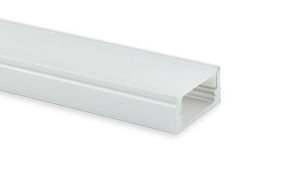
| Support / substrate | Load-bearing structure and heat dissipation | Shape, thickness, material, fixing points |
| Diffuser / optics | Uniforms and directs the beam | Transmittance, opal/prismatic finish, UGR |
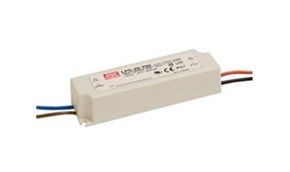
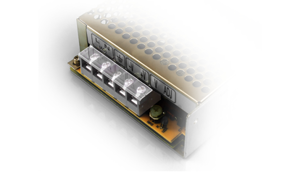
| Power supply (driver) | Converts and stabilizes the power supply | Market grid voltage, dimmability, protections |
The operation is simple to explain and sophisticated to optimize: LED panels convert electrical energy into light with minimal losses, dissipating the little residual heat through the support. The perceived quality (absence of flicker, uniformity, color rendering, visual comfort) depends on the balance between these components, and this is exactly what made-to-measure manufacturing allows you to calibrate rather than endure.
Types of LED panels: edge-lit, backlit, and custom surfaces
Not all panels are the same in how they distribute light, and understanding the difference helps in choosing the correct approach during the design phase. The two classic architectures are edge-lit and backlit, to which is added the entire world of luminous surfaces made directly with LED strips arranged according to a free layout.
In the edge-lit solution, the LEDs are positioned on the edges and the light is distributed across the entire surface by a light guide plate: the result is a very thin and uniform fixture, appreciated when thickness is a constraint. In the backlit solution, the LEDs are distributed across the entire rear surface: this achieves higher flux, better uniformity over large sizes, and often a better cost/performance ratio. In made-to-measure manufacturing based on strips, finally, the arrangement of the sources follows exactly the client's design, allowing geometries that no standard panel can replicate. The choice between these approaches is not ideological: it depends on the available thickness, required flux, budget, and above all, the effect the project wants to achieve.
Why build quality makes the difference
With the same appearance, two LED panels can behave very differently over time. The difference is made by details that are not visible to the naked eye on the first day, but which emerge after months of operation. This is where a controlled supply beats a bargain purchase.
The decisive factors are thermal management (an LED that runs cooler lasts longer and maintains its color better), the quality of the power supply (on which stability, absence of flicker, and system life depend), the chromatic consistency between pieces (the so-called binning, crucial when many panels are placed side by side), and the solidity of the connections. In made-to-measure manufacturing, these aspects are not left to chance: they are defined in the specification and verified in the controls, which is exactly what distinguishes a managed order from an improvised supply.
From prototype to finished product: the made-to-order method
The heart of custom production is not having more models, but knowing how to read a client's idea and bring it to the creation of an industrial object replicable on a large scale. Many companies know how to sell a catalog, but few know how to manage an order that starts from a sheet of paper, a rendering, or a working prototype. This paragraph describes the logic behind the Ledpoint service.
The starting point: project, drawing, or prototype
A made-to-measure supply can arise from three different inputs, and Ledpoint works with all three. The first is the technical project: dimensions, wattages, color temperature, installation constraints. The second is the drawing or rendering: an aesthetic idea to be translated into an electrical and photometric specification. The third, the most concrete, is the physical prototype: a sample made by the client, showing the desired arrangement of the sources.
The prototype is valuable because it eliminates ambiguities. A drawing can be interpreted in many ways, whereas a prototype says exactly where the light must be, how the strips are connected, and what distances to respect. Ledpoint's task is to preserve that logic by transforming it from an artisanal object into a repeatable, stable, and certifiable product.
Why made-to-order production is advantageous for large supplies
For small quantities, catalog purchasing often remains the fastest choice. For large orders, the reasoning changes, and the reasons are economic even before they are technical. Below are the concrete advantages that make made-to-measure manufacturing competitive on large volumes.
| Aspect | Standard catalog | Custom made-to-order LED panels |
|---|---|---|
| Adaptation to space | The project adapts to the product | The product adapts to the project |
| Cost per unit (large volumes) | Fixed, with multiple distribution margins | Optimizable thanks to dedicated production |
| Aesthetic consistency of the batch | Variable between supplies | Binning and specifications controlled on the batch |
| Spare parts and continuity | Linked to the commercial life of the model | Archived and reproducible specification |
| Lead times on non-standard sizes | Often impossible | Managed as part of the process |
The least obvious but most important benefit concerns risk. In a large supply, an error discovered only on-site costs much more than the price difference between a standard and a made-to-measure product. The made-to-order method shifts controls upstream, where correction costs little.
Lead times, logistics, and order management
A made-to-measure supply is not just a matter of product: it is a project with lead times and logistics to manage. Ignoring its organizational dimension is one of the fastest ways to turn a good idea into a delay. For this reason, planning is an integral part of the service.
Lead times depend on layout complexity, quantities, and certification requirements, but the management logic is constant: first the sample is validated, then batch production is scheduled, and finally controls, warehousing, and delivery are organized. Agreeing on a realistic timeline from the start avoids the final rush, which is often the hidden cause of defects. On multi-delivery orders, the ability to stagger supplies according to site progress counts, so the material arrives when needed and not earlier, reducing stock and risk of damage. In this regard, proximity to production sites and a warehouse that acts as a quality filter make the difference between a predictable delivery and a series of unforeseen events.
Case study: from connected LED strips to an installation-ready panel
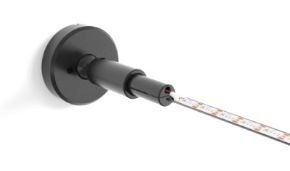
Theory becomes clear with a real example. In this order, the client did not arrive with a generic request, but with a working prototype: a set of LED strips connected to each other according to a precise arrangement, designed to achieve a certain lighting effect on a defined surface. The stated goal was simple to state and delicate to achieve: to obtain the same result as the prototype, but in a finished, robust, and mass-installable product.
The problem brought by the client
A prototype of hand-connected LED strips answers the question of what effect I want but leaves all industrial questions open: how to fix it stably, how to protect the wiring, how to guarantee that the hundredth piece is identical to the first, how to power it safely according to the regulations of the destination country. The value of made-to-measure manufacturing lies precisely in bridging the gap between the artisanal sample and the repeatable product.
The solution created by Ledpoint
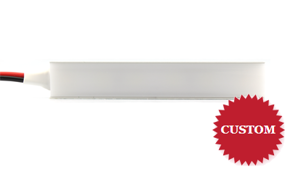
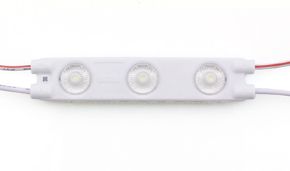
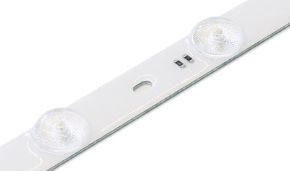
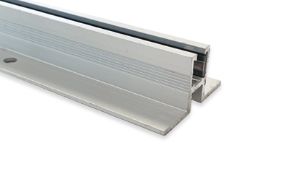
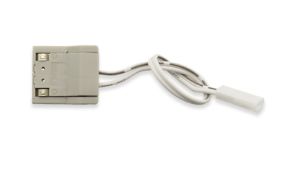
The delivered result is a ready-to-use LED panel that faithfully maintains the arrangements given by the client: the strips are integrated into a stable support, the wiring is neat and protected, the connection points are standardized, and the whole is designed to be simply fixed and connected, without further processing on-site. In other words, the installer receives a finished and verified object, not a kit to assemble.
This step (from connected strips to finished panel) summarizes the entire service: the client brings the idea and the arrangement, Ledpoint returns an industrial product consistent with that design, verified at departure and rechecked upon arrival. It is the same principle that applies, with due proportions, to supplies of a few dozen or several thousand pieces.
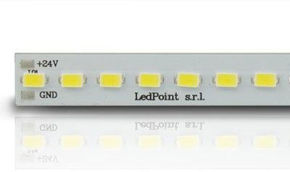
An LED mini-panel was created:
What this case study teaches
Beyond the single project, this experience highlights three lessons valid for any client. The first is that a prototype is worth a thousand words: providing a sample, even a rough one, drastically reduces the risk of misunderstandings and shortens the path to the right product. The second is that repeatability is the true industrial problem: making one piece work is easy, making a thousand identical ones work is what requires method, control, and documentation.
The third lesson concerns the value of the installation-ready product. Delivering an LED panel already wired, tested, and standardized in its connectors shifts the complexity from the construction site to the production phase, where it is easier and less expensive to manage. For the installer, it means certain lead times and fewer margins for error, while for the client, it means a project that respects deadlines and budget. It is an advantage that is especially appreciated when the pieces are not just one, but hundreds.
The stages of made-to-measure manufacturing
A well-managed custom order is not improvisation, but a process in defined stages where each phase reduces the uncertainty of the next. Knowing this path helps the client understand what information to prepare and at what moments key decisions are expected. Below is the typical flow of a made-to-measure LED panel supply.
The seven steps, from briefing to delivery
The path is linear, but each step has a precise technical objective. The following sequence is the one Ledpoint applies to large orders.
- Analysis of the project or prototype: dimensions, source layout, photometric requirements, and installation constraints are acquired. If a prototype exists, it becomes the primary reference.
- Translation into technical specification: the client's idea is converted into measurable parameters: flux in lumens, power in watts, color temperature in kelvins, CRI, IP rating, supply voltage.
- Definition of the bill of materials: strips or modules, diffuser, support, driver, and connectors consistent with the specification and destination market are chosen.
- Sampling and validation: a compliant sample is created, verified to reflect the prototype, and the client's formal approval is collected.
- Batch production: with the approved sample as a reference, mass production begins while keeping the validated parameters constant.
- Quality control at origin: verification of the product before departure to the warehouse (details in the dedicated paragraph).
- Sample verification in the warehouse and delivery: new sample testing upon arrival, then shipment to the client with technical documentation.
The advantage of this scheme is that sample approval locks the variables: from that moment on, every produced piece must correspond to a shared reference. This is how a supply of thousands of panels maintains chromatic and dimensional consistency from the first to the last piece.
Ledpoint's double quality control
The quality of a large supply is not declared, it is verified: and it is verified twice. The difference between a reliable supplier and an improvised one does not lie in the product when everything goes well, but in what happens when something can go wrong. For this reason, the Ledpoint model provides for two distinct inspection moments, in different places and times.
First control: verification at origin, before departure
Ledpoint maintains close and direct contact with the main production sites and focuses great attention on verifying product quality at departure, before it arrives at the warehouse. This means that controls do not only take place at the end of the chain, but at the point where a problem can still be corrected without impacting the client's lead times and costs. Proximity to production is not a logistical detail: it is what allows intervention on the batch while it is still being processed.
In this phase, the aspects that, if wrong, would compromise the entire order are verified: correspondence with the approved sample, chromatic consistency between pieces, tightness of connections, integrity of wiring, power-on operation, dimensional compliance.
Second control: sample testing in the warehouse
The compliant product is not taken for granted. Once it arrives at the warehouse, it is tested again on a sample basis: units are taken from the batch and functional checks are repeated to intercept any critical issues related to transport or defects not emerged at origin. This second inspection is a safety net independent of the first and closes the circle before the material reaches the client or the construction site.
| Control | Where | When | What it protects |
|---|---|---|---|
| Verification at origin | At the production site | Before departure | Batch compliance, upstream correction |
| Sample testing | In Ledpoint warehouse | Upon arrival | Transport defects, independent control |
Two controls at two different times drastically reduce the probability that a defect reaches the construction site. For those managing a large order, this translates into fewer returns, fewer installation stops, and a much flatter risk curve.
Batch traceability and documentation
Quality control does not end with the inspection: it is completed with documentation. On a large supply, knowing what has been produced and with what specifications is as important as the product itself, because it is what guarantees continuity over time. The technical specification validated on the sample becomes the archived reference of the batch.
This has three very concrete practical consequences:
- First, reproducibility: if the client needs a replenishment or spare parts months later, the archived specification allows replicating the same product without visible differences.
- Second, consistency between batches: future expansions and integrations remain chromatically and dimensionally aligned with the original.
- Third, exception management: if a problem emerges on-site, the documentation allows quickly tracing back to the cause and circumscribing the intervention.
In a word, traceability transforms a supply into an ongoing relationship, not a one-off delivery.
The technical specifications we define together
Customizing does not mean choosing at random: it means consciously deciding every parameter that influences performance, comfort, and lifespan. In made-to-measure manufacturing, these values are not imposed by the catalog, but agreed upon based on real use. It is worth knowing them, because they are the same numbers that appear in specifications and requests for proposals.
The parameters that really matter
The following table collects the fundamental quantities of an LED panel, with their practical meaning and typical indicative values. They are the explicit criteria on which any serious comparison is built.
| Parameter | Unit | Practical meaning | Typical indicative values |
|---|---|---|---|
| Luminous flux | lumen (lm) | How much light it emits | 3,000–6,000 lm per 60x60 panel |
| Illuminance | lux (lx) | Light reaching the work plane | 300–500 lx offices; 200–300 lx corridors |
| Power | watt (W) | Electrical consumption | 25–40 W per 60x60 |
| Luminous efficacy | lm/W | Light per watt consumed | 100–150 lm/W in modern solutions |
| Color temperature | kelvin (K) | Light tone | 3000K warm; 4000K neutral; 6000K cool |
| Color rendering | CRI (Ra) | Fidelity of illuminated colors | ≥80 standard; ≥90 retail/museum |
| Protection rating | IP | Resistance to dust and water | IP20 indoor; IP44–IP65 harsh environments |
| Lifespan (lumen maintenance) | L70/L80 | Hours before light decay | 30,000–50,000 h and beyond |
| UGR | index | Glare control | <19 for offices and VDTs |
In custom production, these values are set based on the application: a panel for an office with VDTs prioritizes low UGR and 4000K, a retail display case focuses on high CRI; a humid environment requires an adequate IP rating. Defining the right numbers during the design phase avoids costly oversizing and dangerous undersizing.
Uniformity, flicker, and visual comfort
Some parameters do not always appear on datasheets but greatly impact the real experience.
- The first is uniformity: a luminous surface must illuminate homogeneously, without hot spots or dark areas. This is one of the reasons why the arrangement of the sources (and therefore the made-to-measure manufacturing based on the client's layout) is so decisive.
- The second is flicker: rapid oscillations of the luminous flux, often imperceptible at a conscious level, which can cause visual fatigue and headaches after prolonged exposure. A quality system, with an adequate power supply, keeps flicker at very low levels.
- The third is glare control (UGR): essential where people work for long periods or in front of screens.
Visual comfort is not an aesthetic luxury: it is productivity, safety, and well-being, and in a made-to-measure product it can be optimized rather than endured.
Color temperatures and their effect
Color temperature deserves an in-depth look because it is the choice that most impacts the perception of a space. The table summarizes the main tones and their typical applications.
| Temperature | Perception | Where it is typically used |
|---|---|---|
| 2700–3000K (warm) | Welcoming, relaxing | Homes, hotels, restaurants, warm retail |
| 4000K (neutral) | Clear and natural | Offices, schools, healthcare, workspaces |
| 5000–6500K (cool) | Bright, energetic | Industry, warehouses, laboratories, outdoors |
In custom production, the color temperature can also be made adjustable (tunable white), so the same environment changes atmosphere throughout the day. It is an increasingly requested function in offices, healthcare, and hospitality, and must be planned from the design phase because it affects the choice of sources and controls.
How much light is needed: recommended illuminance per environment
One of the most common mistakes is sizing the light "by feel". Instead, there are consolidated reference values (also recalled by sector technical standards, such as UNI EN 12464 for indoor workplaces) which indicate the recommended illuminance based on the activity. The table summarizes some indicative values useful in the design phase.
| Environment / activity | Indicative illuminance (lux) | Notes |
|---|---|---|
| Corridors and transit areas | 100–150 lx | Comfort and safety |
| Common areas, reception | 200–300 lx | Welcoming |
| Offices, meeting rooms | 300–500 lx | UGR<19 with VDTs |
| Retail and sales | 300–750 lx | High CRI for products |
| Precision work | 750–1000 lx and beyond | Demanding visual tasks |
| Warehouses | 100–200 lx | Higher in picking areas |
Designing based on real illuminance, and not on installed power, is what avoids spaces that are too dark or uselessly over-illuminated. With a made-to-measure product, the flux of each LED panel can be calibrated to the correct value for that environment, optimizing comfort and consumption together.
Formats, geometries, and configurations
Standard formats exist for a reason: they cover most modular suspended ceilings and simplify purchasing and spare parts. But made-to-measure production is born exactly where formats end. This paragraph lines up the most requested configurations and explains when it is convenient to stay standard and when to step out of it.
From modular formats to non-standard sizes
The most common modular sizes arise from suspended ceiling systems. The table summarizes the typical formats and their most common intended use for ceiling and wall LED panels.
| Format (cm) | Typical use | Installation |
|---|---|---|
| 60x60 | Offices, standard modular suspended ceilings | Recessed, plasterboard, suspended |
| 120x60 | Large environments, extended luminous surfaces | Recessed or suspended |
| 120x30 | Corridors, linear surfaces | Recessed or surface-mounted |
| 30x30 | Compact light points, integrations | Recessed |
| Non-standard / shaped | Niches, backlighting, signs, architectural projects | Made-to-measure according to client layout |
Frameless versions, suspended ones with relevant kits, wall LED panels, and dimmable or adjustable light models all fall within the perimeter of customization. Backlit surfaces and decorative luminous panels (where the LED strip is integrated behind a diffuser to create a graphic or image effect) also start from the same principle: an arrangement of sources defined by the project and made stable and repeatable.
The role of LED strips in custom production
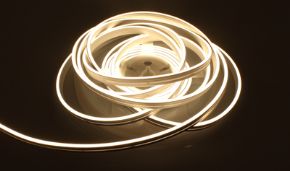
Many made-to-measure processes start from LED strips: high-density flexible tapes which, properly arranged and powered, become the source of the panel. This is the case of the project described above. Strips allow free geometries (lines, curves, contours, fillings) impossible with predefined rigid modules. Integration with plasterboard suspended ceilings, the creation of linear light cuts, and continuous ceiling systems almost always arise from this technology, which is why the ability to work with strips in a neat and reliable way is central to a custom supply.
Applications: where custom LED panels are used
A made-to-measure product only makes sense if it solves a real problem in a real context. This is why it is worth reviewing the environments where customization makes a difference, with the specific needs of those who design and install. In every scenario, the priority parameters change, not the method.
Offices and work environments
In offices, the priority is visual comfort: adequate illuminance on the work plane (typically 300–500 lux), controlled glare (UGR<19), and neutral color temperature around 4000K. Custom office LED panels allow adapting the format and position of light points to the actual floor plan, avoiding the shadow areas of standard layouts.
Retail, shops, and commercial spaces
In retail, light sells. A high color rendering (CRI ≥90) is needed to faithfully display products and materials, targeted light accents, and chromatic consistency among all fixtures. Here, customization allows integrating light into furniture, display windows, and counters, transforming lighting into part of the exhibition design.
Suspended ceilings, plasterboard, wall, and suspension
Architectural integrations are the ideal ground for custom production. LED strips in plasterboard suspended ceilings, linear light cuts, continuous surfaces, and wall LED panels require sizes and arrangements that rarely coincide with the standard. Made-to-order manufacturing allows respecting the exact geometry of the space, whether recessed or suspended with the relevant kits.
Industrial environments
In factories and warehouses, robustness, adequate IP rating, safety, and lifespan count. Replacing obsolete lighting with LED solutions reduces consumption and maintenance interventions thanks to the long service life. Custom production helps integrate lighting on machines, shelving, and work areas with specific requirements.
Architecture, backlighting, and special projects
Facades, signs, backlit surfaces, and decorative luminous panels push customization to the maximum: free shapes, images, graphic effects. In these cases, the project is almost always unique, and the only way is made-to-measure manufacturing starting from the client's drawing.
The needs of those who commission, market by market
Behind every supply there is a person with precise objectives, and these objectives change with the role and the country. Recognizing them helps set up the order well from the start. Here are the typical priorities of the main client profiles, with an emphasis on international differences.
The construction company seeks efficient and long-lasting solutions that reduce maintenance over the building's life; on multinational projects, it must deal with different voltages and certifications, and this is where a made-to-measure product, calibrated to the destination market, avoids costly on-site modifications.
The interior designer wants to customize the lighting and integrate it into the aesthetics: they are interested in color options, dimmability, and chromatic consistency, with tone preferences that vary between warm and cool markets.
The owner of an electronics store aims to differentiate the offer with innovative and reliable products and to communicate their technical characteristics well to customers.
The industrial maintenance manager must plan the replacement of obsolete lighting ensuring safety, long lifespan, and compliance, often across multiple plants in different countries.
The sustainability-oriented architect, finally, evaluates energy efficiency and environmental impact and needs to comply with local environmental regulations while communicating the concrete benefits of the LED choice to clients.
The common denominator is customization governed by a method: every profile gets what they need when the product is designed for their real case and verified before arriving on-site, regardless of the country of installation.
The LED panel market: why demand is growing
Understanding the market direction helps make more solid purchasing decisions, especially on large supplies that last for years. The overall picture is clear and consolidated: LED lighting has replaced traditional technologies as the reference standard, driven by efficiency, lifespan, and public energy-saving policies. Below are the structural factors supporting this demand, presented in qualitative terms and with typical indicative values of the sector.
The growth drivers
The push towards LED panels arises from the intersection of multiple forces acting in the same direction. The table lines them up with their practical effect on the purchasing choice.
| Driver | Effect | Consequence for the buyer |
|---|---|---|
| Energy efficiency | Much lower consumption for the same light | Lower bills, favorable ROI |
| High lifespan | Fewer replacements | Reduced maintenance, fewer stops |
| Energy-saving regulations | Phasing out of inefficient technologies | LED as the mandatory choice |
| Efficiency incentives | Reduction of initial investment | Faster payback (where available) |
| Demand for customization | Increasingly specific projects | Growth of made-to-measure manufacturing |
The most relevant data for the reader is not a market share percentage, but an underlying trend: demand is shifting from the generic product to the specific solution. More and more clients are not looking for just any panel, but that panel, with those sizes, that light, and that arrangement. It is exactly the ground of made-to-order production, and explains why the custom service has gone from exception to ordinary request in professional projects.
Traditional lighting in comparison: why there is no going back
The comparison with previous technologies clarifies the magnitude of the leap. Compared to traditional lamps, LED panels offer much higher efficiency, a service life an order of magnitude longer, instant switching on without warm-up times, absence of problematic components at end-of-life, and excellent performance in frequent switching on and off. In practice, every item that weighed on the operating costs of traditional lighting (consumption, replacements, maintenance) is significantly reduced with LEDs. It is this combination, rather than a single feature, that has made going back economically senseless.
International context: regulations and markets
A large order rarely stops at national borders, and what is obvious in one country may be non-compliant in another. Designing an LED panel intended for multiple markets means knowing voltage differences, markings, and consumption habits in advance. It is one of the areas where customization shows its value, because it allows adapting the product to the destination market right from the specification.
Grid voltages and power supply
The first crossroads is electrical. Much of Europe adopts 220–240V / 50Hz grids, while several non-European markets (for example North America and parts of the American continent) operate at 110–120V / 60Hz. A driver sized for one market is not automatically suitable for the other. In custom production, the choice of the power supply is made based on the destination country, avoiding improvised adaptations on-site.
Markings and compliance
Every market has its own rules for placing products on the market. In the European Union, the CE marking is the reference, with relevant product and photobiological safety standards; there are also voluntary quality marks recognized by the market. Outside the EU, different schemes apply, with their own certifications and energy labels. The practical rule is simple: compliance must be decided in the design phase, not verified afterwards, because it affects the choice of components.
| Aspect | EU Markets | Many non-EU markets |
|---|---|---|
| Grid voltage | 220–240V / 50Hz | Often 110–120V / 60Hz |
| Main marking | CE | Dedicated national/regional schemes |
| Energy label | EU classes | Different local systems |
| Color temperature preference | Often 3000–4000K | Variable, sometimes cooler tones |
Cultural and climatic preferences
Besides regulations, habits count. The perception of the "right light" varies: some markets prefer warm and enveloping tones, others cooler and brighter lights. Climate also plays a role, because hot-humid environments require greater attention to the IP rating and thermal management. A made-to-measure product can be calibrated market by market without multiplying warehouse codes, maintaining a single design logic.
Efficiency, lifespan, ROI, and costs
Those who buy in quantities do not only look at the purchase price, but the total cost over time. A well-designed LED panel costs a bit more at the beginning and much less over its entire service life. This paragraph puts numbers at the center, because this is how an investment is justified in front of a property owner or a purchasing department.
Why LED is convenient: the numbers
The economic advantage of LED arises from three levers: it consumes less, lasts longer, and breaks down less. The table broadly compares an LED solution with traditional lighting, for the same amount of light produced.
| Item | Traditional lighting | LED Panels |
|---|---|---|
| Luminous efficacy | Low (much energy into heat) | High (100–150 lm/W) |
| Service life | Limited (frequent replacements) | 30,000–50,000 h and beyond |
| Electrical consumption | High | Reduced (up to −50/−70% typical) |
| Maintenance | Frequent | Rare |
| Purchase cost | Lower | Higher, amortized over time |
How to calculate the return on investment
The ROI of a lighting renovation intervention depends on three factors: annual energy savings, reduction of maintenance costs, and operating hours. In high-use contexts (offices, retail, industry), the return is faster, because more hours turned on mean more accumulated savings. The calculation logic is this: the higher the usage, the sooner the initial price difference is paid off.
Costs and incentives
The cost of a custom supply depends on volumes, layout complexity, chosen components, and certification requirements. On large numbers, dedicated production allows optimizing the cost per unit. On the incentives front, many countries provide energy efficiency concessions that can reduce the outlay: conditions vary by territory and over time, so they must be verified case by case with a tax or technical consultant in the reference country.
A practical example of savings calculation
Abstract numbers are not very convincing: a simplified example helps understand the order of magnitude. Let's imagine an environment with many light points turned on for most of the working day. By replacing traditional fixtures with modern efficiency LED panels, the consumption per light point is significantly reduced, and over dozens or hundreds of fixtures, the savings multiply.
The reasoning to follow is always the same, in four steps:
- how many fixtures and how many hours turned on per year;
- how much the power per fixture drops when switching to LED;
- how much that savings is worth at the local energy cost;
- how much is also saved in avoided replacements and maintenance over the service life.
The sum of these effects, compared with the higher initial cost, gives the payback period. In high-use environments, the payback is typically short, because every hour of operation works in favor of the investment. It is also the reason why offices, retail, and industry are the contexts where LED renovation offers the most immediate economic advantages.
How to commission a custom LED panel supply
Arriving prepared for the first request for proposal shortens lead times and improves the result. You don't need to be a lighting designer: a few clear pieces of information are enough to put the supplier in a position to propose the right solution. This paragraph works as an operational checklist for those who need to start an order.
The evaluation criteria for an LED panel
Before comparing offers, it is advisable to set the criteria. They are the same ones that a serious specification puts in black and white. Applying them to every proposal makes the comparison objective.
| Criterion | Question to ask | Why it matters |
|---|---|---|
| Efficiency (lm/W) | How much light per watt? | Determines consumption and ROI |
| Lifespan (L70/L80) | After how many hours does the light decay? | Replacement frequency |
| Color rendering (CRI) | Are colors faithful? | Crucial in retail and museums |
| Comfort (UGR) | Does it glare? | Mandatory in offices |
| IP rating | Where will it be installed? | Safety and reliability |
| Compliance | Does it comply with market regulations? | Legal placing on the market |
| Batch repeatability | Is piece 1000 identical to the first? | Aesthetic consistency |
| Quality control | How many checks, and where? | Risk reduction on-site |
The information to prepare for the quote
To get a precise offer quickly, it is useful to collect in advance: drawing/layout or prototype of the desired effect, installation dimensions and constraints, quantities and lead times, destination market (for voltage and compliance), priority requirements (color temperature, CRI, dimmability, IP rating). The clearer the briefing, the more the sample will be spot on the first try, saving time for both parties.
Installation and maintenance
A good product poorly installed performs like a mediocre product. For this reason, made-to-measure manufacturing aims to deliver panels as ready as possible, reducing on-site operations. Here we summarize the installation principles and the few maintenance rules that keep LED panels efficient over time.
How to mount an LED panel
The methods change with the type of fixture, but the logical sequence is common. These steps serve as a general reference: for the single product, the provided instructions and local regulations always apply, and electrical work must be entrusted to qualified personnel.
- Safety first: turn off the power to the system before any operation.
- Preparation: check the recess seat, suspension structure, or wall surface according to the panel type.
- Fixing: anchor the panel with the provided systems (recess springs, suspension kits, wall brackets).
- Connection: connect the driver and power supply respecting polarity and diagram; in the custom product, connectors are already standardized.
- Testing: restore power and verify uniform lighting and absence of flicker.
How to clean and maintain LED panels
Maintenance is minimal. For cleaning, a soft, dry cloth or slightly dampened one is sufficient, with the panel turned off and cold, avoiding aggressive solvents and direct water jets on fixtures not designed for it. Thanks to the long lifespan, replacements are rare: when spare parts are needed, having the batch specification archived (as happens in made-to-measure supplies) guarantees aesthetic and technical continuity.
When it is convenient to replace existing lighting
For those managing the maintenance of a building or a plant, the practical question is: when is it worth intervening? Some signals are clear. A visible drop in brightness or a color that shifts over time indicates end-of-life sources. Flicker, uncertain switching on, or repeated failures signal power supplies or sources to be replaced. High electricity bills compared to the light produced reveal inefficient technologies still in service.
In these cases, replacing with LED panels is not just a repair, but an investment that pays off: less consumption, fewer interventions, more safety. Planning the replacement in phases, starting from the most intensely used environments, allows distributing the expenditure and measuring the benefits already from the first batches. Here too, a supplier capable of replicating the specification over time simplifies subsequent expansions.
Trends and innovations
LED lighting is not a stagnant sector: the way light is managed, integrated, and experienced is changing. Knowing the development directions helps design supplies that do not become obsolete in a few years. Here are the most relevant trends for those commissioning made-to-measure panels today.
Dynamic and adjustable light
Dimming and color temperature adjustment (tunable white) allow adapting the light to the time of day and the activity, with benefits for comfort and well-being. In custom production, this function is integrated right from the design, choosing consistent drivers and controls.
Smart and IoT integration
Smart lighting systems allow remote control, presence and brightness sensors, programmable scenarios, and integration with building management. The result is further energy savings and finer space management. A made-to-measure panel can be born already prepared for these controls.
Human Centric Lighting: light that follows people
An increasingly concrete trend is Human Centric Lighting, which adjusts intensity and color temperature to accompany the body's natural rhythms. In practice, cooler and more stimulating light in the central hours, warmer and more relaxing towards the evening. The benefit is not only aesthetic: it concerns concentration, well-being, and quality of stay in spaces. In offices, schools, healthcare, and hospitality facilities, this logic is becoming a design requirement, and a made-to-measure LED panel can be born already prepared to support it.
Efficiency and sustainability
The push towards higher efficiency (lm/W) and lower environmental impact continues: less consumption, more durable materials, design oriented towards long service life. For those designing with a sustainable approach, LED panels remain one of the most concrete levers to reduce electricity consumption related to lighting.
Why choose Ledpoint for a made-to-measure order
On a large supply, you don't just choose a product, you choose a partner and a method. The difference is seen in risk management, batch consistency, and the ability to transform an idea into a reliable industrial object. Here, in summary, is what Ledpoint brings to the table.
Method, proximity to production, and control
Ledpoint manufactures custom LED panels made-to-order starting from the project or prototype provided by the client, delivering a finished and installation-ready product. The distinctive value lies in the combination of three elements:
- close contact with the main production sites, which allows intervening on the batch while it is still being processed;
- quality verification at departure, before arrival at the warehouse;
- new sample testing in the warehouse, as an independent control before delivery.
It is a path designed to deliver compliant products to the construction site, not surprises.
Who the service is aimed at
The service is designed for construction companies seeking efficient and long-lasting solutions while reducing maintenance; interior designers who want customized lighting consistent with the project's aesthetics; retailers and electronics stores who want to differentiate their offer with made-to-measure products; industrial maintenance managers who must replace obsolete lighting with safe and low-consumption solutions; and sustainability-oriented architects who integrate LED light into low-impact projects. In all cases, the starting point is the same: your project or your prototype.
Sustainability and environmental impact
For a growing number of clients, light is not just a matter of costs, but of environmental responsibility. Designers and architects ask for solutions that reduce consumption and impact throughout the entire life cycle. LED panels respond well to this need, provided one thinks beyond the single bill.
Less energy, less waste
The first contribution to sustainability is direct: consuming less energy for the same light means fewer associated emissions. Added to this is the long lifespan, which reduces the frequency of replacement and therefore the amount of material entering and exiting over time. A well-designed system, with illuminance calibrated to real use, also avoids wasting light where it is not needed: an aspect that customization allows to control precisely.
Designing to last
The most sustainable choice is often the one that lasts. A made-to-measure, documented, and reproducible product favors targeted repairs and consistent expansions instead of completely replacing the system. Combined with smart controls (presence sensors, adjustment based on natural light, time scheduling), an LED panel system further reduces real consumption. For the sustainability-oriented architect, communicating these concrete benefits to the client is as important as achieving them.
Common mistakes to avoid in an LED panel supply
Learning from others' mistakes costs less than making them. On large orders, some oversights repeat regularly and produce delays, returns, and disputes. Knowing them in advance is the simplest way to prevent them, and explains why a structured method is worth more than a discount.
The five most frequent mistakes
Here are the most common traps and how well-managed made-to-measure production defuses them.
- Looking only at the purchase price: ignoring consumption, lifespan, and maintenance leads to choices that cost more over time. The correct evaluation is on the total cost.
- Underestimating chromatic consistency: panels placed side by side with slightly different tones ruin the result. Binning control on the batch avoids this.
- Not defining the destination market: discovering on-site that voltage or marking is not suitable blocks the project. They must be decided in the specification.
- Approving without a sample: starting production without validating a sample exposes you to surprises on the entire batch.
- Neglecting quality controls: relying on a single final check lets defects pass. Double verification drastically reduces the risk.
Each of these mistakes is prevented upstream, not corrected downstream. It is the reason why the value of a custom order is measured in the process, not just in the product.
Integrating LED panels into a plasterboard suspended ceiling
One of the most requested integrations concerns the plasterboard suspended ceiling, where LED strips and luminous surfaces create light cuts, illuminated frames, and continuous ceilings. It is a context where made-to-order sizing is almost always necessary, because the geometries follow the architecture and not a standard format.
The principles to respect are few but important: provide space for heat dissipation, guarantee accessibility for possible maintenance, correctly size the power supply, and take care of luminous continuity at the junction points, where discontinuities are most noticeable. Designing these details together with the supplier, instead of improvising them on-site, is what distinguishes a professional luminous ceiling from an approximate result.
Frequently asked questions about custom LED panels
The questions most often asked by companies, designers, retailers, and technical managers, collected here in a synthetic form. Each answer opens with a click.
What are custom LED panels?They are LED panels designed and produced to measure starting from a drawing, layout, or prototype provided by the client. Ledpoint manufactures them made-to-order maintaining the requested dimensions, geometry, and source arrangement, and delivers them finished and ready for installation. |
Can I start from my own prototype?Yes, and it is the ideal case. If you bring a prototype — for example LED strips connected according to a certain arrangement — Ledpoint uses it as a reference and transforms it into a repeatable, stable, and certifiable industrial product, consistent with the effect you have defined. |
How does quality control work on large orders?With a double verification. The first takes place at origin, before departure from the production site, thanks to close contact with production. The second takes place on a sample basis in the warehouse, upon arrival, as an independent control before delivery to the client. |
What formats are available?The most common modular formats are 60x60, 120x60, 120x30, and 30x30 cm, suitable for suspended ceilings and standard installations. Made-to-measure production also allows non-standard and shaped geometries, designed for niches, backlighting, and specific architectural projects. |
How to choose the right color temperature?It depends on the environment: about 3000K for a warm and welcoming light, 4000K neutral for offices and workspaces, 6000K cool where maximum brightness is needed. In custom production, the color temperature is defined based on real use and the destination market. |
Are LED panels suitable for multiple foreign markets?Yes, if designed for the destination market. Above all, the grid voltage (220-240V in much of Europe, often 110-120V outside) and the required markings change. Customization allows calibrating power supply and compliance right from the specification. |
How long do they last and how much maintenance do they require?A quality LED panel indicatively offers 30,000-50,000 hours of service life or more, with contained flux decay (L70/L80). Maintenance is minimal: cleaning with a soft cloth with the panel turned off and cold, and rare replacements thanks to the long lifespan. |
What is needed to receive a quote?A few pieces of information are enough: drawing, layout, or prototype of the desired effect, installation dimensions and constraints, quantities and lead times, destination market, and priority requirements such as color temperature, CRI, dimmability, and IP rating. The clearer the briefing, the more the sample is spot on immediately. |
The winning choice
When a lighting project steps out of the standard, the winning choice is not to look for the product most similar to others, but to commission exactly what is needed to stand out in the market. Custom LED panels are born for this: to adapt the light to the space, the project, and the market, instead of bending the project to the limits of the catalog. The path (from prototype to specification, from sampling to batch, up to double quality control) is what transforms an idea into a reliable supply on large numbers.
The case study told in this article summarizes it well: from a prototype of hand-connected LED strips to a finished, wired, and installation-ready panel, consistent with the requested arrangement and verified before and after arrival at the warehouse. It is the way Ledpoint puts its method at the service of your project. Do you have a drawing, a layout, or a prototype? That is where we start.
Contact Ledpoint to evaluate your made-to-measure order, request a sample, or receive a dedicated quote.
This article was developed with the support of artificial intelligence and subsequently reviewed, corrected, and validated by the technical team of NaturNext.eu, which guarantees its reliability and compliance with official sources.