



LED lighting by sector: the 5 most used solutions in each sector
There is no single answer to the question "what are the best LED lights", because the choice changes radically depending on the sector of use. The LED lights used on a construction site have completely different requirements from those used in an operating room, in a livestock farm or on an advertising sign. In this guide we analyze 14 business sectors and, for each one, the 5 types of LED lights most used by professionals in the sector, with the technical characteristics that determine their suitability.
The aim is to offer a practical tool both for those working in the sector (to understand which LED lights to consider for a specific project) and for those involved in sales and consulting, to correctly guide the customer based on the real context of use.
In this article...
1. LED Lights for Furniture
In furniture, LED lights don't just illuminate: they become part of the furniture design itself, emphasizing shapes, materials and depth. The five most requested solutions in this sector are:
1. LED Strips for Furniture and Walk-in Closets
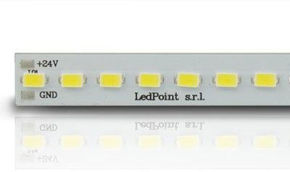
Flexible LED lights strips, often 12V powered and with twilight or motion sensors, are the most widespread solution for lighting walk-in closets, shelves and internal compartments without visible wiring.
2. Recessed LED Spotlights for Furniture
Small recessed spotlights, often adjustable, are used to selectively illuminate shelves, display cabinets and niches, with a discreet effect and high aesthetic impact.
3. Under-cabinet LED Bars
In the kitchen, linear under-cabinet LED lights ensure direct lighting of the work surface, generally at 3000-4000K for a good compromise between color rendering and visual comfort.
4. Linear LED Profiles for Wall Panels and Bookcases
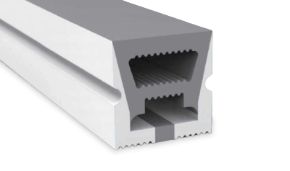
Aluminum profiles with integrated diffuser are inserted along the edges of wall panels and bookcases to create continuous lines of light, enhancing the depth of volumes without visible lighting fixtures.
5. RGB LED Lights for Accent Lighting
RGB or RGBW strips, often app-controllable, are used for atmospheric lighting in backlit furniture, wall panels and equipped walls, with the possibility of varying color and intensity according to the time of day.

2. LED Lights for Architecture
In architecture, LED lights are used to enhance volumes, facades and pathways, with a strong impact both during the day and at night on the perception of the building.
1. Outdoor Linear LED Bars for Facades
IP65/IP66 linear bars are installed along frames and architectural profiles to draw continuous lines of light on building facades.
2. LED Floodlights for Facade and Monument Lighting
Adjustable beam floodlights allow lighting vertical surfaces from bottom to top, often with RGB control for chromatic scenography on historical or monumental buildings.
3. Recessed LED Strips for Suspended Ceilings
LED strips recessed in flush-mounted ceiling profiles create continuous luminous borders, widely used in representative environments, lobbies and museum spaces.
4. Floor LED Lights (Walkover)
Walkable lighting fixtures, with reinforced diffuser, are used to mark outdoor paths and entrances with a ground-level scenic effect.
5. LED Lights for Scenic Lighting of Architectural Elements
Small punctual LED modules, often RGBW, are hidden in niches, cornices and architectural details to create light and shadow plays on the building surface.

3. LED Lights for Construction
On construction sites, LED lights must first and foremost guarantee robustness, resistance to impacts and weather, and quick installation even in temporary environments. In this context, LED strips and sealed profiles are the most versatile solution: they adapt to temporary structures, can be easily moved from one work area to another and allow lighting long sections with a single power line.
1. IP65/IP67 LED Strips for Construction Site Lighting
LED strips with IP65 or higher protection rating resist dust, humidity and splashes, ensuring large area lighting even in difficult environmental conditions, without the weight and complexity of traditional systems.
2. Sealed LED Profiles for Site Shacks and Offices
Aluminum profiles with gaskets and sealed diffuser offer reliable and long-lasting lighting in the temporary spaces of the construction site, where dust and humidity would quickly put unprotected lighting fixtures out of use.
3. Battery-powered LED Strips for Temporary Signaling
Battery-powered LED strips, easily attachable to barriers and delimitations, offer a flexible and wiring-free signaling solution, ideal for ensuring visibility and safety in the evening and night hours.
4. Outdoor LED Profiles for Delimiting Paths and Work Areas
High-resistance sealed profiles, installed along passages and operational areas, precisely delimit construction site paths, improving operator safety during movement.
5. High-power LED Strips for Long Sections and Tunnels Under Construction
24V LED strips, less subject to voltage drop, allow lighting long sections of construction sites or tunnels with a single continuous line, reducing the number of power supply points required.

4. LED Lights for the Marine Sector
In the marine sector, LED lights must resist salt spray, constant humidity and vibrations, while maintaining low consumption, a critical factor on board. LED strips, neon flex and sealed profiles represent the ideal solution for this sector, thanks to their installation flexibility on the curved surfaces typical of hulls and their high resistance to marine atmospheric agents.
1. IP67/IP68 LED Strips for Boat Exteriors
Completely resin-sealed strips, resistant to salt water, are installed in cockpits, decks and technical compartments exposed to the elements, without fear of infiltration.
2. Neon Flex for Perimeter and Running Light
Neon flex, thanks to its flexibility and mechanical resistance, adapts perfectly to the curved profiles of the hull and is used to outline edges, gunwales and guide lines for aesthetic and safety purposes during night navigation.
3. LED Strips for Cabin Interior Lighting
Low voltage strips, often dimmable, illuminate cabins and living areas on board with reduced current draw from the on-board battery.
4. Sealed LED Profiles for Cockpit and Technical Compartments
Aluminum profiles with gaskets and sealed diffuser protect the LED strip from humidity and salt spray, ensuring long-lasting decorative and functional lighting even in the most exposed areas.
5. LED Strips and Neon Flex for Safety and Emergency Lighting
High-visibility strips and neon flex, also powered by autonomous battery, offer a flexible and low-consumption signaling solution to ensure crew safety in case of failure of the main electrical system.

5. LED Lights for Horticulture
In horticulture, LED lights are not used to illuminate for the human eye, but to provide the correct light spectrum for photosynthesis and plant development in different growth phases. LED bars and LED strips with spectrum dedicated to vegetative growth are the most used solution, thanks to their linear shape easily installable between cultivation shelves and the possibility of integrating specific targeted wavelengths.
1. Full Spectrum Grow LED Bar
The full spectrum LED bar replicates sunlight for vegetative growth and flowering, particularly widespread in indoor cultivation thanks to the linear shape easy to install above cultivation shelves.
2. LED Bar for Vertical Farming
High-efficiency linear bars are installed between vertical cultivation shelves, where reduced space requires thin lighting fixtures with low thermal radiation.
3. Grow LED Bar with Integrated UV for Flowering Phase
The LED bar with integrated UV LEDs adds targeted wavelengths during the flowering phase, promoting specific metabolic responses of plants without having to install separate lighting fixtures.
4. High-density LED Strips for Uniform Lighting
High-density LED strips with emitters distributed over a wide surface offer more uniform lighting than traditional punctual systems, reducing shadow areas between plants.
5. LED Strips for Propagation and Cuttings
Low-wattage strips are used in the initial propagation phases, where a low but constant light intensity is required.

6. LED Lights for Events and Set-ups
In the events sector, LED lights are a scenic and narrative tool, often managed in real time during the event itself. LED strips, profiles and controllers represent the most used combination in this sector, because they allow quickly creating customized light scenographies, easily assembled and disassembled between one event and another.
1. App-controllable RGB LED Strips
RGB strips controllable from smartphone via dedicated controller allow quickly changing color and scene according to the moment of the evening, without complex technical interventions.
2. Linear LED Profiles for Scenic Lighting
Aluminum profiles with diffuser, installed along structures and tents, create continuous lines of light for scenic lighting and light shows synchronized with music.
3. Wall Washer LED Strips for Backdrops and Walls
High-brightness LED strips, mounted in dedicated profiles, project a wide and uniform beam on large surfaces, used to color walls, tents and backdrops of exhibition setups.
4. Controllers and Control Units for Managing Light Scenes
DMX or Bluetooth controllers allow programming and synchronizing in real time multiple sections of LED strips, managing color changes, intensity and scenography during the event without manual interventions.
5. Modular LED Profiles for Scenic Backdrops
LED profiles assembled in modular configurations create customizable luminous backdrops, often synchronized with video content during the event.

7. LED Lights for Vending
In the vending sector, LED lights must guarantee product visibility, low consumption and continuous 24-hour operation.
1. LED Strips for Internal Lighting of Vending Machines
Low-profile strips uniformly illuminate the product compartment, improving the visibility of goods displayed inside the vending machine window.
2. LED Lights for Vending Machine Signs
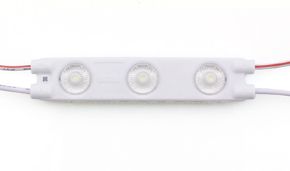
LED modules backlight the logo and signs of the vending machine, ensuring visibility even in poorly lit environments or at night.
3. LED Bars for Backlighting Product Displays
Thin bars positioned behind display shelves enhance the product for sale with homogeneous and shadow-free lighting.
4. LED Status Indicator Lights
Small LED indicators visually communicate the operating status of the vending machine (available, under maintenance, out of stock), improving the user experience.
5. LED Modules for Front Window Lighting
Linear LED modules illuminate the front window of the vending machine, increasing its visibility and attractiveness even from a distance.

8. LED Lights for Industrial Automation
In industrial automation, LED lights have a predominantly technical and safety function, often integrated directly into production processes. LED strips, profiles and controllers are the most used combination in this field, because they allow lighting work areas, delimiting operational zones and creating status light signals without having to install dedicated and complex lighting fixtures.
1. Sealed LED Strips for Lighting Machines and Production Lines
IP65 LED strips, compact and easily integrable into the structure of machine tools and production lines, illuminate the work area ensuring visibility to automated processes.
2. RGB LED Strips with Controller for Status Signaling
RGB strips controlled by a dedicated controller can be programmed to flash or change color in case of alarms, anomalies or changes in the production process status, visually communicating the situation in the department to the operator.
3. LED Profiles for Lighting Panels and Maintenance Stations
Aluminum profiles with diffuser, installed near electrical panels and technical stations, facilitate maintenance interventions and visual inspection of components thanks to direct and uniform lighting.
4. RGB LED Strips with Controller for Andon Signaling Systems
RGB strips managed by controllers can replicate the logic of three-color systems (green, yellow, red), signaling in real time the operating status of production lines, a principle very widespread in lean manufacturing philosophy.
5. Sealed LED Profiles for Heavy Industrial Environments
Profiles with gaskets and sealed diffuser protect the LED strip from dust, humidity and light chemical agents, ensuring reliable lighting even in particularly demanding industrial environments.
Note: For ATEX classified environments at risk of potentially explosive atmosphere, specifically certified and approved lighting fixtures are required, a category not covered by the LED strips and profiles range of Ledpoint.it.

9. LED Lights for Signs and Billboards
In signage, LED lights have progressively replaced traditional neon, offering greater efficiency, less maintenance and greater freedom of shape. LED strips, neon flex and profiles are today the most used solutions in this sector, because they cover both the internal lighting of channel letters and the aesthetic rendering of neon, with reduced consumption and no dangerous gases.
1. Backlight LED Strips for Box Letters and Channel Signs
High-brightness linear LED strips are inserted inside box letters and channel signs, uniformly backlighting the internal volume even on large surfaces.
2. Flexible LED Neon (Neon Flex)
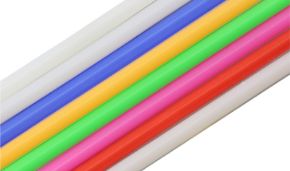
Neon flex reproduces the aesthetics of traditional neon with LED technology, offering greater installation flexibility, lower consumption and absence of dangerous gases: the ideal choice for writings and logos with curved or cursive shapes.
3. LED Profiles for Front Lighting of Signs
Linear aluminum profiles with diffuser front-light non-backlit signs, enhancing their graphic content even at night with uniform light and no visible light points.
4. High-brightness LED Strips for Totems and Advertising Displays
High-density LED strips, uniformly distributed inside the totem structure, ensure high and homogeneous brightness even on displays exposed in full daylight.
5. Neon Flex for Outlines and Decorative Profiles of Signs
Neon flex, thanks to its flexibility, is also used to outline borders, frames and decorative profiles of signs, with a continuous effect and no luminous interruptions.

10. LED Lights for Commercial and Retail
In retail, LED lights are a sales tool: they directly affect the perception of the quality of displayed products and the customer experience in the store. LED strips and profiles are the most used solution in this sector, because they integrate directly into shelving, display windows and suspended ceilings, offering targeted lighting without weighing down the furniture design.
1. Adjustable LED Profile for Lighting Displayed Products
Profiles with adjustable diffuser allow directing light exactly on the products on display, with the possibility of modifying the angle according to the merchandise arrangement.
2. Recessed LED Profiles for Shelving
Thin profiles integrated into shelving directly illuminate the displayed merchandise, improving its perception without weighing down the furniture design.
3. LED Strips for Display Window Lighting
Strips with high color rendering (CRI 90+) enhance products in display windows, a decisive element for attracting the attention of passers-by even in the evening.
4. Recessed LED Profiles for General Lighting of the Sales Area
Flush-mounted ceiling or wall profiles ensure uniform general lighting of the sales area, generally at 4000K for a good balance between color rendering and visual comfort.
5. Linear LED Profiles for Store Suspended Ceilings
LED profiles integrated in the suspended ceiling, combined with opal diffuser, offer diffused and glare-free lighting, ideal for large sales areas.

11. LED Lights for Automotive and Transport
In the automotive sector, LED lights must guarantee resistance to vibrations, thermal shocks and quick installation even in tight spaces. LED strips, LED modules, profiles and neon flex are the most used solutions for internal, decorative and set-up lighting of vehicles, campers and commercial vehicles, while for approved optical groups (headlights, stop lights, daytime running lights) specifically certified components for road circulation are required, not covered by this product range.
1. RGB LED Strips for Cabin Ambient Lighting
Decorative strips, often RGB and controllable via app or remote control, illuminate the cabin with customizable ambient effects, an increasingly widespread trend even on mid-range vehicles and campers.
2. Neon Flex for Internal and External Contour Lighting
Neon flex, thanks to its flexibility, is used to outline internal cabin contours or external profiles on vans and equipped vehicles, with a continuous luminous effect resistant to impacts and vibrations.
3. LED Modules for Trunk and Technical Compartment Lighting
Small LED modules, easily integrable in tight spaces, illuminate trunks, technical compartments and loading areas, ensuring visibility during loading or maintenance interventions.
4. LED Profiles for Linear Lighting of Campers and Vans
Aluminum profiles with diffuser, installed on the ceiling or along the walls of campers and equipped vans, offer uniform linear lighting with no visible light points, ideal for the living spaces of vehicles.
5. LED Strips and Neon Flex for Set-up and Signage of Commercial Vehicles
LED strips and neon flex are also used for external decorative lighting of equipped commercial vehicles (food trucks, promotional vehicles), enhancing logos and signs applied to the vehicle.
12. LED Lights for Infrastructure and Public Spaces
In public infrastructure, LED lights are now the standard for street and urban lighting, thanks to a net energy saving compared to previous technologies. Sealed LED strips, profiles and neon flex find application especially in lighting paths, underpasses and pedestrian delimitations, where continuous, uniform and weather-resistant light is required, while for main street lighting (street lamps, traffic lights) specifically certified lighting fixtures are necessary, not covered by this range.
1. Sealed LED Profiles for Pedestrian Path Lighting
IP65/IP67 aluminum profiles, installed flush or on the wall along paths and green areas, offer low and diffused lighting that marks paths without dazzling pedestrians, as an alternative to traditional step markers.
2. IP67 LED Strips for Underpasses and Tunnels
Completely sealed LED strips, resistant to humidity and dust, ensure continuous and uniform lighting in critical safety environments such as underpasses and pedestrian tunnels.
3. Neon Flex for Delimiting Paths and Public Areas
Neon flex, resistant and flexible, is used to continuously outline edges of flower beds, steps and delimitations of public areas, offering a clear visual reference even in low light conditions.
4. LED Profiles for Staircase and Green Area Lighting
Sealed linear profiles, installed along staircases, walls and green areas of parks and squares, offer uniform accent lighting, often with automatic regulation systems based on time.
5. LED Strips for Decorative Lighting of Public Architectural Elements
High-resistance LED strips are used to enhance architectural elements of public spaces (fountains, monuments, urban furniture structures), with a scenic effect and low energy consumption.
Note: For street lamps, traffic lights and signalers, specific road certification is required, a category not covered by the LED strips, profiles and neon flex range of Ledpoint.it.
13. LED Lights for the Medical and Healthcare Sector
In the medical field, LED lights must meet very rigorous requirements in terms of color rendering, absence of flicker and light uniformity. LED strips, profiles and neon flex find application especially in indirect and ambient lighting of corridors, departments and common areas of healthcare facilities, where high visual comfort is required for patients and staff, while for specific clinical-diagnostic equipment (surgical lights, germicidal systems, examination lamps) certified medical devices are necessary, not covered by this range.
1. High Color Rendering LED Strips for Indirect Department Lighting
Indirect light strips, with high CRI and often dimmable, are installed in hospital departments to offer more comfortable lighting than traditional ceilings, reducing glare perceived by patients.
2. Recessed LED Profiles for Corridors and Common Areas
Aluminum profiles with opal diffuser, installed on ceiling or wall along corridors and waiting rooms, ensure uniform and shadow-free lighting, contributing to an environment perceived as safer and more welcoming.
3. Dimmable LED Strips for Night Department Lighting
Low-wattage strips, dimmable and adjustable in color temperature, are used for night lighting of departments, offering a minimum but sufficient light level without disturbing patient rest.
4. LED Profiles for Perimeter Lighting of Clinics and Examination Rooms
Linear ceiling or wall profiles ensure uniform general lighting with high color rendering in clinics, an important requirement for correct visual perception during staff activities, although not replacing examination lamps certified for clinical procedures.
5. Neon Flex for Internal Signage of Healthcare Facilities
Neon flex is used to outline internal paths, emergency exits and light signage inside healthcare facilities, offering a continuous visual reference and low energy consumption
Note: Surgical lights, medical imaging panels, UV-C germicidal systems and examination lamps are medical devices subject to specific certifications, a category not covered by the LED strips, profiles and neon flex range of Ledpoint.it.
14. LED Lights for Farming
In farming, LED lights directly affect animal welfare and, in some sectors, the productivity of the livestock activity itself. LED strips, profiles, neon flex and specific LED bars find application both for general lighting of livestock environments and for more specialized needs related to photoperiod and animal welfare.
1. IP65/IP67 LED Strips for General Stable Lighting
Sealed LED strips, resistant to dust and humidity, ensure reliable and uniform lighting in livestock environments, subject to severe environmental conditions.
2. Growing LED Bar with UV and White for Poultry Houses and Photoperiod Regulation
The 1-meter LED bar with 36 UV LEDs (305-315nm) and 72 white LEDs (3800-4200K), Zigbee 48V driver, originally designed for growing, is also very suitable for the poultry sector: the white channel adjustable via Zigbee allows precise management of the light/dark cycle for photoperiod control, while the integrated UV component supports vitamin D3 synthesis in animals, a factor that affects the welfare and productivity of farms.
3. Sealed LED Profiles for Uniform Lighting of Livestock Sheds
Aluminum profiles with diffuser, combined with high-efficiency LED strips, distribute light uniformly over large surfaces, reducing shadow areas inside sheds.
4. Neon Flex for Delimiting Paths and Service Areas
Neon flex, resistant to humidity and impacts, is used to outline internal paths, service aisles and passage areas inside livestock structures, offering a continuous visual reference even in low light conditions.
5. Dimmable LED Strips for Light Intensity Control
LED strips adjustable in intensity, also remotely controllable, allow adapting the lighting level to different phases of the day or to the specific needs of different farmed species.
Note: Portable flashlights for night control and specific spectrum anti-fly solutions are not part of the LED strips, profiles and neon flex range of Ledpoint.it.
Frequently Asked Questions about LED Lights by Sector
Which LED lights are most used in the retail sector?Adjustable track spotlights, recessed profiles for shelving, strips for display windows, downlights for sales areas and panels for suspended ceilings. |
What type of LED lights are used in construction and building sites?Light towers, rechargeable portable spotlights, signal lights, sealed ceiling lights and LED light strings for temporary lighting of work areas. |
Which LED lights are suitable for the marine sector?IP67/IP68 sealed ceiling lights, navigation and running lights, strips for interior lighting, underwater spotlights and emergency lights, resistant to salt spray and humidity. |
Which LED lights are used in horticulture?Full spectrum grow lights, bars for vertical farming, UV/IR lights for flowering, quantum board panels and strips for cutting propagation. |
Which LED lights are most common in the medical field?Surgical lights for operating rooms, panels for medical imaging, strips for indirect lighting of departments, UV-C germicidal lights and examination lamps. |
Which LED lights are used in event setups?App-controllable RGB strips, stage bars, wall washer floodlights, wireless battery-powered lights for centerpieces and panels for scenic backdrops. |
Which LED lights are used in industrial automation?Bars for industrial machine lighting, stroboscopic signal lights, flashlights for control panels, andon columns and explosion-proof lights for ATEX environments. |
Custom LED Lights: The Right Solution for Every Sector
As emerges from this overview, LED lights are not a single product but a very wide family of solutions, each designed to meet specific technical requirements of the sector in which it is used: resistance to atmospheric agents in marine and construction fields, high color rendering in medical and retail fields, dedicated light spectrum in horticulture, safety certifications in industrial and automotive fields. Knowing the 5 types of LED lights most used in each sector allows correctly guiding the choice, avoiding both economic waste and technically inadequate solutions for the context of use.
This article was developed with the support of artificial intelligence and subsequently reviewed, corrected, and validated by the Ledpoint.it technical team, which guarantees its reliability and compliance with official sources.