





Lighting design with LED strips, profiles, neon flex, and controllers: the technical guide for professionals
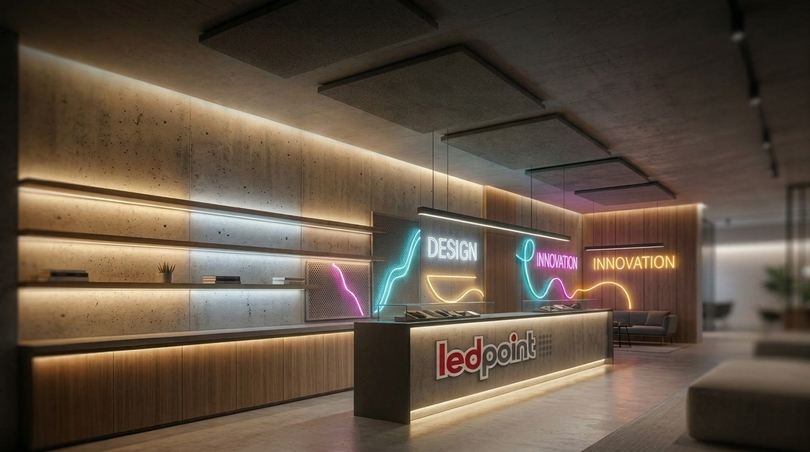
Lighting design is the discipline that designs light as a material of architecture: it establishes how much light is needed, where, in what color, with what quality and how it changes over time. Today lighting design is mainly realized with linear LED systems (LED strips, aluminum profiles, neon flex) managed by DALI, DMX, ZigBee or 0/1-10V controllers, because they offer efficiency, miniaturization and total control.
For decades, light design was constrained by the shape of the lamp: the light bulb, the fluorescent tube, the halogen spotlight imposed dimensions, heat, positions and maintenance. With the arrival of linear LEDs the relationship has been reversed. It is no longer architecture that adapts to the source: it is the source that disappears inside the architecture, becoming a line in a plasterboard groove, a slit of light in a step, a luminous sign on a wall, a ceiling that changes color temperature as the hours pass. This is the ground on which contemporary lighting design is played out.
This guide, written by the technical team of Ledpoint in Faenza for lighting designers, architects, lighting project designers, interior designers, installers and facility managers, combines theory and practice. We start from what lighting design is, who invented it and how much its market is worth today, and then move on to the reasons why light design has oriented towards LED strips, aluminum profiles, neon flex and control systems, with data measured in the laboratory, comparison tables, calculation methods, standards and application cases for shops, hotels, restaurants, offices, homes, condominiums and laboratories.
In this article...
1. What is lighting design: definition and meaning
Before talking about LED strips and controllers, it is worth establishing a common vocabulary. In construction site language, in commercial offers and even in specifications, terms are used as synonyms that are not synonyms: lighting, light design, light design, lighting design, illuminating engineering. Clarifying the meaning of each helps to understand who does what and what skills are needed in a project.
What does lighting mean and what does lighting design mean
In English lighting means "illumination": it is the noun that derives from the verb to light, to turn on, to illuminate. It should not be confused with lightning, which means lightning bolt (the question "do you say lighting or lightning?" is among the most searched: for artificial light you always write lighting). The term is not plural, although in commercial jargon forms like "lightings design" or typos like "lighting desgin" are encountered: the correct spelling remains lighting design.
Lighting design is the design of light understood as language: it is not limited to guaranteeing a level of illuminance, but decides how light reveals space, guides the gaze, enhances materials, communicates an identity and accompanies people's activities. In French one speaks of conception lumière, in Italian of design of light or design of light. It is a discipline that lies halfway between architecture, engineering, scenography and visual perception.
Lighting design and lighting engineering: differences
Lighting engineering is the applied science that studies the production, measurement and distribution of light: lumens, lux, candles, photometric curves, uniformity, glare. Lighting design translates these principles into a system compliant with standards, verified by calculation. Lighting design includes lighting engineering but adds expressive intention: why that wall is brighter than another, why the light is grazing on a stone wall and diffused on the ceiling, why at 7 pm the hotel lobby goes from 4000K to 2700K.
| Term | Meaning | Main focus | Typical output |
|---|---|---|---|
| Lighting | Illumination, in a general sense | Light as a result | Fixtures and sources |
| Lighting engineering | Applied science of light | Photometric quantities and measurements | Calculations, verifications, data |
| Lighting design (technical) | Technical design of the system | Regulatory requirements, uniformity, consumption | Technical report, drawings, calculation |
| Lighting design / design of light | Design of light as language | Perception, emotion, identity, function | Concept, scenarios, specifications, control |
| Light design (entertainment) | Light design for theater, concerts, TV | Narration, time, cue | Plot, cue list, DMX programming |
| Lighting engineering | Engineering of lighting | Optics, electronics, thermal | Products, systems, testing |
Who is the lighting designer and what do they do
The lighting designer (or light designer, designer of light) is the professional who designs the lighting of a space starting from people's needs and the identity of the place. They analyze the architecture, the available natural light, the activities that will take place, the materials and colors; define a concept, choose sources and fixtures, calculate illuminance levels, design control systems and follow the construction site until the final tuning of the scenarios. In one sentence: the lighting designer decides where light is needed, where it disturbs and where it tells something.
Lighting designer, lighting project designer and lighting consultant
The lighting project designer is often an engineer or a surveyor who focuses on the compliance of the system and on calculations; the lighting consultant is an independent consultant who supports architecture firms, general contractors or clients in choosing solutions; lighting architects are architects specialized in lighting. In Italian practice these figures overlap: the same lighting design studio can offer creative concept, calculation, works supervision and testing. In the entertainment world there is also the theatrical lighting designer (or television, or nightclub), who creates the light design of a show and programs its scenes on a DMX console.
What lighting design is not
Lighting design does not coincide with the choice of decorative lamps nor with the purchase of a trendy chandelier, even if designer lighting, understood as a designer lamp, can be part of the project. It is not even synonymous with "colored lights": an excellent project can be entirely white, at 3000K, almost invisible. The value of lighting design is measured in perceived quality, comfort, consumption and coherence, not in the number of fixtures installed.
The three types of lighting: ambient, functional and accent
Every lighting design project combines three layers of light. Ambient lighting (or general, diffused) guarantees orientation and perception of space; functional lighting (task lighting) serves to perform a task, such as reading, cooking, working at a counter; accent lighting creates visual hierarchies, enhances an object, a texture, a product in a window. To these three levels is added natural light, which the designer integrates with artificial light, and increasingly a fourth level, dynamic light, which varies over time thanks to control systems. LED strips in aluminum profiles are today the most versatile tool for building all four layers with the same formal language.
2. When lighting design was born and why it constantly evolves
Lighting design as an autonomous profession is less than a century old, but research on the expressive use of light is as old as architecture: just think of the oculus of the Pantheon or the stained glass windows of Gothic cathedrals. What changes, in the twentieth century, is the possibility of controlling artificial light with increasing precision. Every technological leap, from the incandescent lamp to the LED, has produced a leap in language.
The theatrical origins: Appia, Fortuny and McCandless
The first modern theories are born in the theater. The Swiss scenographer Adolphe Appia, between the end of the nineteenth century and the beginning of the twentieth, maintained that light should model the stage space and not only make it visible. In Venice Mariano Fortuny experimented with systems of indirect and reflected light for the stage. In 1932 the American Stanley McCandless, professor at Yale, published A Method of Lighting the Stage, the first systematic method of stage lighting, still studied today in courses for entertainment lighting designers.
The birth of architectural lighting design
The passage from the stage to architecture is largely due to Richard Kelly, who in the 1950s formalized the distinction between ambient light, focal light and "play of brilliants", collaborating with architects such as Mies van der Rohe, Philip Johnson and Louis Kahn. In 1969 the IALD, International Association of Lighting Designers was founded in the United States, sanctioning the international recognition of the profession. In Italy the lighting culture finds a home in AIDI, Associazione Italiana di Illuminazione, a reference point for standards, training and research.
The lighting design timeline
| Period | Key event | Impact on lighting design |
|---|---|---|
| 1879-1900 | Spread of the incandescent lamp | Artificial light becomes controllable and domestic |
| Early 1900s | Theories of Appia, research of Fortuny | Light as an expressive tool of space |
| 1932 | McCandless method for the stage | First light design methodology |
| 1930s-1950s | Spread of fluorescent lamps | Linear lighting of offices and shops is born |
| 1950s | Principles of Richard Kelly | Architectural lighting design is born |
| 1962 | First visible light LED (Nick Holonyak) | Beginning of the solid-state revolution |
| 1969 | Founding of IALD | International professional recognition |
| 1986 | DMX512 protocol | Control standard for entertainment and dynamic architecture |
| 1990s | High-efficiency blue LED (Shuji Nakamura and colleagues, Nobel 2014) | White LED is born, basis of modern LED strips |
| 2000s | DALI standard, first flexible LED strips | Integrated and addressable linear light |
| 2010s | Linear COB, tunable white, silicone neon flex | Continuous lines without dotting, dynamic light |
| 2020s | Human centric lighting, wireless control, EU Ecodesign 2019/2020 | Circadian light, controlled flicker, mandatory efficiency |
Why lighting design is constantly evolving
Lighting design evolves due to three forces acting together. The first is technological: each generation of LEDs offers more lumens per watt, smaller chips, greater color stability and lower prices, opening applications unthinkable a few years earlier. The second is regulatory: European ecodesign regulations, the ban on fluorescent lamps and minimum environmental criteria in public procurement push towards more efficient and controllable solutions. The third is cultural: research on the effects of light on circadian rhythm, well-being and sales has transformed light from a technical cost into a strategic lever. When tools, rules and expectations change together, the way of designing changes too: this is why lighting design can never be considered "finished".
From lamp to system
The most profound change of the last fifteen years is the passage from the logic of the fixture to the logic of the system. An LED strip alone is not a finished product: it becomes a project only when combined with a profile that dissipates and shields it, a diffuser that controls its optics, a properly sized power supply, a controller that governs it and an interface that the user understands. It is exactly in this composition that the lighting designer exercises their competence today.
3. The great masters: famous and Italian lighting designers
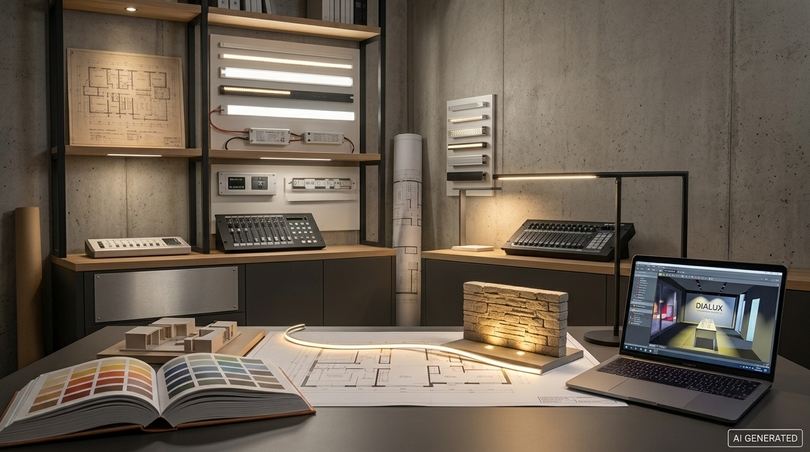
Knowing the masters of lighting design is not an exercise in erudition: their principles are still today the best filter for evaluating a project. Many intuitions born with incandescent lamps and fluorescent tubes find their most complete realization precisely in linear LEDs. Here are the figures who have defined the discipline, from the origins to the present day.
The international pioneers
Richard Kelly and the three principles of light
Richard Kelly (1910-1977) is considered the father of architectural lighting design. He designed the light of iconic buildings such as the Seagram Building in New York, Philip Johnson's Glass House and Louis Kahn's Kimbell Art Museum. His theoretical contribution is the distinction between ambient luminescence (the ambient light that makes space readable), focal glow (the focal light that attracts attention) and play of brilliants (the brilliant points that give life and sparkle). Every time an LED groove illuminates a ceiling, a profile underlines a shelf and a neon line draws a detail, we are applying Kelly's principles.
Jean Rosenthal, Abe Feder and the American theater
Jean Rosenthal (1912-1969) revolutionized Broadway and modern dance lighting, including the lights of the premiere of West Side Story. Abe Feder, active between theater and architecture, is often indicated among the first professionals to explicitly call themselves "lighting designer". Their work demonstrated that light can build rhythm, time and narration: concepts that we now find in dynamic scenarios programmed with DMX and DALI controllers.
Howard Brandston, Claude Engle and the light of monuments
Howard Brandston is known for the lighting of the Statue of Liberty on the occasion of the 1986 restoration; Claude Engle collaborated for a long time with architect I. M. Pei on prestigious museum projects. Both demonstrated that the lighting of a monument is an act of critical interpretation, not of simple exposure.
Artists and designers of light
A fundamental part of lighting design culture comes from art. Dan Flavin transformed the fluorescent tube into sculptural material: his last work, the installation in the church of Santa Maria Annunciata in Chiesa Rossa in Milan, is a mandatory reference for anyone designing with colored linear light. James Turrell works on the perception of light as a physical presence, with environments in which the sources are completely hidden. Olafur Eliasson, with The Weather Project at the Tate Modern in 2003, showed how a monochromatic light can transform a public space into a collective experience. Ingo Maurer, the "poet of light", brought irony and lightness into lamp design and anticipated the use of LEDs in products.
These authors share an idea: the source must disappear so that only the light remains. This is exactly what LED strips recessed in trimless profiles, neon flex with homogeneous emission and COB lines without dotting make possible today.
Italian light designers: a recognized school
Italy boasts a unique tradition that combines the lighting industry, product design and architectural culture. Piero Castiglioni designed, with Gae Aulenti, the lighting of the Musée d'Orsay in Paris, becoming an international reference for museum light. The Castiglioni family, with Achille and Pier Giacomo, marked the history of designer lamps. Pietro Palladino is the author of lighting engineering manuals studied by generations of designers. Alongside these names, dozens of lighting design studios in Milan, Rome, Turin, Bologna and throughout the country work today on museums, hotels, luxury retail, public spaces and residences, often in close contact with manufacturers and distributors of linear LED systems.
| Figure | Field | Lesson for those designing with LED strips and neon flex |
|---|---|---|
| Stanley McCandless | Theater | Method: every light has a direction and a role |
| Richard Kelly | Architecture | Stratify ambient, focal and brilliant light |
| Jean Rosenthal | Theater and dance | Light builds rhythm and time: design scenarios |
| Dan Flavin | Art | The line of colored light as architecture |
| James Turrell | Art | Hide the source, show only the light |
| Ingo Maurer | Design | Lightness, irony, technological experimentation |
| Piero Castiglioni | Museums and architecture | Light at the service of the work and its reading |
4. How much the lighting design market is worth: data and statistics
Lighting design is not a niche for a few: it is a global market worth tens of billions and growing faster than construction as a whole. Understanding the size and directions of this market helps designers, installers and distributors to read demand and invest in the right skills. The following data come from international research companies; since each adopts different perimeters and methodologies, they should be read as orders of magnitude and trends, not as absolute values.
Architectural lighting: the perimeter of lighting design
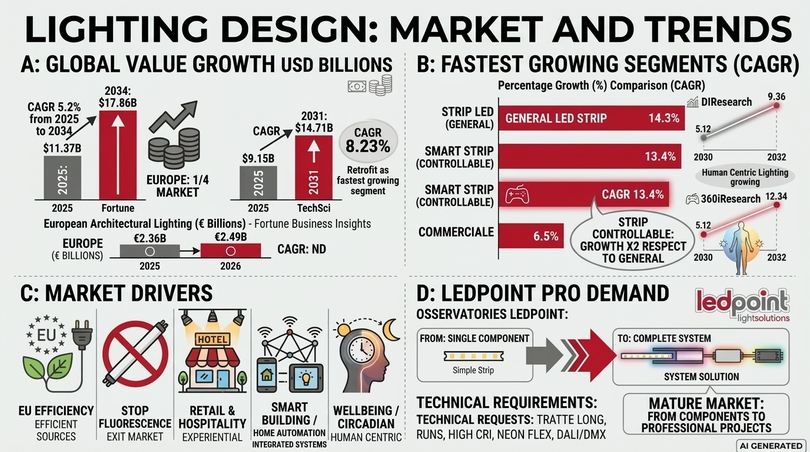
According to Fortune Business Insights, the global architectural lighting market was worth about 11.37 billion dollars in 2025 and should reach 17.86 billion in 2034, with an average annual growth of 5.2%; Europe weighed about a quarter of the total. TechSci Research, with a narrower perimeter, estimates 9.15 billion in 2025 and 14.71 billion in 2031 (CAGR 8.23%), indicating retrofit as the fastest-growing segment. Grand View Research places the 2025 value at around 11.1 billion.
| Market segment | 2025 value | Projection | Estimated annual growth | Source |
|---|---|---|---|---|
| Architectural lighting (global) | 11.37 bn USD | 17.86 bn USD by 2034 | 5.2% | Fortune Business Insights |
| Architectural lighting (global) | 9.15 bn USD | 14.71 bn USD by 2031 | 8.23% | TechSci Research |
| Architectural lighting Europe | 2.36 bn USD | 2.49 bn USD in 2026 | n.a. | Fortune Business Insights |
| LED strips (global) | 1.79 bn USD | 4.56 bn USD by 2032 | 14.3% | DIResearch |
| LED strips for commercial use | 3.1 bn USD | 4.8 bn USD by 2034 | 6.5% | OG Analysis |
| Smart LED strip (controllable) | 5.12 bn USD | 12.34 bn USD by 2032 | 13.4% | 360iResearch |
| Human centric lighting | 4.23 bn USD | growing | n.a. | Fortune Business Insights |
What the numbers say about LED strips and control
The most significant data for those working with linear light is the growth differential. LED strips and especially controllable ones grow at almost double the rate of architectural lighting as a whole. It is the numerical proof of the shift of lighting design towards linear, integrated and controller-governed systems. Estimates on strips vary widely between institutes, because some include only the bare product, others complete systems and consumer channels; the direction, however, is unambiguous.
The forces driving the market
- Mandatory energy efficiency: EU Ecodesign Regulation 2019/2020 and the Energy Performance of Buildings Directive impose more efficient and controllable sources.
- Exit of fluorescent lamps: since 2023 T5 and T8 tubes can no longer be placed on the European market as new products, generating a vast replacement demand.
- Experiential retail and hospitality: shops, hotels and restaurants use light as a branding and sales tool.
- Smart buildings and home automation: integration with BMS, sensors and apps shifts value from product to system.
- Well-being and circadian light: growing attention to non-visual effects of light fuels demand for tunable white.
A Ledpoint proprietary data point on professional demand
From Ledpoint's observatory, which serves installers, lighting design studios, set-up companies and retailers every day, a clear trend emerges: requests for technical consultancy increasingly concern not the single product but the complete combination of strip, profile, diffuser, power supply and controller. In particular, questions about 24V and 48V strips for long runs, high color rendering COB, silicone neon flex for outdoors and DALI and DMX decoders are growing. It is the signal of a market maturing from "decorative light" to professional lighting design.
5. Why lighting design has chosen LED strips, profiles and neon flex
If one observes the projects awarded in recent years, from hotels to museums, from flagship stores to private residences, one element recurs almost always: integrated linear light. It is not a passing fashion. It is the most effective response to a series of design needs that traditional sources could not satisfy. Let's see the technical and cultural reasons for this choice.
The seven technical reasons
1. Miniaturization and integration
An LED strip has a circuit about 2 to 20 mm wide and a thickness of a few millimeters. This dimension allows the source to be inserted into joints, steps, shelves, frames and grooves that no traditional lamp could occupy. Architecture no longer has to "make space" for light: light adapts to the existing geometry.
2. Luminous efficiency
Professional-grade LED strips now exceed 120 lm/W. In Ledpoint laboratory measurements, performed with an integrating sphere and spectroradiometer, a 2835 24V strip at 14.4 W/m with 120 LEDs/m reaches about 1600 lm/m with an efficiency of 123 lm/W. By comparison, a good quality T8 fluorescent tube is around 80-100 lm/W before fixture and ballast losses. The key concept is luminous efficacy, i.e. the ratio between emitted flux and absorbed power.
3. Continuity of the line
With COB LED strips and high-density strips (240 or more than 384 LEDs/m) a continuous luminous line is obtained, without the annoying "dotted" effect. Combined with an opal diffuser or a neon flex, they generate homogeneous luminous surfaces that recall Flavin's works but consume a fraction of the energy.
4. Color quality and control
Professional lighting design requires precise color temperature, high color rendering and consistency between batches. Modern strips offer CRI Ra above 90, color tolerances of 3 MacAdam steps and versions with adjustable white CCT, RGBW and RGB+CCT, which allow switching from warm white to saturated color with the same line.
5. Digital control
LED strips are easily dimmed in PWM, addressed pixel by pixel with SPI versions and integrated into DALI, DMX, ZigBee, 0/1-10V systems and sensors. Light becomes programmable: it can change intensity, color and direction based on the time, presence, event.
6. Flexibility of shape
Strips are cut to measure every few centimeters, can be curved, bent at 90° with foldable versions; neon flex draws letters, logos and organic shapes. The designer no longer chooses between standard lengths of 60, 120 or 150 cm, but designs light to the exact measure of the project.
7. Very low voltage and safety
Working at 12, 24 or 48V in safety extra-low voltage reduces risks, simplifies installations in humid environments, in contact with the public or on furniture, and allows light to be brought where 230V would be problematic. The concept is that of safety extra-low voltage (SELV).
Comparison: traditional sources and linear LED systems
| Criterion | T8/T5 fluorescent tube | Halogen spotlights | Glass neon | LED strip + profile | LED neon flex |
|---|---|---|---|---|---|
| Typical efficiency | 80-100 lm/W | 15-25 lm/W | low | 100-130 lm/W | depends on diffuser |
| Lengths | Fixed (60/120/150 cm) | Point | Custom handcrafted | Cut every 1.5-10 cm | Cut every 2.5-12.5 cm |
| Dimming | Complex | Simple | Complex | Simple and digital | Simple and digital |
| Adjustable color | No | No | No | CCT, RGB, RGBW, pixel | Single color, RGB, DMX |
| Voltage | 230V | 12V or 230V | Thousands of volts | 12/24/48V (also 230V) | 12/24V |
| Architectural integration | Low | Medium | Medium | Very high | High |
| Mercury | Yes | No | In colored tubes | No | No |
The cultural reason: light as a line
There is also an aesthetic motivation. Contemporary architecture prefers clean surfaces, precise joints, natural materials. The line of light is the graphic sign that best dialogues with this language: it underlines a profile, separates two materials, makes a piece of furniture "float", extends a perspective. Lighting design has found in linear light its most natural alphabet, and in LED strips, profiles and neon flex the letters with which to write it.
6. The principles of lighting design applied to linear light
An LED strip alone does not make a project. To transform it into lighting design, clear principles are needed, the same ones that guide design with any source: quantity, direction, color, quality and control of light. In this section we translate them into the language of linear light, with the most useful reference values in the design phase.
The fundamental quantities
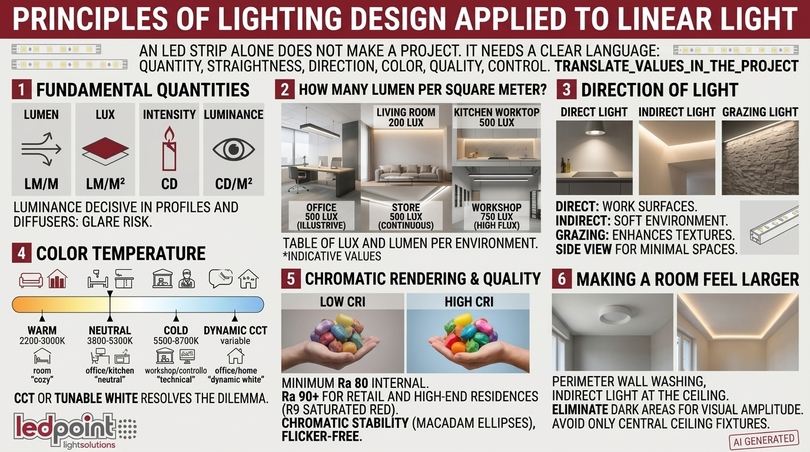
The lumen measures the emitted luminous flux; for strips one reasons in lumens per meter (lm/m). The lux measures the illuminance on a surface, i.e. how many lumens arrive on a square meter. Luminous intensity (candles) describes how much light goes in a certain direction; luminance (cd/m²) how bright a surface appears to the eye. In design with profiles and diffusers, luminance is decisive: a line that is too bright in the visual field creates glare even if the lux on the work surface are correct.
How many lumens per square meter are needed?
One of the most frequent questions concerns the need for light. The answer depends on the activity. The UNI EN 12464-1 standard indicates, for example, about 500 lux for offices and VDU workstations, 300 lux for general sales areas, 100-200 lux for corridors and circulation areas. To estimate the necessary flux, multiply the desired illuminance by the area and divide by a utilization factor that takes into account optics, reflections and maintenance.
| Environment | Indicative illuminance (lux) | Indicative lumens per m² installed* | Typical linear solution |
|---|---|---|---|
| Corridors, stairs, cellars | 100-150 | 180-300 | Surface profile with 9.6 W/m strip and sensor |
| Living room (ambient light) | 100-200 | 200-400 | Plasterboard groove with 2700-3000K strip |
| Kitchen (worktop) | 300-500 | 500-900 | Under-cabinet profile with CRI 90 strip |
| Office | 500 | 800-1100 | Suspended profile with controlled UGR diffuser |
| Shop (sales area) | 300-750 | 600-1500 | Continuous lines 4000K CRI 90 and accents |
| Laboratory, workbench | 500-750 | 900-1500 | Profile with 4000-5000K high-flux strip |
*Indicative values for a first dimensioning: the final design requires a lighting calculation with dedicated software.
Direction of light: direct, indirect, grazing
The same strip produces opposite effects depending on how it is oriented. In direct light, inside a profile with diffuser facing downwards, it illuminates work surfaces and paths. In indirect light, hidden in a groove that illuminates the ceiling or a wall, it creates soft ambient light without harsh shadows. In grazing light, placed a few centimeters from a textured surface, it enhances stone, wood, plaster textures. The side view LED strips, which emit laterally, are valuable when the available space is minimal and the light must come out parallel to the mounting surface.
Color temperature: 3000K or 4000K?
Color temperature, expressed in kelvin, describes the hue of white light. There is no absolute answer to the question "3000K or 4000K?": it depends on the function, the materials and the identity of the place. In general 2700-3000K communicates welcome and intimacy (residences, hotels, restaurants), 3500-4000K is neutral and clear (shops, offices, operating kitchens), 5000-6500K is technical and stimulating (laboratories, control areas). Modern lighting design solves the dilemma with dynamic white: CCT or tunable white strips that vary during the day.
| Color temperature | Perception | Recommended environments | Ledpoint category |
|---|---|---|---|
| 2200-3000K | Warm, intimate, relaxing | Bedrooms, evening lobbies, restaurants, wine bars | Warm white LED strips |
| 3800-5300K | Neutral, clear, natural | Shops, offices, kitchens, showrooms | Natural white LED strips |
| 5500-8700K | Cold, technical, energetic | Laboratories, workshops, garages, jewelry windows | Cool white LED strips |
| Variable 2700-6500K | Dynamic, circadian | Offices, schools, hotels, smart residences | CCT LED strips |
Color rendering and quality of light
The color rendering index (CRI) indicates how faithfully a source reproduces colors compared to a reference light. For professional lighting design, the minimum acceptable for interiors is Ra 80, but in clothing stores, galleries, restaurants and prestigious residences one works with Ra above 90, also controlling the R9 value (saturated red), decisive for skin, meat, wood and fabrics. The quality of light also includes color stability between batches (measured in steps of MacAdam ellipses), the absence of flicker and the correct spatial distribution.
Making a room look bigger with lighting
A frequent question from interior designers is how to use light to visually enlarge a space. The lighting design answer is simple: illuminate vertical surfaces and the ceiling. A perimeter LED groove that "washes" the walls visually moves the boundaries away; an indirect line along the ceiling lifts it; the elimination of dark areas in corners reduces the feeling of closure. Conversely, a single central ceiling light flattens the room and creates harsh shadows.
7. LED strips: the raw material of light design
If contemporary lighting design were a language, the LED strip would be its most used word. But not all strips are equal: between a bazaar product and a professional strip, efficiency, color stability, duration, heat dissipation and safety change. Knowing the parameters that matter is the first step to correctly specify.
Anatomy of a professional LED strip
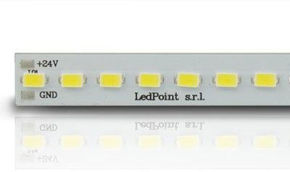
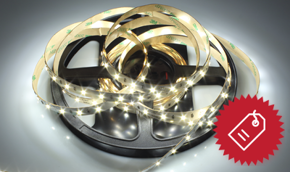
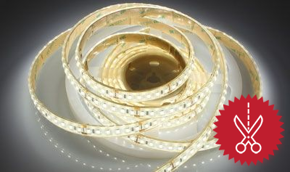
An LED strip consists of a flexible printed circuit (FPC) with copper tracks, SMD or COB LEDs soldered in sequence, resistors or integrated circuits for current regulation and an adhesive backing. The copper thickness, the quality of the LEDs and the current regulation determine the useful life more than any other factor. Ledpoint uses, for example, in several white lines, Honglitronic LEDs in 3 SDCM tolerance version, verified in the laboratory.
SMD 2835, COB and other LED models
- 2835 LED strips: the professional standard for efficiency and reliability, ideal for grooves, under-cabinets, profiles and general lighting.
- COB LED strips: chips embedded in a continuous line of phosphors, up to 1600 LEDs/m, which eliminate dotting even without a diffuser. The chip on board technology is preferred for exposed lines.
- 335 side view LED strips: lateral emission for backlighting panels and minimal spaces.
- Addressable LED strips (pixel LED): each segment is individually controllable for dynamic effects, moving signs and scenography.
Parameters to read in a datasheet
| Parameter | What it indicates | Recommended value for professional lighting design |
|---|---|---|
| Lumens per meter (lm/m) | Actual luminous flux per meter | Measured data, not estimated |
| Efficiency (lm/W) | Light produced per watt | Over 100 lm/W for general light |
| Power (W/m) | Consumption and thermal load | Consistent with the dissipating profile |
| CRI (Ra) and R9 | Color fidelity | Ra ≥ 90 for retail, hospitality, residential |
| SDCM / MacAdam | White uniformity between LEDs and batches | ≤ 3 steps |
| Voltage | 12, 24, 48 or 230V | 24V standard, 48V for long runs |
| Cutting pitch | Every how many cm it can be cut | As fine as possible for precise measurements |
| IP rating | Protection from dust and water | IP20 dry interiors, IP65/IP67 damp and outdoor |
| Density (LEDs/m) | Continuity of the line | 120-240 LEDs/m or COB for exposed lines |
Measured data: some examples from the Ledpoint laboratory
Ledpoint measures its strips with an integrating sphere and spectroradiometer, declaring lumens per meter, efficiency, actual color temperature and color rendering. This approach allows the designer to work with verified values and not with catalog estimates. Some representative examples:
| Type | Voltage | Power | Measured flux | Efficiency | Notes for design |
|---|---|---|---|---|---|
| 2835 strip, 120 LEDs/m, 3000K, 3 step | 24V | 14.4 W/m | about 1600 lm/m | about 123 lm/W | General light in groove or profile |
| 2835 strip, 120 LEDs/m, 4000K, 50 m reel | 24V | 14.4 W/m | about 1600 lm/m | about 123 lm/W | Large lengths without waste |
| COB strip 1600 LEDs/m, 4000K, CRI Ra>93 | 24V | 44 W/m | about 3700 lm/m | about 93 lm/W | High flux, requires dissipating profile |
| 2835 strip, 240 LEDs/m, 2800-2900K | 24V | 19.2 W/m | about 2070 lm/m | about 120 lm/W | Continuous high-intensity lines |
The most important data for a lighting designer is not the maximum declared value, but the consistency between power, profile and operating temperature. A 44 W/m strip laid without a dissipating profile loses flux and useful life in a few weeks; the same strip in an aluminum profile of adequate mass works stably for years.
Voltage: 12V, 24V, 48V or 230V?
The choice of voltage is a design decision, not a detail. 12V LED strips are suitable for short runs and furniture applications; 24V LED strips are the professional standard for grooves, profiles and general lighting; 48V LED strips allow very long runs from a single power point, reducing voltage drop; 230V LED strips connect directly to the mains and are useful for large outdoor areas, provided they are installed by qualified personnel and in compliance with standards. Strips with constant current control system maintain uniform brightness even over long runs.
Special lines for lighting design
Circadian light and natural spectrum
For projects oriented towards well-being, Ledpoint offers the Circadian Light lines, designed to follow the natural rhythm of daylight, and Sunled, with a spectrum close to the solar one for particularly natural color rendering. They are solutions indicated for offices, schools, medical offices, hotels and residences where the perceived quality of light is a design value.
Light for food, saturated colors and foldable strips
In food retail, light for food enhances meat, fish, bread and fruit with dedicated spectra. Colored light strips with monochromatic emission offer more saturated colors compared to RGB mixing. Foldable and adjustable-angle strips solve corners and curves on a plane without soldering.
8. Aluminum profiles: optics, heat dissipation and integration
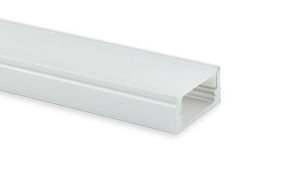
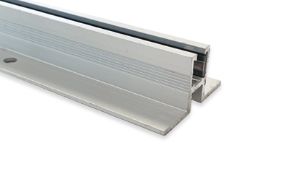
The aluminum profile is what transforms an LED strip into a lighting fixture. It performs three functions together: it dissipates heat, controls the optics and integrates light into architecture. In professional lighting design the choice of profile is worth as much as the choice of strip, because it determines performance, comfort and duration.
Why aluminum: thermal management
LEDs transform only part of the energy into light; the rest becomes heat that concentrates in the chip junction. If this heat is not dissipated, the junction temperature, flux decay and color drift increase. Aluminum, thanks to its high thermal conductivity, distributes heat over a large surface and releases it to the environment. For this reason the mass of the profile must be proportionate to the watts per meter of the strip: a thin profile is fine for strips up to about 10 W/m, while 20-44 W/m strips require more substantial extrusions. The anodized aluminum finish protects against corrosion and improves thermal emission.
The families of profiles for lighting design
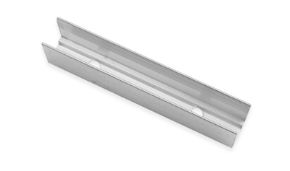
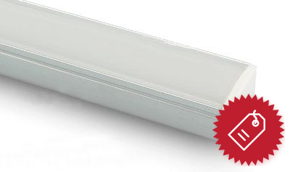
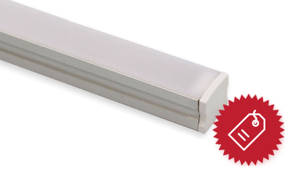
- Surface profiles: applied to furniture, ceilings and walls; ideal for retrofit and quick installations.
- Recessed profiles: with flanges or flush, inserted into millings on wood, plasterboard or stone for a clean line.
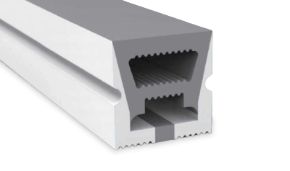
- Plasterboard and trimless profiles: embedded in the plastering and making the edge disappear, leaving only the slit of light. It is the most requested solution for the "LED strip in plasterboard ceiling".
- Corner profiles: 45° emission for furniture corners, windows and niches, such as the 16 mm angular aluminum profile.
- Suspension profiles: for offices, tables, counters, with adjustable suspension cables and, if needed, direct and indirect emission.
- Round profiles: for 360° luminous tubes that reinterpret the neon tube, such as the 30 mm diameter round profile and the 50 mm diameter round profile.
- Walkable and outdoor profiles: for floors, steps and facades, with resistant diffusers and high IP ratings.
You can find the entire range in the aluminum profiles for LED strips category; for non-standard needs Ledpoint also makes custom profiles to the designer's drawing.
Diffusers: how much light is lost and why it's worth it
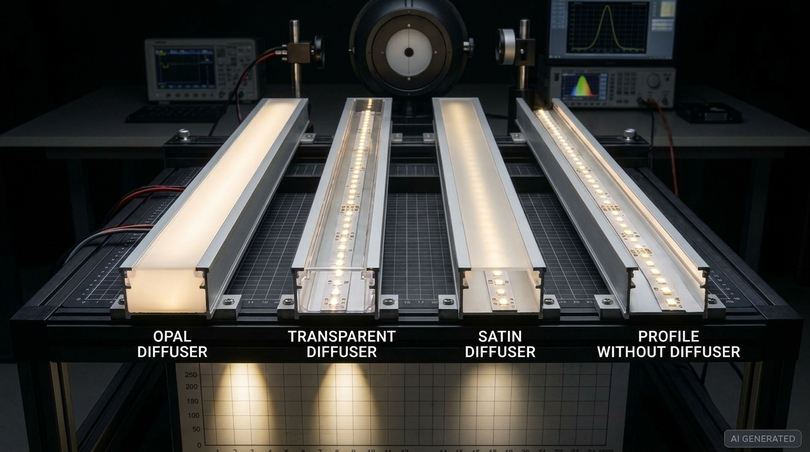
The diffuser controls the appearance of the line and visual comfort. The more opal it is, the more homogeneous the line, but the more flux it retains. The photometric curves published in Ledpoint catalogs show very concrete differences between the different covers:
| Profile (catalog example) | Transparent diffuser | Opal diffuser | Satin diffuser | Recommended use |
|---|---|---|---|---|
| Surface profile for strips up to 12 mm | -14% | -32% | -33% | Furniture, shelves, windows |
| Surface profile for strips up to 24 mm | -8% | -26% | -27% | Wide strips, double strip, high flux |
| Profile with high opal cover | — | -20/-25% | — | Homogeneous line with reduced loss |
| Watertight profile for strips up to 12 mm | — | -44% | — | Humid environments, maximum homogeneity |
| 30 mm round profile with opaque diffuser | — | about -13% | — | Luminous tubes with neon effect |
The practical rule: with low-density strips, a more opal diffuser or a deeper profile is needed; with COB or high-density strips, a more transparent cover can be used and flux recovered. You can compare combinations in the profile and LED strip matching tables and find covers in the diffusers category.
Accessories that make the difference on site
A professional installation is recognized by the details: coordinated end caps, mounting clips that allow the profile to be removed for maintenance, profile joints linear and angular for geometric compositions, profile and accessory kits to order everything together. For furniture there are also electrified tracks for furniture that bring power and light inside bookcases and wardrobes.
9. Neon flex and neon flex tubes: the continuous line of light
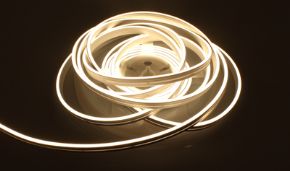
Neon flex is perhaps the product that best tells the paradigm shift in lighting design. It takes up the iconic aesthetics of the glass neon tube, but realizes it with an LED strip enclosed in a diffusing body of silicone, PVC or polyurethane. The result is a continuous, flexible, safety extra-low voltage and unbreakable luminous line that bends by hand and is cut to measure.
What neon flex is and how it works
Inside the neon flex, a high-density LED strip emits towards an extruded body that acts as a diffuser. The thickness and shape of the material merge the individual points of light into a homogeneous line. The diffuser deliberately sacrifices part of the flux to eliminate any dotting, and this is precisely the secret of the neon effect. In Ledpoint measurements, in the 6x12 mm neon flex at 2700K at 11 W/m the internal strip emits about 1050 lm/m, while about 239 lm/m arrive at the tube output. In the 15 mm round rope-effect neon flex the internal strip produces about 1175 lm/m and the tube returns about 840.
| Ledpoint product | Internal strip flux | Output flux | Ratio | Ideal application |
|---|---|---|---|---|
| Neon Flex 6x12 mm 2700K 24V 11W IP65 | about 1050 lm/m | about 239 lm/m | about 23% | Signs, logos, decorative lines |
| Rope effect Neon Flex 15 mm round 24V 20W | about 1175 lm/m | about 840 lm/m | about 71% | Suspended tubes, indoor 3D installations |
| Neon Flex 6 mm 12V 9.6W IP65 (warm white) | about 1000 lm/m | about 400 lm/m | about 40% | Outlines, signs, sheltered outdoors |
The families of neon flex for the project
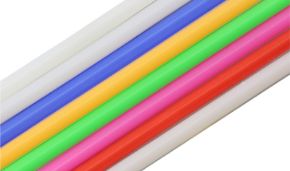
Silicone, PVC and polyurethane neon flex
Silicone resists UV rays, does not yellow and dissipates heat better: it is the standard choice for outdoors and long-lasting projects. PVC is cheaper and suitable for indoors. Polyurethane offers IP67, resistance to water, solvents and harsh environments, as in the 10 mm top view polyurethane Neon Flex 4000K CRI Ra>90 IP67, also suitable for swimming pools, exposed facades and nautical environments.
Horizontal, vertical and 360° bending
The bending direction is the first parameter to check. To draw shapes on a wall, horizontal bending is needed; to follow curved surfaces, arches and steps, vertical bending is needed; for three-dimensional installations, round 360° models are needed. Getting this data wrong means not being able to realize the design.
RGB, DMX and second-generation neon flex
For scenography, nightclubs and dynamic facades, the 8 mm RGB Neon Flex 24V IP65 is managed with an RGB controller, while the 11 mm RGB DMX Neon Flex IP67 is addressable via DMX512 for synchronized animations. For large lengths, the 2nd generation 6 mm Neon Flex is available in 50 m reels with cutting every 2.5 cm. For minute details there are mini neon flexes from 3x5 and 5x5 mm, presented in the in-depth article Mini Neon Flex: the line of light that draws the details.
Empty neon flex tubes: the designer's freedom
When the project requires a specific strip, for example CCT, RGBW or very high color rendering, the solution is an empty neon flex tube into which the chosen strip is inserted. Ledpoint offers sections from 4x8 up to 20x20 mm and rounds from 18 mm, such as the 16x16 mm black neon flex tube, with dark sides that concentrate emission on the front face, or the 18 mm round neon flex tube, the closest to the glass tube. Pay attention to power: silicone is not a heat sink, so it is prudent to stay on strips of contained power, indicatively up to 10 W/m. For the complete guide to the neon effect, consult the article LED Neon: how to imitate neon with strips and neon flex; all accessories are in the neon flex accessories category.
Neon flex in architectural lighting design
Reducing neon flex to signs would be a mistake. In architectural lighting design it is used to draw the profile of a staircase, underline a handrail, create luminous lines on the floor in public spaces, outline pools and fountains, mark paths in gardens, compose custom pendant lamps. Its strength is the ability to be simultaneously source, diffuser and graphic sign. An application example is described in the case study on sign lighting with LED neon flex.
10. From fluorescent tube to linear LED: conscious retrofit
A huge part of the Italian building heritage is still lit by fixtures with fluorescent tubes, what in jargon are called "neon": condominium garages, cellars, warehouses, sheds, shops, professional kitchens, laboratories. With their exit from the market, electricians, administrators and maintainers find themselves facing a choice. In this section we answer the most frequent questions, with the lighting design approach.
Why fluorescent tubes are disappearing
Fluorescent lamps contain mercury. With the update of the exemptions of the European RoHS directive, since 2023 compact ones first and linear T5 and T8 tubes then can no longer be placed on the EU market as new products, except for residual stocks. Anyone managing a fluorescent tube system today must plan replacement, not postpone it.
LED retrofit tube or profile with strip: two paths
The first path is the LED retrofit tube, which is inserted into the old fixture. It is fast, but often requires modifying the wiring by eliminating starter and ballast, and maintains the limits of the existing fixture: fixed lengths, dated optics, no dimming. The second path, closer to the logic of lighting design, is to replace the fixture with an aluminum profile with LED strip and opal diffuser, choosing exact length, color temperature, flux, CRI and control system. It is the solution that also allows adding sensors and dimmers.
| Criterion | LED retrofit tube | Aluminum profile + LED strip |
|---|---|---|
| Ballast removal | Often necessary (depends on model) | Not applicable: new low-voltage system |
| Lengths | 60, 120, 150 cm | Custom, even continuous lines |
| Dimming and sensors | Limited | Complete (PWM, DALI, 0/1-10V, sensors) |
| Color temperature | Fixed | Fixed or adjustable (CCT) |
| Light uniformity | Good | Excellent, with opal diffuser |
| IP rating | That of the fixture | From IP20 to IP67 depending on profile and strip |
| Aesthetic value | Unchanged | Architectural redevelopment |
The answers for electricians and installers
For the electrician the priority is a reliable and repeatable installation. Profile solutions with 24V strips require a power supply sized with at least 20% margin, proper connections and compliance with DM 37/08 for the 230V part. Duration depends on dissipation and power supply: a professional strip properly installed in an adequate profile can exceed 50,000 operating hours with high flux maintenance. The certifications to verify are the CE marking, conformity with the IEC/EN 60598 series for fixtures, photobiological safety IEC/EN 62471 and, for power supplies, safety and electromagnetic compatibility standards.
The answers for the clothing store
To enhance garment colors, CRI Ra ≥ 90 and a good R9 value are needed; the most versatile color temperature is 3000-4000K, with 3000K for warm and sartorial brands and 4000K for sportswear and fast fashion. Light must be flicker-free, therefore quality power supplies and, for 230V strips or mains fixtures, anti-flicker drivers. For power, in the sales area one works indicatively between 300 and 750 lux, with higher accents on windows and mannequins.
The answers for sheds, warehouses and laboratories
In environments with dust, humidity or low temperatures, strips and profiles with protection rating at least IP65 are needed, IP67 where washing is expected. LEDs, unlike fluorescent tubes, turn on instantly even in the cold. For continuous switching, it is advisable to choose strips with low power density per meter in profiles of significant mass, so as to limit the operating temperature. For large quantity supplies and professional prices it is possible to contact the Ledpoint technical-commercial office.
The answers for condominium administrators
Garages, cellars, stairs and corridors are the ideal case for low-consumption linear light with presence and motion sensors. The savings calculation is simple: compare the installed power before and after, multiply by the annual hours of operation and by the cost of energy.
| Condominium garage scenario (example) | Before: 20 fixtures 2x36W fluorescent | After: 20 120 cm LED profiles at 14.4 W/m + sensors |
|---|---|---|
| Mains power (with losses) | about 1,700 W | about 380 W |
| Annual operating hours | 8,760 (always on) | about 2,200 (with sensors) |
| Annual consumption | about 14,900 kWh | about 840 kWh |
| Annual cost at €0.25/kWh | about €3,700 | about €210 |
| Maintenance | Tube and starter replacement | Minimal |
Indicative values for a typical case; actual savings depend on system, hours of use and tariff.
The answers for DIY and home laboratory
For a 2-meter workbench, a profile with a 4000-5000K strip at 14.4 W/m (about 1600 lm/m) is sufficient, positioned frontally above the surface and not behind the operator, to avoid shadows. Cold light helps concentration, but 4000K with high CRI is often the best compromise between precision and comfort. Few tools are needed: scissors or aluminum miter saw, soldering iron or quick connectors, tape measure and screwdriver. The 12/24V part is within reach of an experienced hobbyist; connecting the power supply to the 230V mains must be entrusted to an electrician.
11. Controllers and light management: DALI, DMX, ZigBee, 0/1-10V
If the strip is the word and the profile is the sentence, the controller is the direction. It is here that lighting design expresses all its power: scenarios, transitions, circadian cycles, automatic savings, integration with home automation. Choosing the right protocol at the start of the project avoids costly reworks.
PWM dimming: the basis of everything
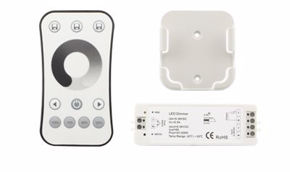
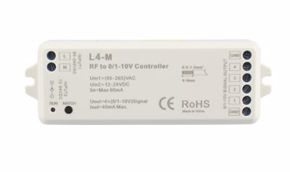
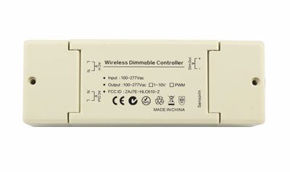
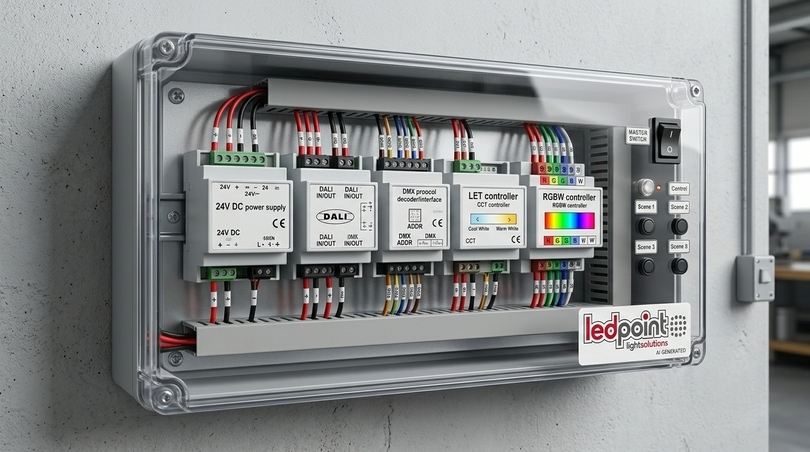
Constant voltage LED strips are regulated by pulse-width modulation (PWM): the dimmer turns the LEDs on and off many times per second, varying the duration of the pulses. A high PWM frequency avoids perceivable flicker and bands in video recordings, a fundamental requirement for shops, offices, photographic studios and spaces where content is recorded. Ledpoint offers single-color dimmers, CCT controllers, RGB controllers, RGBW controllers and RGB+CCT systems, with dedicated receivers and remote controls.
Control protocols compared
| Protocol | Type | Strengths | Typical applications | Ledpoint category |
|---|---|---|---|---|
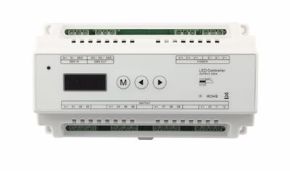
| DALI | Digital, wired, bidirectional | Addressing, feedback, BMS integration | Offices, hotels, museums, retail | DMX and DALI decoders |
| DMX512 | Digital, wired, high speed | Dynamic effects, synchronization | Entertainment, facades, clubs | DMX and DALI decoders |
| 0/1-10V | Analog | Simplicity, BMS compatibility | Offices, industry, retrofit | 0/1-10V |
| ZigBee | Wireless mesh | No control cable, smart home integration | Residential, hotels, retrofit | ZigBee |
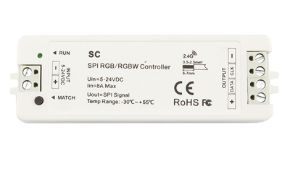
| SPI (pixel) | Digital for addressable strips | Individual pixel control | Animated signs, scenography | SPI controllers |
| RF and app | Proprietary wireless | Quick installation, remote controls | Residential, small shops | Controllers |
Sensors, Kinetic and automation
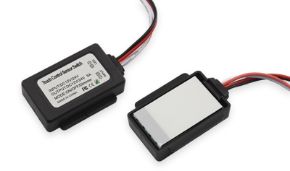
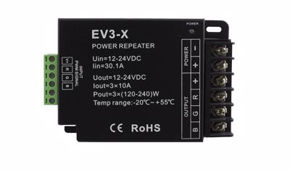
Sensors for presence, motion and brightness turn on the light only when needed and regulate it according to natural light (daylight harvesting). The Kinetic line offers battery-free controls that generate energy from key pressure, ideal for retrofit without masonry work. For mirrors and bathrooms there are touch mirror dimmers, while signal amplifiers extend control over large lengths.
How to choose the control system
The decisive criterion is not the most advanced technology, but the one that the end user will know how to use and the maintainer will know how to manage. In a residence, a wireless system with app and a few preset scenarios is often the best solution; in a hotel or office, DALI guarantees centralized control, diagnostics and integration with building management; in a club or a medium facade, DMX allows dynamic effects. A good lighting designer always provides a simple manual control, even in the most sophisticated systems.
12. Power supplies and drivers: the invisible heart of the system
The power supply is the least visible and most underestimated component of an LED system, but it determines light stability, absence of flicker, duration and safety. An excellent strip with an inadequate power supply is a bad system.
Constant voltage and constant current
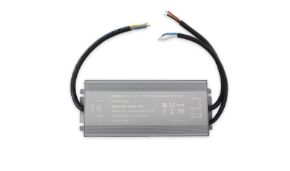
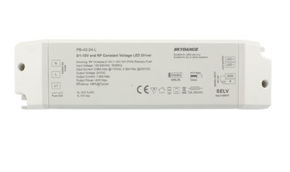
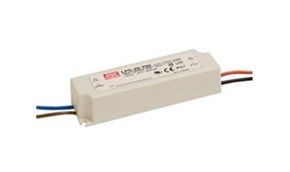
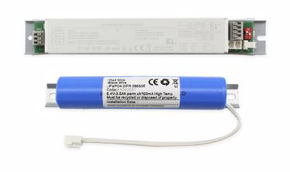
LED strips work with constant voltage power supplies (12, 24 or 48V), which keep the voltage stable as the load varies. Modules and some fixtures instead require constant current power supplies. Confusing the two types is one of the most serious errors. In the power supplies category you will find 24V and 48V models, smart versions with integrated control and solutions for emergency lighting.
How to size the power supply
- Calculate total power: meters of strip × W/m. Example: 12 m × 14.4 W/m = 172.8 W.
- Add a margin of at least 20%: 172.8 × 1.2 = about 207 W; a 240 W power supply is therefore chosen.
- Check voltage drop: at 24V it is advisable to power every 5 m or so or from both ends; at 48V the runs can be longer.
- Check compatibility with the dimmer and with the control protocol.
- Consider the environment: IP rating, temperature, ventilation and accessibility for maintenance.
How much does an always-on LED consume?
A frequent question from facility managers and business owners. The formula is: annual kWh = power (W) × hours ÷ 1000. A 10 m line of 9.6 W/m strip always on absorbs about 96 W plus power supply losses (about 10%): about 106 W, equal to about 930 kWh per year, i.e. about €232 with energy at €0.25/kWh. With sensors and 60% dimming in low-occupancy time bands, consumption can be drastically reduced. In lighting design, savings do not come only from the efficient source, but from the right light, in the right place, only when needed.
13. Lighting design: the step-by-step method
Every lighting design project follows, with variations, a recognizable path. Knowing it helps clients and installers understand times, costs and responsibilities, and helps the designer not to skip steps that are later paid for on site. Here are the phases of a lighting design project with linear LED systems.
Phase 1: brief and analysis
Objectives, activities, users, architectural constraints, budget and timing are collected. Natural light, materials, colors and surface reflections are analyzed. A good brief always contains the answer to a question: what should those entering this space feel?
Phase 2: luminous concept
The lighting designer defines the hierarchy of lights, the layers (ambient, functional, accent, dynamic), color temperatures and scenarios. The concept is often presented with sketches, night renders and "luminance maps" that show where the space will be brighter.
Phase 3: lighting calculation and software
The lighting calculation verifies illuminance, uniformity, glare (UGR) and consumption. The most used software, such as DIALux, Relux and AGi32, work with the photometric files of the fixtures (IES and LDT formats). For linear systems it is essential to have real photometric curves of the strip + profile + diffuser combination, not of the strip alone. These are the best lighting design programs in use today in professional studios.
Phase 4: choice of fixtures and specifications
Specifications are drawn up: type of strip (LED model, W/m, lm/m, CRI, CCT, voltage, IP), profile (section, finish, diffuser, accessories), power supplies, controllers, protocol. A well-written specification reports measurable values, not generic brands, so that the installer can verify the supply.
Phase 5: electrical and control layout
Power points, cable routes, position of power supplies (ventilated and accessible), control groups and DALI or DMX addresses are drawn. It is the phase in which voltage drop is prevented and future maintenance is foreseen.
Phase 6: realization, tuning and testing
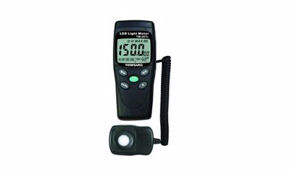
On site, installation, orientation, dissipation and connections are verified. At the end the lighting designer tunes the scenarios, measures lux with the luxmeter, checks the absence of flicker and delivers to the client a user manual with diagrams, product codes and maintenance programs.
| Phase | Output | Mistake to avoid |
|---|---|---|
| 1. Brief | Objectives and constraints document | Starting from products instead of people |
| 2. Concept | Sketches, renders, scenarios | Lighting everything uniformly |
| 3. Calculation | Lighting report | Using data of the strip alone without profile |
| 4. Specifications | Technical specification | Generic non-verifiable values |
| 5. Layout | Electrical and control diagrams | Inaccessible power supplies |
| 6. Testing | Measurements, manual, scenarios | Delivering without final tuning |
14. Lighting design by sector: shops, hotels, bars, offices, home
The principles are universal, but each sector has different priorities. Here we collect the answers to the most frequent questions of architects, interior designers, shop owners, hoteliers, restaurateurs, facility managers and creators, with the most suitable linear solutions.
Retail and clothing stores
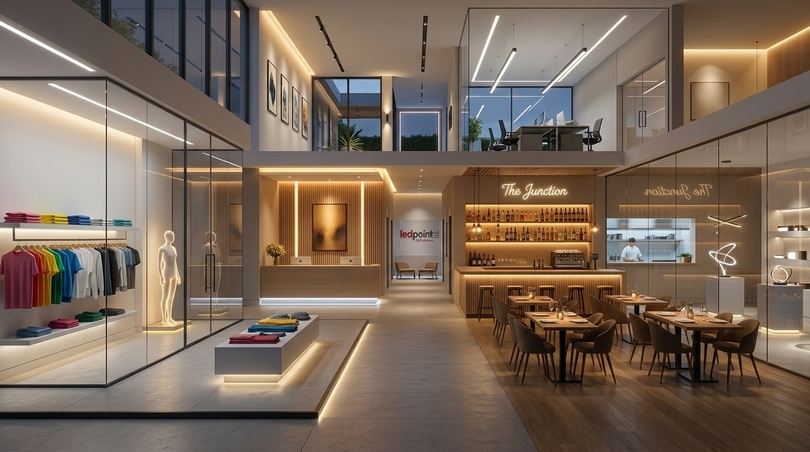
In retail, light sells. A window lit with correct contrast attracts the gaze from afar; a fitting room with faithful light reduces returns. Continuous 4000K CRI ≥ 90 lines on shelves, more intense accents on mannequins and warmer light in relaxation areas create a visual path. To change atmosphere between collections or seasons, CCT and RGBW strips with controllers allow modifying the environment without interventions. For windows, an illuminance level 2 to 5 times higher than that of the internal sales area is recommended.
Hotels and accommodation facilities
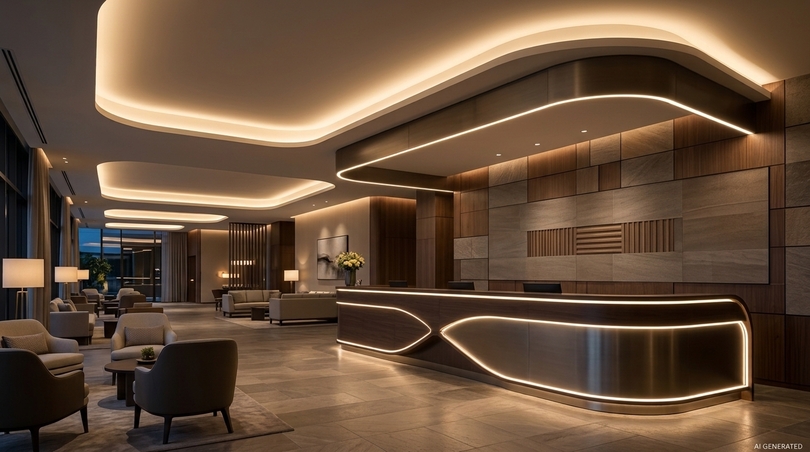
In the lobby, light must welcome: illuminated vertical surfaces, indirect grooves at 2700-3000K, accents on reception and works of art. In rooms, simple scenarios are needed (welcome, reading, night), courtesy light at low intensity under the bed or in passages, backlit mirrors with high color rendering. In corridors and stairs, low-consumption strips with sensors guarantee safety and savings 24 hours a day. For maintenance it is advisable to standardize a few codes of strips and profiles, choose accessible power supplies and products with long catalog availability. DALI or ZigBee systems allow centralized scenario management and automatic switching off of unoccupied rooms.
Bars and restaurants
In the dining room the most welcoming tone is between 2700 and 3000K, with high CRI to enhance dishes and faces. The counter is the stage: a backlit line under the top, bottle shelving with grazing light, possibly a neon flex with the venue's name. In the kitchen and laboratories, watertight IP65/IP67 profiles that are easy to clean and neutral 4000K light for food control are needed. In most cases it is possible to install LED lines without redoing the system, using the existing lines to power the new power supplies.
Offices and facility management
In offices the priority is visual comfort: 500 lux on the work surface according to UNI EN 12464-1, adequate uniformity, controlled glare (UGR ≤ 19) and flicker-free light. Suspended profiles with direct and indirect emission and tunable white systems reduce visual fatigue. To plan maintenance, inspection intervals are defined, installed codes are recorded and DALI diagnostics are used. Replacing traditional lighting with controlled linear LEDs can reduce lighting consumption by more than half, with even higher values when presence and daylight sensors are integrated.
Home lighting design: homes and interiors
In home lighting design, linear light allows creating atmospheres without filling the ceiling with spotlights. In the living room a perimeter indirect groove and an accent lamp are enough to create depth; in the kitchen an under-cabinet profile CRI 90 at 3000-4000K illuminates the worktop without shadows; in the bedroom warm light at low intensity, possibly under the bed, promotes relaxation; in bathrooms IP65 profiles and backlit mirrors. To match lights to furniture style, coordinated profile finishes (anodized aluminum, black, white) and color temperatures consistent with the materials are chosen.
Museums, galleries and architecture
In museums light must respect the work: high color rendering, absence of UV and IR, controlled levels. LED lines hidden along walls and in display cases, together with illuminated display boxes, offer uniform and discreet lighting. To enhance architecture, grazing lines are used on facades and columns, silicone neon flex to underline profiles and cornices, and IP67 strips for exposed elements.
Outdoor, garden and facade lighting
Outdoors, IP65 or IP67 products, protected power supplies and attention to light pollution are needed: light oriented downwards or towards the surfaces to be illuminated, never towards the sky, in compliance with regional laws. Silicone and polyurethane neon flex are ideal for marking paths, steps and pool edges; floodlights complete the project where more concentrated fluxes are needed.
Photographers, videomakers and content creators
For photos and videos, LED strips are valuable as background lights, backlights and atmosphere lights, while the main light on the subject normally requires dedicated panels. The key rules: CRI ≥ 90 for natural skin, color temperature between 3200 and 5600K consistent across all sources, dimmer with high-frequency PWM to avoid bands in videos. A neon flex sign in the background, slightly blurred, makes a home set recognizable: to avoid reflections, orient the lines towards opaque walls and not towards glossy surfaces. Solutions with plug-in power supply are easy to transport and configure.
15. Visual comfort, health and circadian light
Light is not only for seeing: it influences attention, mood, sleep and well-being. Contemporary lighting design integrates this knowledge into the project, and controllable linear systems are the most effective tool for doing so.
Glare and visual fatigue
Glare occurs when a very bright source enters the visual field. It is measured with the UGR (Unified Glare Rating) index: in offices the maximum recommended value is 19. With LED strips the risk arises when the line is exposed without a diffuser or with a diffuser that is too transparent. Deep profiles, opal diffusers and positioning outside the direct visual field are the first defenses against visual fatigue.
Flicker: the invisible flickering
Flicker, even when not consciously perceived, can cause fatigue and headaches in sensitive subjects and creates problems in filming. EU Regulation 2019/2020 introduced limits for mains sources (Pst LM and SVM indices). For LED strips the quality depends on the power supply and dimmer: high-frequency PWM and stabilized power supplies guarantee flicker-free light.
Is LED light harmful to health?
It is a recurring question. The answer, based on the photobiological safety standard IEC/EN 62471, is that quality LEDs for general lighting, used normally, do not represent a health risk: most fall into the exempt or low risk groups. Reasonable precautions concern avoiding staring directly at very intense sources and choosing warmer color temperatures in the evening, so as not to interfere with rest.
Circadian rhythm and human centric lighting
The circadian rhythm is the biological clock that regulates sleep and wakefulness, sensitive above all to the blue component of light. The human centric lighting approach proposes more intense and cooler light in the morning and mid-day, warmer and softer in the evening. With CCT strips or the Circadian Light line and a programmable controller, this pattern is reproduced in offices, schools, nursing homes and hotel rooms.
16. Standards, energy efficiency and sustainability
A lighting design project must be beautiful, but also compliant. This section summarizes the main Italian and European regulatory references and strategies for sustainable lighting.
The standards to know
| Reference | Scope | Why it matters in the project |
|---|---|---|
| UNI EN 12464-1 | Lighting of indoor workplaces | Lux, uniformity, UGR, color rendering for activities |
| UNI EN 12464-2 | Outdoor workplaces | Requirements for outdoor operating areas |
| UNI 11630 | Criteria for drafting the lighting project | Minimum contents of project documentation |
| UNI EN 13201 | Road lighting | Classes and requirements for roads and public spaces |
| UNI EN 1838 | Emergency lighting | Escape routes and safety |
| IEC/EN 60598 | Safety of lighting fixtures | Construction and safety requirements |
| IEC/EN 62471 | Photobiological safety | Classification of risk groups |
| Reg. EU 2019/2020 | Ecodesign of light sources | Minimum efficiency, flicker, product information |
| Reg. EU 2019/2015 | Energy labeling | Energy class of sources |
| DM 37/08 | Systems in buildings | Installation according to good practice and declaration of conformity |
| IP code (IEC 60529) | Protection rating | Correct choice for humid environments and outdoors |
Strategies for sustainable lighting
- Source efficiency: high-efficiency strips and profiles that do not waste flux.
- Intelligent control: presence sensors, daylight-based regulation, timed scenarios.
- Targeted design: illuminate surfaces and tasks, not empty space.
- Duration and maintainability: correct dissipation and individually replaceable components.
- Reduction of light pollution: shielded optics, warm temperatures outdoors, night switch-offs.
- End of life: correct disposal as WEEE of strips, power supplies and old fluorescent tubes.
System certification
At the end of the works the installer issues the declaration of conformity required by DM 37/08, with diagrams and materials used. For workplaces it is good practice to attach the lighting report with the measurements taken. Documenting the system means protecting the client, installer and designer, as well as facilitating future maintenance and expansion.

17. Common mistakes and practical advice
In years of consultancy to installers, designers and private individuals, the Ledpoint technical team has collected a precise case history of errors that compromise a linear light project. Many are trivial, but they cost dearly because they emerge when ceilings and plastering are already closed.
| Mistake | Consequence | How to avoid it |
|---|---|---|
| Powerful strip without dissipating profile | Flux drop, color drift, early failures | Aluminum profile of mass adequate to W/m |
| Undersized power supply | Flicker, overheating, switch-offs | Margin of at least 20% |
| Runs too long from one side | Weaker and warmer light at the end | Multiple power feeds, 24V or 48V |
| Exposed line with low-density strip | "Dotted" effect on reflections | COB, high density or opal diffuser |
| Different color temperatures in the same space | Disordered environment, perception of low quality | Same CCT and same SDCM tolerance |
| Power supplies in inaccessible positions | Maintenance with masonry work | Inspection hatches and as-built diagrams |
| Lighting everything uniformly | Flat space, no hierarchy | Stratify ambient, functional, accent |
| Ignoring IP rating in bathrooms and outdoors | Infiltrations, oxidation, electrical risk | IP65/IP67 and correct sealing |
| Control system too complex | Users who do not use the scenarios | Simple interfaces and manual controls |
Five tips from lighting designers
- Design the darkness: shadow areas give depth as much as light.
- Always test a sample: one meter of strip in the real profile, switched on on the real material, is worth more than any render.
- Hide the source: the eye must see the light, not the LED.
- Think about scenarios, not switches: every space has at least two or three different moments of use.
- Document everything: codes, lengths, power supply positions and control addresses.
18. How to become a lighting designer: courses, software, fees
Lighting design attracts architects, engineers, designers, entertainment technicians and installers who want to specialize. There is no specific professional register in Italy: the profession is built with targeted training, site experience and a portfolio of completed projects.
Study paths
The most common bases are degrees in architecture, engineering (electrical, building, energy) and design. On these are grafted university masters and executive courses, lighting design courses in person in Milan, Rome and other cities, and online lighting design courses. For entertainment there are dedicated paths for the light technician and theatrical and television lighting designer, often linked to theaters, academies and productions. Whatever the path, the decisive competence is formed on site: touching strips, profiles, power supplies and controllers, measuring light, making mistakes and correcting them.
Skills and tools
- Photometry and colorimetry: lumens, lux, luminance, CCT, CRI, photometric curves.
- Calculation and rendering software: DIALux, Relux, AGi32, in addition to CAD and BIM programs.
- Basic electrical engineering: constant voltage and constant current, voltage drops, protections.
- Control protocols: DALI, DMX, 0/1-10V, wireless systems.
- Standards: UNI EN 12464, UNI 11630, Ecodesign, system safety.
- Design culture: architecture, art, perception, history of light.
How much does a lighting designer earn and cost
Fees vary greatly based on experience, geographic area and type of assignment. A junior in a lighting design studio typically starts with salaries in line with those of young technical designers, while established professionals working on hotels, retail and museums can reach significantly higher levels. For the client, the cost of a lighting designer is usually calculated as a lump sum on the project, as a percentage of the system value or per surface area. A good project almost always pays for itself with energy savings, reduction of site errors and the perceived value of the space.
19. Lighting design trends 2026
The trends for home and commercial space lighting in 2026 confirm the direction of recent years and accelerate some components. Here are those we observe most frequently in professional requests.
Micro-lines and trimless
Lines of light become thinner: profiles of a few millimeters, trimless cuts in plasterboard, COB strips that become a continuous luminous thread. Light becomes increasingly a construction detail and less and less an object.
Dynamic white and circadian light
Tunable white is moving out of pilot projects and into offices, hotels and residences. CCT strips and circadian lines, managed by simple controllers or DALI systems, allow accompanying the day with varying temperatures and intensities.
Architectural neon flex and mini neon
Neon flex is moving out of signage and becoming a furnishing and architecture element: custom lamps, wall lines, luminous handrails. Mini formats open the way to very fine details on furniture and objects.
Wireless control and smart integration
ZigBee and wireless systems simplify retrofit and integration with voice assistants and apps, while in large projects DALI remains the standard for reliability and diagnostics. Battery-free controls reduce wiring and maintenance.
Measurable sustainability
Clients and specifications require verifiable data: real lm/W, duration, annual consumption, repairability. Companies able to provide laboratory measurements, such as Ledpoint datasheets obtained with an integrating sphere, become preferred partners of lighting designers.
Which chandeliers and lamps are used in 2026?
Alongside integrated linear light, sculptural pendant lamps remain protagonists, often combined with hidden linear systems: general light comes from grooves and profiles, while the chandelier becomes a decorative and accent element. Increasingly often it is the designers themselves who design custom suspensions with round profiles, neon flex and suspension cables.
20. FAQ on lighting design
The most frequent questions on lighting design, LED strips, profiles, neon flex and light control, with short and direct answers. Click on each question to read the answer.
What is lighting design?Lighting design is the design of light as an element of architecture and experience. It defines quantity, direction, color, quality and variation over time of light, to respond to people's activities, enhance space and communicate its identity, with attention to visual comfort, consumption and standards. |
What does a lighting designer do?The lighting designer analyzes the space, natural light and user needs, develops a luminous concept, performs the lighting calculation, chooses sources, profiles, power supplies and control systems, drafts the specifications and follows the site until the tuning of scenarios and testing of the system. |
What is the difference between a lighting designer and a lighting project designer?The lighting project designer focuses on the technical compliance of the system: lux, uniformity, glare, standards. The lighting designer includes these aspects but adds expressive and perceptual intention: visual hierarchies, atmospheres, dynamic scenarios, identity of the place. In practice many studios offer both skills. |
Why does lighting design increasingly use LED strips and profiles?Because LED strips in aluminum profiles offer miniaturization, efficiency above 120 lm/W, continuous lines without dotting, high color rendering, custom cutting and digital control. They allow integrating light into architecture, making the source disappear and leaving only the luminous effect visible. |
Is 3000K or 4000K light better?It depends on the use. 3000K is warm and welcoming, suitable for residences, hotels and restaurants; 4000K is neutral and clear, indicated for shops, offices and operating kitchens. In more advanced projects, CCT strips with adjustable white are used, which pass from one tone to another during the day or according to the scenario. |
How many lumens per square meter are needed?Indicatively 200-400 lumens per square meter for ambient light in a home, 800-1100 for an office at 500 lux and up to 1500 for sales areas and laboratories. The values depend on optics, reflections and height: for the final design a lighting calculation with dedicated software is needed. |
Does LED or neon produce more light?At equal power, LED produces much more light than glass neon and the fluorescent tube. In neon flex part of the flux is deliberately retained by the diffuser to obtain a homogeneous line: it is the compromise that creates the neon effect with consumption still much lower than traditional technology. |
Do you have to remove the ballast to install an LED tube?With many LED retrofit tubes yes: starter and ballast must be eliminated and the fixture rewired according to the manufacturer's instructions. Alternatively, the fixture can be replaced with an aluminum profile with LED strip and power supply, a solution that offers custom lengths, dimming and sensors. Work on the 230V part must be performed by an electrician. |
Which control system to choose for LED strips?For a home, dimmers and wireless controllers with remote control or app are often enough; for hotels, offices and museums DALI offers addressing, diagnostics and integration with building management; for dynamic effects and facades DMX is used; for wireless retrofit ZigBee. The choice depends on users, maintenance and required scenarios. |
Is LED light harmful to health?Quality LEDs for general lighting, used normally, are not considered harmful: they mostly fall into the exempt or low risk groups of the IEC/EN 62471 standard. It is advisable to avoid staring at very intense sources, choose flicker-free power supplies and prefer warmer light in the evening hours. |
How much does an always-on LED strip consume?It is calculated by multiplying power by hours and dividing by one thousand. Ten meters of 9.6 W/m strip always on consume about 930 kWh per year, power supply included, equal to about 230 euros at €0.25/kWh. Presence sensors and dimming can significantly reduce these values. |
How does one become a lighting designer?Usually one starts with a degree in architecture, engineering or design, attends masters and lighting design courses in person or online, learns software such as DIALux and Relux and gains experience in lighting design studios and on site. The portfolio of completed projects is the real business card. |
21. Light as a project
From Appia's stage to trimless light cuts, lighting design has always sought the same thing: a light capable of revealing space without imposing itself. LED strips, aluminum profiles, neon flex and controllers are today the tools that make this research within reach of every project, from the large hotel to the small shop, from the museum to the condominium garage. They work truly when chosen as a system: the right strip in the right profile, with the right diffuser, the sized power supply and a control that the user knows how to use.
To translate your concept into a system, explore the LED strips, aluminum profiles, neon flex and flexible LED tubes and controllers categories, download the Ledpoint catalogs with datasheets and photometric curves or request consultancy from Ledpoint technicians for combinations, calculations and professional quotes. For further insights visit the Ledpoint blog and the guide to cutting neon flex and LED strips.
This article was developed with the support of artificial intelligence and subsequently reviewed, corrected and validated by the technical team of Ledpoint.it, which guarantees its reliability and conformity to official sources.