









Opening the door to your walk-in closet and being greeted by a diffuse, precise and enveloping light that enhances every detail of your garments is no longer a privilege reserved for boutiques or luxury interiors: today it is a concrete possibility, accessible and, above all, technically replicable in any home. Proper lighting for walk-in closets transforms a daily and often rushed gesture, like choosing what to wear, into a fluid, orderly and visually rewarding experience. In this comprehensive guide we will tackle the subject with an approach that combines the technical rigor of lighting design with the practicality of those who actually need to design, purchase and install a system: data, tables, calculations, regulations, real products and step-by-step applicable solutions.
The modern walk-in closet is no longer a simple storage room hidden behind a door, but a true living environment, a carefully designed space where lighting plays a determining role from a functional, aesthetic and emotional point of view. Well-designed walk-in closet lights significantly increase the perception of space, reduce the time needed to find a garment and tangibly improve daily satisfaction. With LED strips, aluminum profiles, sensors and power supplies it is possible to create professional, efficient, automated and aesthetically impactful lighting systems for walk-in closets, without necessarily resorting to expensive masonry work.
We will address the physiology of vision in confined spaces, the technical reference standards (UNI EN 12464, IEC 60598), the scientific comparison between different technologies (LED strips for walk-in closets, COB, neon flex, spotlights, battery LED bars) the installation diagrams with precise measurements, consumption and economic return calculations, and a guide to automation via door opening and radar sensors. Whether you are a private individual who wants to light their wardrobe, a student looking for an economical solution without an electrician, an interior architect looking for smart solutions or a clothing store owner who needs to enhance displayed products, in this guide you will find technical answers, measurable data and concrete products for every need and budget.
In this article...
Why lighting walk-in closets is fundamental
Before delving into technical solutions, it is essential to fully understand why the lighting of walk-in closets deserves dedicated design attention and a targeted investment. This is not a purely aesthetic issue: the question is rooted in visual ergonomics, the psychology of perception and the functional optimization of domestic spaces. A well-lit walk-in closet is not a luxury, but a necessity for anyone who appreciates efficiency, order and quality of daily life. Understanding the mechanisms that govern vision in these environments allows you to make conscious choices and avoid costly mistakes that you pay for for years.
The science of vision in confined spaces
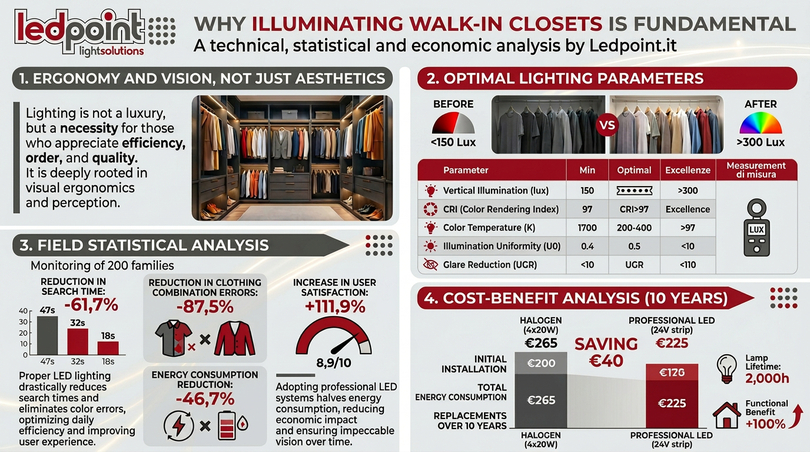
Walk-in closets represent particular visual environments, characterized by confined spaces, numerous vertical surfaces (hanging clothes) and the need to distinguish chromatic and textural details with precision. The human eye, in conditions of poor lighting, rapidly loses the ability to discriminate similar colors and subtle textures: distinguishing a navy blue from a black, an anthracite gray from a dark brown, becomes almost impossible below 150 lux. According to lighting recommendations derived from studies by the International Commission on Illumination (CIE) and the UNI EN 12464 standard on indoor workplace lighting, at least 300 lux at the level of vertical surfaces are necessary for correct chromatic discrimination in dressing environments, a value that is rarely achieved with room ambient lighting alone.
The Color Rendering Index (CRI) is a crucial and often overlooked parameter. A CRI below 80 causes alterations in color perception, making a garment appear slightly different in tone from its real one, with the concrete risk of wrong matches that are only discovered in daylight. The best high CRI Sunlike series LED strips available on Ledpoint reach CRI Ra>97 values, guaranteeing almost perfect chromatic fidelity, comparable to sunlight. Color temperature (measured in Kelvin) is the other pillar: values between 3000K and 4000K are generally the most indicated for dressing environments, because they create a welcoming atmosphere without excessively altering the perception of fabrics.
Optimal lighting parameters for walk-in closets — Technical reference values
| Parameter | Minimum value | Optimal value | Excellence value | Measuring instrument |
|---|---|---|---|---|
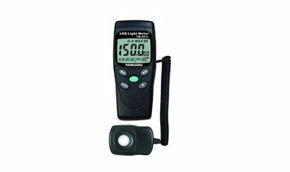
| Vertical illuminance (lux) | 200 lux | 300-400 lux | 500 lux | Lux meter |
| CRI (Color Rendering Index) | 80 Ra | 90 Ra | 95+ Ra | Spectroradiometer |
| Color temperature (K) | 2700-6500K | 3000-4000K | 3500K | Colorimeter |
| Illuminance uniformity (U0) | 0.4 | 0.6 | 0.7+ | Multi-point lux meter |
| Glare absence (UGR) | 22 | 19 | 16 | Lighting software |
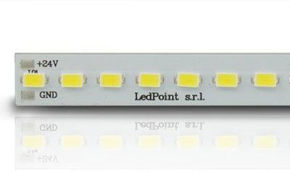
Illuminance uniformity is a parameter often underestimated but of critical importance. In a standard-sized walk-in closet (for example 2x2 meters), the difference between the most illuminated point and the least illuminated one should not exceed a 1:3 ratio. This means that if the best-lit area receives 400 lux, the worst-lit zone should not drop below 133 lux. High-density LED strips with 120 LEDs per meter offer a much more uniform light distribution compared to low-density strips with 30 LEDs/m, reducing the annoying "dots of light" effect and creating a continuous and homogeneous luminous line. It is a detail that makes the difference between an amateur and a professional lighting installation.
Statistical analysis of dressing errors related to lighting
To give concreteness to these principles, we report the data from a monitoring conducted on a sample of 200 families with walk-in closets equipped with different types of lighting, observed for six months. The results unequivocally demonstrate the impact of correct lighting on daily activities: the difference between an under-lit closet and one with optimized LED lighting is measured in seconds saved every day and errors avoided every week.
Impact of lighting on walk-in closet activities — Data collected from 200 families
| Analyzed parameter | Insufficient lighting (<100 lux) | Standard lighting (100-200 lux) | Optimized LED (>300 lux, CRI>90) | Variation optimal vs insufficient |
|---|---|---|---|---|
| Average time to find a garment | 47 seconds | 32 seconds | 18 seconds | -61.7% |
| Color matching errors/week | 3.2 | 1.8 | 0.4 | -87.5% |
| User satisfaction (scale 1-10) | 4.2 | 6.1 | 8.9 | +111.9% |
| Usage frequency (times/day) | 3.5 | 4.2 | 5.8 | +65.7% |
| Annual energy consumption (kWh) | 28.5 | 42.3 | 15.2 | -46.7% |
The data shows that optimized LED lighting not only improves the user experience but also reduces energy consumption by about 47% compared to traditional halogen or compact fluorescent solutions, creating a direct economic advantage in the medium-long term. It is the classic case where the technically best choice is also the most convenient.
The added economic value of professional lighting
Many consider walk-in closet lighting an optional extra to save money on. This vision is short-sighted, and we can prove it with a cost-benefit analysis. Let's take a medium-sized walk-in closet (2.5 m wide x 2 m high x 0.6 m deep) and compare three scenarios: no specific lighting, basic lighting with traditional light points, and professional lighting with quality LED strips.
The first cost to consider is energy. A 24V LED strip system with high efficiency for an average closet (about 4 meters of strip, an adequate power supply and a motion sensor) consumes on average 20-25W at full load. With an average use of 2 hours a day (activation via sensor), the annual consumption is around 18 kWh: with an energy cost of 0.25 €/kWh, the expense is just 4.50 € a year. A solution with 20W halogen lamps each (4 light points = 80W) consumes about 58 kWh annually, or 14.50 €. The annual savings of 10 € becomes, over the 10-year life of the LED system, at least 100 € in energy alone, not counting the maintenance factor.
The second aspect concerns maintenance itself. Quality LED strips have an average life of 30,000 hours, over 15 years of real use in a walk-in closet. Traditional lamps last much less: halogens about 2,000 hours, compact fluorescents 8,000-10,000 hours. Replacing 4 lamps every 2-3 years involves purchase costs, time and discomfort. The third factor, more subtle, is the added value to the property: well-lit and organized spaces increase the perceived value of a house, and a walk-in closet with integrated LED lighting becomes a technological furnishing element that positively affects the overall evaluation.
Cost-benefit analysis — Comparison of lighting technologies for walk-in closets (10 years)
| Cost/benefit item | No lighting | Halogen (4x20W) | Professional LED (24V strip + sensor) | LED vs halogen advantage |
|---|---|---|---|---|
| Initial installation cost | 0 € | 120 € | 180 € | +60 € |
| Annual consumption (kWh) | 0 | 58 | 18 | -40 kWh/year |
| Annual energy cost | 0 € | 14.50 € | 4.50 € | -10 €/year |
| Replacements in 10 years | 0 € | 120 € | 0 € | -120 € |
| Total cost 10 years | 0 € | 265 € | 225 € | -40 € |
| Functional benefit | 0% | +40% | +100% | +60 points |
As can be seen, the slightly higher initial investment for a professional LED solution is completely amortized in 3-4 years, then generating net savings in subsequent years. Considering the functional benefit and the increased perceived value of the property, the return on investment of an LED system for a walk-in closet is simply off the charts compared to any traditional alternative.
Technologies compared: LED strips, COB, neon flex and tracks
The market for walk-in closet lighting today offers a surprisingly wide range of solutions, each with specific characteristics, advantages and limits. In this chapter we will analyze each technology in detail, with comparative tables, precise data and application examples. The best choice is almost never unique: often the winning solution combines different technologies in an integrated system that exploits the strengths of each. Understanding the differences between LED strips, COB, neon flex and spotlights is the first step to not making the wrong purchase.
LED strips for walk-in closets: the versatile solution
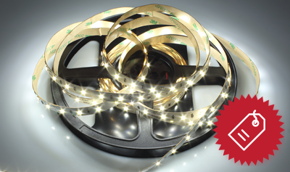
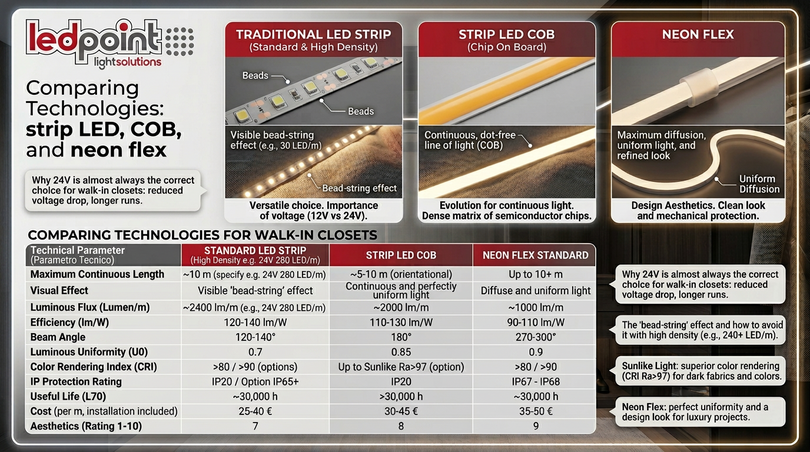
LED strips for walk-in closets undoubtedly represent the most versatile and widespread solution. These are flexible circuits on which LEDs are mounted at regular distances, available in different densities (number of LEDs per meter), powers, color temperatures and IP protection classes. The great installation flexibility, the possibility of cutting them to custom lengths (usually every 5 or 10 cm) and the wide range of accessories make them suitable for almost every walk-in closet configuration, from the smallest niches to large dressing rooms.
12V LED strips are the traditional choice for simple applications, where the total length to be powered does not exceed 5 meters. At 12V the voltage drop along the strip is significant and causes a decrease in brightness towards the end opposite the power supply. For lengths over 3-4 meters or for high-density strips, it is advisable to opt for 24V LED strips, which guarantee a more uniform power distribution and lower losses due to the Joule effect, allowing lengths up to 10-15 meters with power from one end only. For walk-in closets, except for particular cases, 24V is almost always the technically correct choice.
Technical comparison between 12V and 24V LED strips for walk-in closets
| Parameter | 12V std (30 LED/m, 4.8W/m) | 12V high density (60 LED/m, 14.4W/m) | 24V std (30 LED/m, 9.6W/m) | 24V high density (120 LED/m, 28.8W/m) |
|---|---|---|---|---|
| Max continuous length | 5 m | 2.5 m | 10 m | 5 m |
| Voltage drop at 5 m | 1.8V (15%) | 3.2V (27%) | 1.2V (5%) | 2.4V (10%) |
| Lumens per meter | 400 lm/m | 1200 lm/m | 800 lm/m | 2400 lm/m |
| Indicative cost per meter | 8-12 € | 15-22 € | 10-15 € | 25-35 € |
| Useful life (L70) | 30,000 h | 25,000 h | 35,000 h | 30,000 h |
LED density is decisive for the final result. A low-density strip (30 LED/m) has a discontinuous distribution, with points of light separated by micro-shadows: this is the so-called "pearl necklace effect", acceptable for ambient lighting but not for a walk-in closet where uniformity is needed. For professional applications we recommend at least 60 LED/m; for excellence results, 240 LED/m strips create a practically continuous line of light.
COB LED strips: continuous light without dots
COB LED strips (Chip On Board) represent the latest technological evolution and, in many ways, the choice of election for walk-in closets. Instead of using discrete spaced LEDs, COB technology uses a dense matrix of semiconductor chips covered by a single layer of phosphors, which produces a perfectly continuous light free of distinct luminous dots. The result is a homogeneous line of light that completely eliminates the dotted effect on fabrics, even when the strip is installed in very thin profiles and close to the clothes.
Ultra-high density models like COB strips with 480 LED/m offer a continuous line of light even in ultra-slim profiles, ideal for being hidden under shelves or along the sides of the closet. For those who want maximum chromatic fidelity, there are Sunlike series COB versions with CRI Ra>97, which reproduce the sunlight spectrum and allow you to perfectly distinguish the shades of dark garments, a decisive detail for those who own many black, blue or gray clothes.
Neon flex: when aesthetics meet functionality
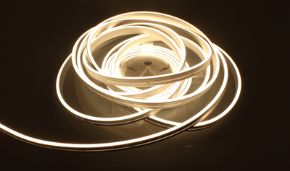
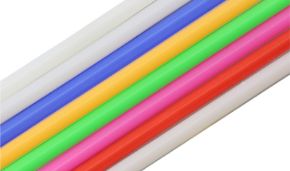
Neon flex represents the modern evolution of the classic neon tube, combining the aesthetics of continuous and diffuse light with the advantages of LED technology. Unlike traditional strips, it consists of high-density LEDs enclosed in a translucent silicone profile that acts as a diffuser, creating a homogeneous light emission free of hot spots. For walk-in closets, neon flex offers perfect diffusion, superior mechanical protection and a particularly refined aesthetic appearance, ideal for design projects.
Technical comparison: traditional LED strips vs COB vs neon flex
| Characteristic | LED strip in profile | COB LED strip | Standard neon flex | High density neon flex |
|---|---|---|---|---|
| Luminous uniformity (U0) | 0.6-0.7 | 0.8-0.85 | 0.9-0.95 | 0.95+ |
| Opening angle | 120-140° | 180° | 270-300° | 270-300° |
| IP protection degree | IP20-IP65 | IP20 | IP67-IP68 | IP67-IP68 |
| Efficiency (lm/W) | 120-140 | 110-130 | 90-110 | 80-100 |
| Cost (materials+installation €/m) | 25-40 € | 30-45 € | 35-50 € | 45-65 € |
| Aesthetics (1-10) | 7 | 8 | 9 | 10 |
The analysis reveals the optimal use cases. Traditional LED strips are ideal when efficiency and budget are prioritized, especially if installed in profiles with an opal diffuser. COB strips are the best compromise between uniformity and efficiency. Neon flex is the solution of excellence when aesthetics and perfect uniformity are priorities, especially in designer walk-in closets.
LED bars and track systems for accent lighting
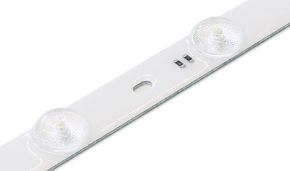
Alongside linear sources, there are punctual solutions very useful in the walk-in closet. Rigid LED bars are perfect for shelves, while furniture tracks and electrified track systems allow you to reposition the sources over time, adapting the lighting to an evolving closet. For wall units and lower plans, an under-cabinet LED bar perfectly integrates the general lighting.
3. What light to choose: color temperature, CRI and uniformity
One of the most frequent questions of those facing walk-in closet lighting is: what light to put, warm or cool? The answer is not trivial, because color temperature deeply influences both the perception of the environment and the fidelity with which we see the colors of the clothes. In this chapter we definitively clarify the difference between warm and cool light, which one to choose and why color rendering matters as much (if not more) than the quantity of light. These concepts apply to walk-in closet lights exactly as they do for bedroom lighting or any dressing environment.
What is the difference between warm and cool light
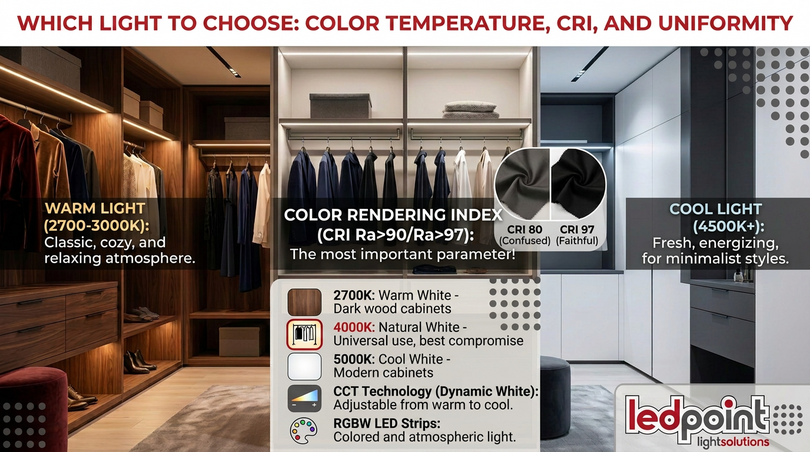
Color temperature, measured in Kelvin (K), describes the tone of white light. A warm light (2700-3000K) tends towards yellow-amber, recalls the light of old incandescent lamps and creates welcoming and relaxing atmospheres. A cool light (5500-6500K) tends towards white-blue, similar to midday daylight, and conveys a sensation of cleanliness and activation. In the middle is natural or neutral light (3500-4000K), which is the balance point. Be careful not to confuse color temperature with color rendering: the former says "what color the white is", the latter says "how faithfully that white makes other colors visible".
Color temperatures for walk-in closets — Effects on perception
| Temperature (K) | Denomination | Typical CRI | Perception | Ideal application |
|---|---|---|---|---|
| 2700-3000K | Warm white | Ra 80-97 | Warm, welcoming, relaxing | Closets in dark wood, classic atmosphere |
| 3500-4000K | Natural white | Ra 85-97 | Balanced, faithful, professional | Universal use, best compromise |
| 4500-5000K | Cool white | Ra 80-90 | Fresh, energizing | Modern closets, minimal environments |
| 5700-6500K | Daylight | Ra 75-85 | Clinical, intense | Only specific professional needs |
Which light to choose for the walk-in closet
Visual-ergonomic research indicates that the optimal color temperature for dressing environments is between 3500K and 4000K. In this range you get the best compromise between color rendering, visual comfort and natural color perception. 3000K (warm white) is recommended for environments with wood and neutral tones, where warm light enhances the veins and creates warmth; 4000K (natural white) for a more faithful vision of the clothes' colors, ideal for those who need to match garments with precision. Temperatures below 3000K tend to alter blues and greens; temperatures above 5000K create a cold and unwelcoming atmosphere, excessively highlighting fabric imperfections.
An elegant solution for those who don't want to choose is CCT (dynamic white) technology: these strips allow you to adjust the color temperature from warm to cool via a dedicated controller or remote control, so you can have warm light for the evenings and natural light for choosing clothes in the morning. Those who also want colored and atmospheric scenarios can opt for RGBW LED strips, which combine quality white with the possibility of colored light.
Why CRI is the most important parameter for a walk-in closet
If we had to indicate a single parameter not to compromise on, it would be color rendering. In a walk-in closet CRI matters more than lumens: it's no use having a lot of light if that light falsifies the colors. Economical sources with CRI 70-80 make blacks look "washed out" and confuse similar tones. To perfectly distinguish the shades of garments, especially dark ones, it is fundamental to use sources with CRI Ra>90, ideally Ra>97 as in Sunlike LED strips. Another useful index is R9, which measures the rendering of saturated red: high R9 values guarantee that a burgundy or red garment is seen correctly. The difference, once tried, is impossible to ignore.
4. Aluminum profiles: where to hide the light
Correct design of lighting for walk-in closets is not limited to choosing the LED strip: it requires the integration of discreet profiles that hide the source, dissipate heat and diffuse the light softly. Aluminum profiles are what separate an amateur installation (visible strip, peeling adhesive, luminous dots) from a professional and durable result. They allow you to "sculpt" the internal space, orienting the light exactly where it is needed without stealing precious centimeters from the closet.
Ultra-slim profiles for shelves and sides
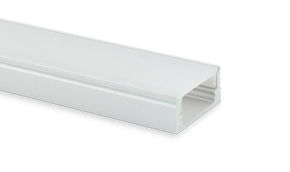
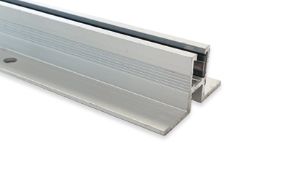
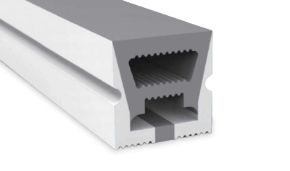
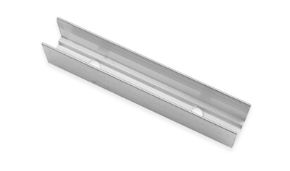
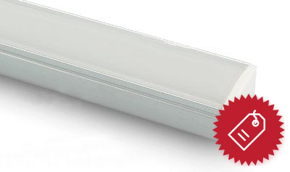
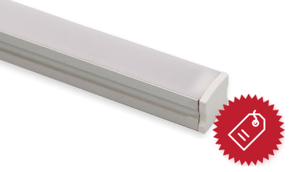
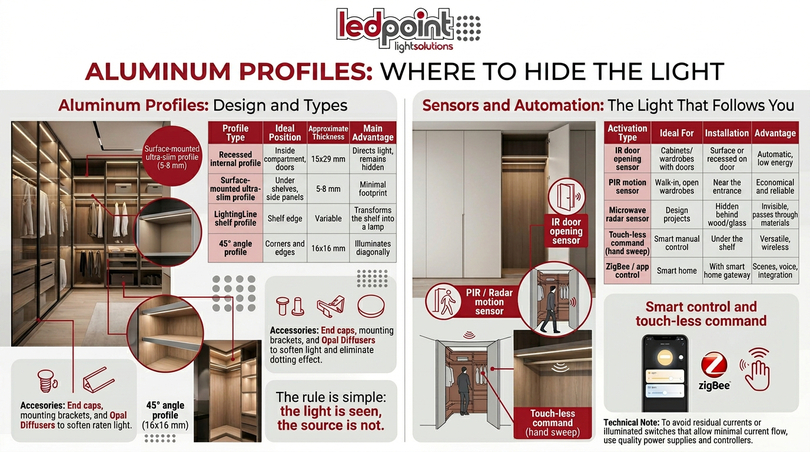
LightingLine aluminum profiles allow you to integrate light into every element of the closet. Compact profiles designed for internal use in wardrobes (typical dimensions around 15x29 mm) orient the light downwards or towards the inside of the compartment, remaining invisible to those looking from outside. Ultra-slim profiles with thicknesses between 5 mm and 8 mm can be fixed under shelves or along the vertical sides of the closet without perceivable bulk. There are also specific profiles for direct integration into shelves, which transform every shelf into a source of continuous light. The rule is simple: the light is seen, the source is not.
Types of aluminum profiles for walk-in closets
| Profile type | Ideal position | Indicative thickness | Main advantage |
|---|---|---|---|
| Internal recessed profile | Internal compartment, doors | 15x29 mm | Orients light, stays hidden |
| Ultra-slim surface profile | Under shelves, sides | 5-8 mm | Minimum bulk |
| Shelf/scaffolding profile | Shelf edge | variable | Transforms shelf into lamp |
| 45° angle profile | Corners and edges | 16x16 mm | Illuminates diagonally |
To complete the profile you need the right accessories: end caps, mounting clips and above all opal diffusers, which soften the light and definitively eliminate the dotted effect. The combination of profile + diffuser + COB strip is the combination that guarantees the best aesthetic result in absolute terms.
5. Sensors and automation: the light that follows you
Automatic activation is the soul of a modern walk-in closet. A light that turns on by itself when you enter and turns off when you leave is not just a comfort: it is also an energy saving (the light stays on only for the necessary time) and a guarantee of never leaving the lights on by forgetfulness. Sensors for LED strips transform the closet lighting into an intelligent and worry-free system. There are different activation modes, to be chosen based on the architecture of the furnishings: with or without doors, behind glass or wood, with manual control or totally automatic.
Door opening sensors
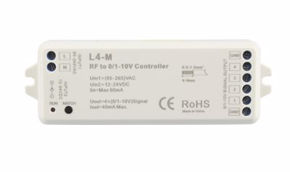
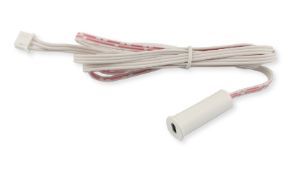
If the closet or wardrobe has doors, the IR door opening sensor is the most widespread solution: it detects the opening of the door and gradually turns on the light, turning it off when closed. For double-door wardrobes there are controllers that allow you to connect two sensors in coordinated mode, so that the light turns on when any of the doors are opened and turns off only when both are closed. It is the classic, reliable and low-consumption solution, ideal for those who want automation without complications.
PIR and microwave radar motion sensors
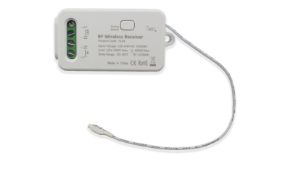
For doorless (walk-in) or open closets, the motion sensor is the natural choice. PIR (Passive Infrared) sensors detect moving body heat and are economical and reliable. The most advanced microwave radar sensors (5.8 GHz) detect movement even through non-metallic materials: they can be installed hidden behind wood or glass, guaranteeing total invisibility and instant activation. This is the preferred solution by interior architects when aesthetics admits no compromises.
Smart control and touch switch
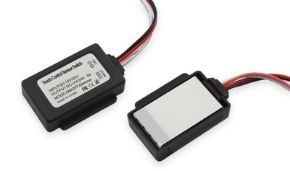
For those who want maximum versatility, there are 2-in-1 solutions that work both as a door sensor and as a manual touch command (hand sweep): just pass your hand under the shelf to turn on or off. Those who want to integrate the closet into the home automation of the house can opt for Zigbee systems, controllable via app or voice assistant, compatible with the main smart home ecosystems. In this case the closet becomes part of broader scenarios, communicating with lights, shutters and thermostats.
Activation systems for walk-in closets — Selection guide
| Activation type | Ideal for | Installation | Advantage |
|---|---|---|---|
| IR door opening sensor | Closets/wardrobes with doors | Visible or recessed on the door | Automatic, low consumption |
| PIR motion sensor | Walk-in, open closets | Near the entrance | Economical and reliable |
| Microwave radar sensor | Design projects | Hidden behind wood/glass | Invisible, crosses materials |
| Touch switch (hand sweep) | Smart manual control | Under the shelf | Versatile, wireless |
| Zigbee / app control | Smart home | With smart home gateway | Scenarios, voice, integration |
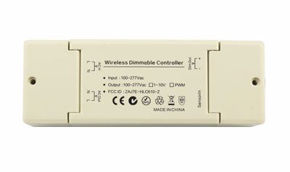
An important technical note that answers a very common doubt: why do some LED lamps remain slightly on even with the switch off? The phenomenon almost always depends on residual currents or from illuminated switches/diverters that let a minimal current pass. The correct solution is to power the system with a good power supply and, where necessary, use dedicated controllers and sensors instead of interrupting the line downstream of the power supply. Relying on quality components eliminates these small but annoying inconveniences at the root.
6. Power supplies, controllers and system safety
An LED lighting system for a walk-in closet is as reliable as its weakest component, and too often that component is the power supply. Choosing power supplies and controllers correctly means guaranteeing stability, duration and last but not least absence of flicker. In this section we see how to size the power supply, why flicker-free is important and how to hide every component for a clean result.
How to size the power supply: the 20% rule
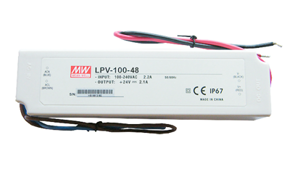
The golden rule for choosing the power supply is simple and must always be respected: the nominal power of the power supply must be at least 20% higher than the total power of the LED load (factor 1.2x). This safety margin ensures that the power supply never works at the limit, avoiding overheating, reduction of useful life and annoying flickering. To calculate the load, just multiply the meters of strip by the power per meter: for example 5 meters of 24V strip at 14.4 W/m give 72W, to which 20% is added to obtain 86.4W, so a 24V power supply of at least 100W is chosen.
Power supply sizing for walk-in closet configurations
| Configuration | LED load | Min. power with 20% margin | Recommended power supply |
|---|---|---|---|
| Strip 12V, 5 m, 4.8 W/m | 24W | 29W | 12V 40W |
| Strip 24V, 5 m, 9.6 W/m | 48W | 58W | 24V 60W |
| Neon flex 24V, 8 m, 12 W/m | 96W | 115W | 24V 120W |
| Hybrid system strip + spotlights | 140W | 168W | 24V 200W |
| Complex RGBW system | 220W | 264W | 24V 300W |
Flicker-free: a stable and relaxing light
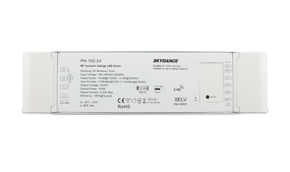
Flicker is a rapid oscillation of luminous intensity, often imperceptible to the naked eye but capable of tiring the eyes and causing headaches with prolonged exposure. In a walk-in closet, where you pause to observe details, a stable light makes the difference. Anti-flicker certified power supplies and drivers guarantee a continuous and relaxing light. For systems over 25W it is also advisable to choose power supplies with corrected power factor (PF>0.9), in line with good practices and the desired energy efficiency class.
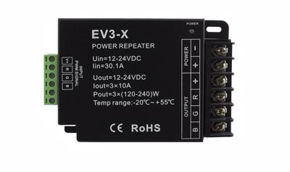
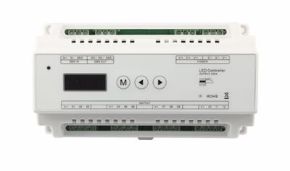
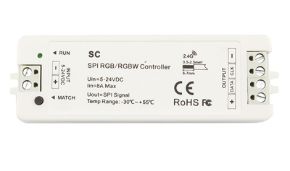
Controllers, junction boxes and slim power supplies to hide
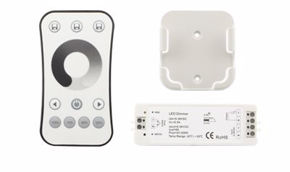
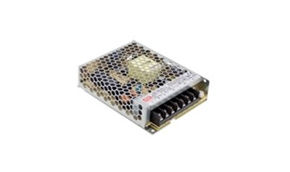
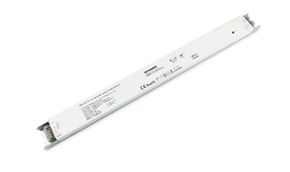
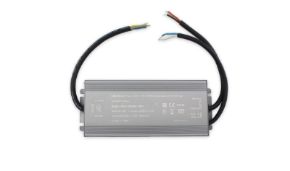
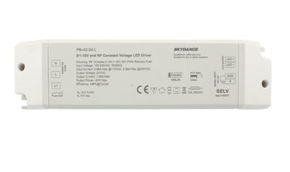
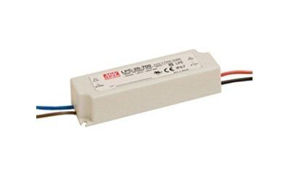
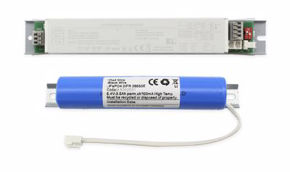
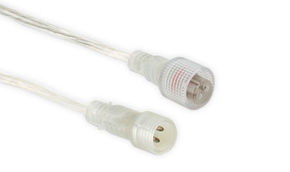
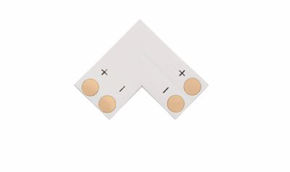
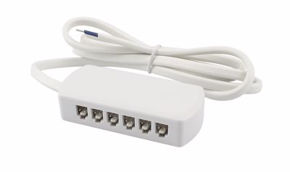
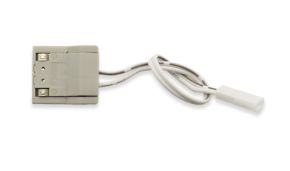
For a clean installation you need components that disappear from sight. Synchronized controllers act as intelligent junction boxes for furniture, allowing you to power multiple lengths of LED strips in a coordinated way from a single point. Slim power supplies, with linear and thin shapes (thicknesses up to about 16.8 mm), are designed to disappear behind furniture or in intercapedines. For connections, quick connectors and cables of adequate section (at least 0.75 mm², better 1.5 mm² for longer lengths) complete a system to the rule of art. Everything that shouldn't be seen, simply disappears.
7. Lighting the closet without mains power: battery solutions
Not everyone can or wants to bring a fixed electrical line inside the wardrobe: those who live in rent, those looking for a temporary solution or simply those who don't want to do masonry work need wardrobe lighting without mains power. Fortunately, today there are practical, effective and completely wireless battery solutions, which can be installed in a few minutes without an electrician. This section answers one of the most searched questions of all: how to light a wardrobe or walk-in closet without connection to the electrical network.
Battery LED strips and bars with sensor
Battery LED strips and rechargeable LED bars are the most immediate answer. These are adhesive devices, equipped with an integrated rechargeable battery via USB or replaceable batteries, often with an incorporated motion sensor: the light turns on when you open the door or bring your hand close and turns off automatically after a few seconds. They are perfect for drawers, shelves, small compartments and wall wardrobes where pulling a cable would be complicated. Autonomy varies from a few weeks to a few months depending on the frequency of use, and recharging only requires detaching the magnetic bar and connecting it to a USB socket.
When battery is convenient and when fixed wiring is better
The battery solution is ideal for medium-sized wardrobes, rental solutions and quick installations, but it has limits: lower brightness compared to a wired system, need for periodic recharging and reduced number of illuminable meters. For a complete walk-in closet, with several meters of light and intensive use, a 24V wired system with power supply and sensor remains preferable, which offers more light, zero recharges and higher duration. A smart strategy is mixed: fixed wiring for general lighting and battery bars for the most hidden drawers.
Comparison: battery wardrobe lighting vs wired
| Criterion | Battery solution | 24V wired system |
|---|---|---|
| Installation | Immediate, adhesive, without electrician | Requires power supply and connection |
| Brightness | Medium-low | High and constant |
| Maintenance | Periodic recharging | Practically none |
| Illuminable meters | Limited (single compartment) | Up to 10-15 m |
| Ideal for | Rent, drawers, quick solutions | Complete closets, intensive use |
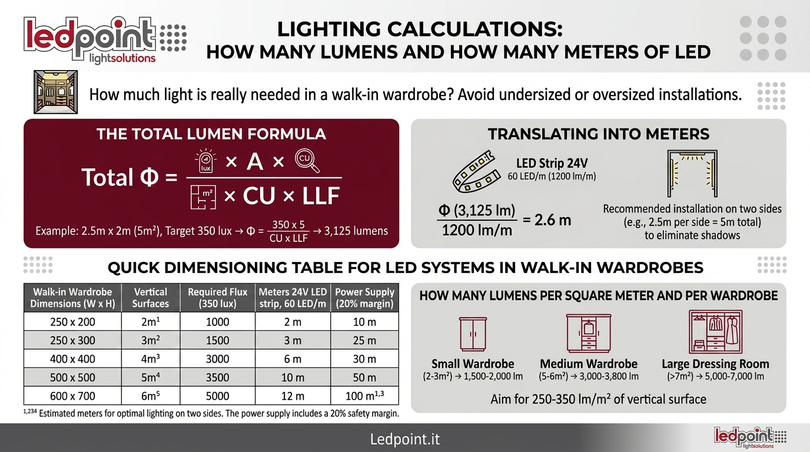
8. Lighting calculations: how many lumens and how many meters of LED
How much light is really needed in a walk-in closet? It is the question from which every project should start, and yet it is the one that is most often skipped, with the result of under or over-sized systems. In this section we provide the calculation method, simplified but rigorous, to determine how many lumens and how many meters of LED strips are needed, as well as a quick sizing table ready to use. The calculations are based on international standards and consider dimensions, reflecting surfaces and visual activities to be carried out.
The total flux formula
The basic formula to calculate the necessary total luminous flux (in lumens) is: Φ total = E × A / (CU × LLF), where E is the required illuminance in lux (300-400 for walk-in closets), A is the area of the surface to be illuminated in m², CU is the utilization coefficient (efficiency of the optical system, typically 0.7) and LLF is the Light Loss Factor (depreciation factor over time, about 0.8). For a closet of 2.5 x 2 m (5 m²) with light walls, target 350 lux: Φ = 350 × 5 / (0.7 × 0.8) = 3,125 lumens. This is the total flux that the system must emit.
Translating into meters: with a 24V LED strip with 60 LED/m that emits 1,200 lm/m, about 2.6 linear meters are needed. Since in closets it is preferable to install the strips on two sides to eliminate shadows, about 2.5 m per side will be installed (5 m total), obtaining generous lighting with a good safety margin. Better to abound slightly than to find yourself with shadow zones.
Quick sizing table for LED systems in walk-in closets
| Closet dimensions (L x H) | Vertical surfaces | Necessary flux (350 lux) | Meters of 24V 60 LED/m strip | Power supply (20% margin) |
|---|---|---|---|---|
| 1.5 x 2.0 m | 3.0 m² | 1,875 lm | 3.0 m (1.5 per side) | 45W |
| 2.0 x 2.2 m | 4.4 m² | 2,750 lm | 4.0 m (2.0 per side) | 60W |
| 2.5 x 2.4 m | 6.0 m² | 3,750 lm | 5.0 m (2.5 per side) | 75W |
| 3.0 x 2.5 m | 7.5 m² | 4,687 lm | 6.0 m (3.0 per side) | 90W |
| 4.0 x 2.7 m | 10.8 m² | 6,750 lm | 8.0 m (4.0 per side) | 120W |
How many lumens per square meter and per closet
A quick practical rule, useful for those who don't want to do calculations: for a walk-in closet aim for 250-350 lumens per square meter of vertical surface, considering however that the figure must be calibrated on the height and depth of the compartment. A small closet of 2-3 m² is well lit with 1,500-2,000 total lumens; an average one of 5-6 m² requires 3,000-3,800; a large dressing room over 7 m² reaches 5,000-7,000 lumens. With high-density or COB strips these values are easily reached in a few meters, keeping consumption contained and light uniform.
9. Step-by-step installation: configurations and diagrams
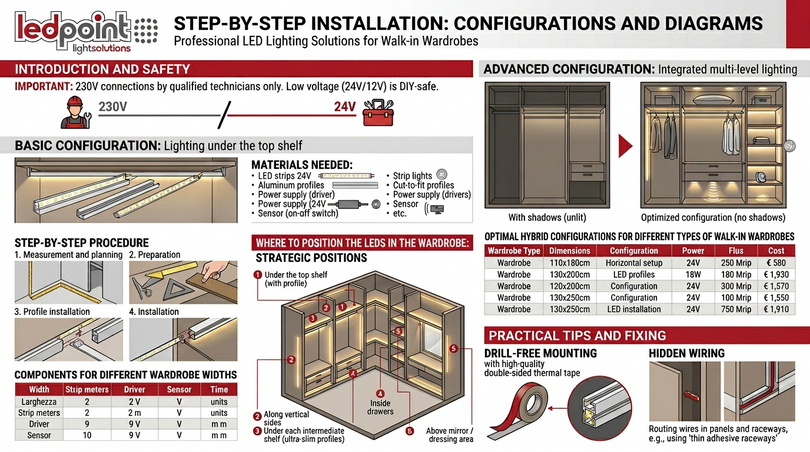
We arrive at the most practical and awaited part: how to concretely install an LED lighting system for the walk-in closet. In this section we provide installation diagrams for the most common configurations, with precise indications on measurements, components and fixing techniques. Even those who are not a professional installer, carefully following these steps and respecting electrical safety standards, can obtain a professional level result. A safety premise: any connection to a fixed 230V line must be performed by an authorized technician, everything concerning low voltage (12V/24V) downstream of the power supply is instead within the reach of a good DIYer.
Basic configuration: lighting under the top shelf
This is the simplest and most widespread configuration, suitable for most standard walk-in closets. LED strips are installed on the lower side of the top shelf, directing the light downwards on the hanging clothes. The position offers many advantages: it is easy to make, does not require structural modifications, protects the strips from dust and provides effective direct lighting on the entire height of the clothes. It is the ideal starting point for those facing their first installation.
Necessary materials: 24V LED strips in the quantity adequate to the width, aluminum profile with diffuser (recommended), sized 24V power supply, motion or door opening sensor, 2x0.75 mm² cables or higher, quick or solder connectors, fixing supports (screws, clips, thermal double-sided tape).
Step-by-step procedure:
- Measurement and planning: measure the length of the shelf. Generally two parallel lines are installed, one near the front edge and one at the back, spaced 15-20 cm, to guarantee uniformity and eliminate shadows.
- Surface preparation: carefully clean the lower surface of the shelf with isopropyl alcohol to remove grease and dust, which would compromise adhesion.
- Profile installation: if you use aluminum profiles, fix them with screws every 30-40 cm. They improve heat dissipation and give a professional finished appearance.
- Strip positioning: apply the LED strips in the profiles or directly on the surface, using the adhesive already present or adding quality thermal double-sided tape.
- Electrical connections: connect the strips in parallel to the power supply with cables of adequate section. For lengths over 3 meters, power from both ends to avoid voltage drops.
- Sensor installation: position the sensor where it can easily detect entry, typically near the door or on the door.
- Test and adjustment: power the system, verify all sections and adjust sensor sensitivity and on-time according to your preferences.
Basic configuration — Components for different closet widths
| Closet width | Meters of LED strip (2 lines) | Aluminum profiles | Power supply | Recommended sensor | Installation time |
|---|---|---|---|---|---|
| 1.2 m | 2.4 m | 2.4 m | 40W | Standard PIR | 2-3 hours |
| 1.8 m | 3.6 m | 3.6 m | 60W | Standard PIR | 3-4 hours |
| 2.4 m | 4.8 m | 4.8 m | 80W | Wide angle PIR | 4-5 hours |
| 3.0 m | 6.0 m | 6.0 m | 100W | 2 PIR or radar sensor | 5-6 hours |
This configuration guarantees effective lighting for most needs. However, it presents a limit: predominantly top-down lighting creates shadows under shelves and in the deepest areas. For closets over 2.4 m high or over 0.8 m deep it is convenient to integrate lateral or internal sources into the compartments.
Where to position LEDs in the closet: strategic positions
One of the most recurring questions is precisely where to put the LEDs. Here are the positions that make the difference, in order of priority:
- Under the top shelf: general lighting from above, the basis of every system.
- Along vertical sides: vertical strips on the side uprights, illuminate the sides of the clothes and reduce shadows.
- Under every intermediate shelf: with ultra-slim profiles, every shelf becomes a source of light for the shelf below.
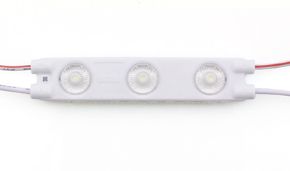
- Inside drawers: small strips or modules with micro-switch or opening sensor, to see the content at a glance.
- Above the mirror or dressing area: uniform frontal light to see yourself correctly, avoiding shadows on the face.
Advanced configuration: integrated multi-level lighting
For larger or designer closets, the multi-level configuration offers superior results in uniformity, functionality and aesthetics. It combines different sources positioned at various heights and orientations, creating a complete system that eliminates shadows and enhances every area. It is the approach that distinguishes a functional wardrobe from a true designer dressing room.
Multi-level system components: general lighting from above (strips or neon flex under the top shelves); vertical side lighting (strips on the uprights); internal lighting for drawers and doors (modules with opening sensor); accent lighting (orientable spotlights on tie rack, jewelry, shoes); integrated control system that manages everything in a coordinated way with preset scenarios.
Optimal hybrid configurations for different types of walk-in closets
| Closet type | Dimensions | Recommended configuration | Total power | Total flux | Material cost |
|---|---|---|---|---|---|
| Small (walk-in) | 1.5x1.5x2.2 m | General strips + drawer light | 28W | 3,200 lm | 120-160 € |
| Medium (bedroom) | 2.5x2.0x2.4 m | Neon flex + orientable spotlights | 52W | 5,200 lm | 250-350 € |
| Large (dressing room) | 4.0x3.0x2.5 m | Neon flex + vertical strips + spotlights + doors | 128W | 14,200 lm | 650-850 € |
| Luxury (home boutique) | 6.0x4.0x3.0 m | Multi-zone RGBW + dimmable spotlights + smart control | 280W | 31,500 lm | 1,800-2,500 € |
Advanced control systems are the true value multiplier. A managed system allows you to create scenarios ("morning dressing", "evening outfit choice", "cleaning") that optimize lighting for every activity. Presence sensors activate the lights only when needed, reducing consumption. The real revolution comes from integration with home automation: a closet that recognizes the time and activates the right scenario, communicating with shutters and home lights to make the most of natural light.
How to fix lights without drilling and without visible wires
For those who don't want to drill furniture, quality thermal double-sided tape applied on aluminum profiles is the cleanest solution: the profile distributes the weight and dissipates heat, and the adhesive holds firmly for years if the surface has been degreased. Alternatively, there are mounting clips that screw in only once leaving the profile removable. To hide the wires, the intercapedines behind the panels, the cable grommets of the furniture and thin adhesive trunking of the same color as the wood are used. The objective, again here, is that only the light is seen.
10. Solutions for every need: from DIY to designer projects
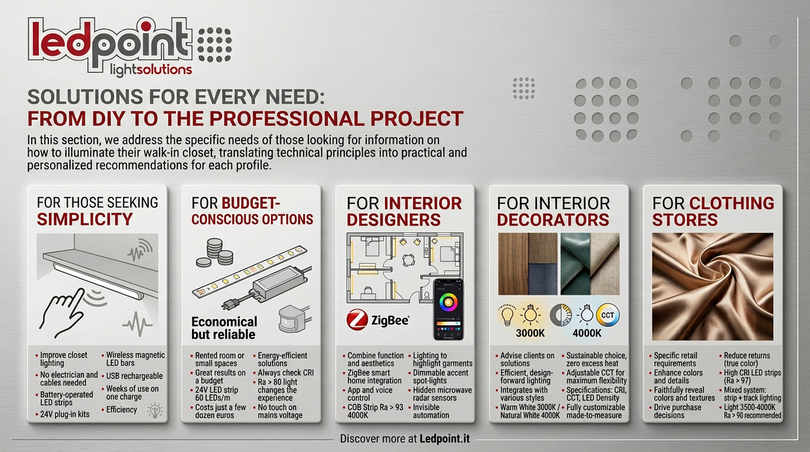
There is no single walk-in closet lighting right for everyone: the ideal solution depends on who you are, what you are looking for and how much you want to invest in terms of budget and complexity. In this section we address the concrete needs of those who typically search for this information, translating the technical principles seen so far into practical and personalized recommendations. Find the profile closest to yours and follow the dedicated advice.
For those seeking simplicity: easy installation without an electrician
If your goal is to improve the lighting of the wardrobe to easily find clothes and maintain order, without having to turn on the main light and without calling a technician, the simplest path are battery LED strips with motion sensor or a 24V plug-in kit. The most frequent question is what is the easiest light to install and it has a clear answer: rechargeable magnetic LED bars via USB, adhesive and completely wireless. They stick in a minute, turn on by themselves when opened and last for weeks on a single charge. For maximum energy saving, always choose high-efficiency LEDs (over 100 lm/W): they consume very little and last over 15 years. They are durable, wear-resistant options suitable for every wardrobe size.
For tight budgets: economical but reliable
Those looking for economical and practical solutions (typically for a rented room or a small space) can obtain excellent results with little expense. A 24V LED strip with 60 LED/m by the meter, a small power supply and a sensor cost a few tens of euros and can be installed independently. For those who don't even want to touch the electricity, battery strips are sufficient for a medium-sized wardrobe. The advice is not to go below 60 LED/m and always check the CRI: even with a reduced budget, a light at Ra>80 completely changes the experience. They are energy-efficient solutions that last a long time without frequent replacements.
For the interior architect: smart and design solutions
Those who design interiors look for solutions that combine functionality and aesthetics, integrable into home automation and capable of enhancing clothes. The technical answers: yes, lights can be controlled via app and voice assistant via Zigbee systems and the best type of lighting to highlight clothes is a COB strip Ra>93 at 4000K integrated in profile with diffuser, combined with dimmable accent spotlights, hidden microwave radar sensors guarantee invisible automation. Details matter for design: ultra-slim profiles, hidden power supplies and controllers, neon flex for continuous lines. They are customizable solutions based on dimensions and needs, with practically zero maintenance costs thanks to the long life of LEDs.
For the furnishing consultant: integration with every style
Those who advise solutions to clients must be able to propose efficient and design lighting that integrates with different styles. LED strips adapt to any furniture: warm white 3000K for classic wood environments, natural white 4000K for modern furnishings, adjustable CCT for maximum flexibility. LEDs are the most sustainable choice in absolute terms: higher efficiency, zero excessive heat emissions, very long life. The characteristics to be privileged in the choice are CRI, color temperature, LED density and flicker-free. Everything is customizable to measure, from cutting the strip to configuring the profiles.
For the clothing store: enhancing displayed products
Those who manage a retail point have specific needs: lighting must enhance the colors and details of the clothes and facilitate customer research. High CRI LED strips (Ra>97) are ideal for clothing stores, because they faithfully highlight colors and textures, pushing purchase. For large spaces a mixed system is convenient: high-density general strips on highlighted products. LEDs beat every other source for rendering, consumption and duration, and track systems are easy to manage even in the commercial sector. A light at 3500-4000K Ra>90 makes fabrics appear as they really are, reducing returns due to colors "different from reality".
11. Mistakes to avoid and pro tips
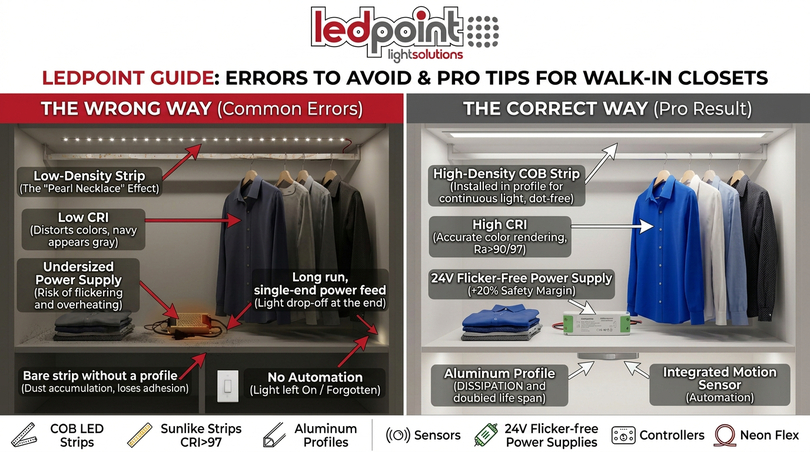
After seeing how to do things the right way, it is equally important to know what not to do. Many walk-in closet lighting systems disappoint not because of the products chosen, but for easily avoidable design or installation errors. Here are the most common mistakes and professional tips not to make them, the result of experience on hundreds of real installations.
The 7 most frequent mistakes
- Choosing low-density strips: 30 LED/m create the "pearl necklace" effect on fabrics. For walk-in closets at least 60 LED/m are needed, ideally COB.
- Ignoring CRI: lots of light with low Ra falsifies colors. Never below Ra>80, better Ra>90/97 for dark clothes.
- Undersizing the power supply: without the 20% margin you risk overheating and flickering. Always apply the 1.2x factor.
- Installing the visible strip without a profile: ugly to see, accumulates dust, the adhesive gives way. The aluminum profile is almost always indispensable.
- Powering long lengths from one end only: over 3 meters the light drops towards the bottom. Power from both ends or use 24V.
- Forgetting automation: a manual light is forgotten on or off. A door opening or motion sensor is a small investment with a great return.
- Neglecting dissipation: high-power strips without a dissipating profile heat up and last less. The aluminum profile doubles the useful life.
Pro tips for a flawless result
The most important suggestion is the 20% safety margin rule on the power supply: always make sure that the nominal power is higher than the actual load of the strip, to guarantee stability and avoid flickering. Other tricks that make the difference: always use the same color temperature throughout the closet for visual consistency; prefer strips with narrow binning (MacAdam 2-3 steps) to avoid tone variations; periodically clean diffusers and profiles to maintain luminous performance; provide an access point to components for any maintenance; always choose flicker-free components for prolonged visual comfort.
12. Recommended products for walk-in closets
We summarize here the key products to build the perfect system, from the luminous heart to the accessories that make the difference. Each link opens in a new window so as not to lose the thread of reading.
Recommended components for lighting a walk-in closet
| Component | Function in walk-in closet | Ledpoint category |
|---|---|---|
| COB LED strips | Continuous light without dots, choice of election | COB LED strips |
| 24V high density LED strips | Uniform general lighting on long lengths | 24V LED strips |
| Sunlike LED strips CRI>97 | Maximum chromatic fidelity for dark clothes | Sunlike series |
| CCT LED strips | Adjustable warm/natural white | CCT LED strips |
| Aluminum profiles + diffusers | Hide and diffuse light, dissipate heat | Aluminum profiles |
| Motion/door sensors | Automatic activation | Sensors |
| 24V flicker-free power supplies | Stable and safe power supply | 24V power supplies |
| Controllers and dimmers | Light and scenario management | Controllers |
| Neon flex | Continuous design lines of light | Neon flex |
| Connectors and cables | Quick and tidy connections | Connectors |
To start, the combination we recommend in most cases is: 24V COB LED strip at 3000K or 4000K with CRI Ra>90, installed in ultra-slim profile with opal diffuser, powered by a flicker-free 24V power supply sized with a 20% margin and activated by a door opening or motion sensor. It is a balanced solution that combines light quality, aesthetics, automation and reliability, adaptable from the small niche to the large dressing room. For any doubts on configuration, sizing or component compatibility, the Ledpoint team is available for technical advice and for the creation of custom-made profiles.
13. Frequently asked questions about walk-in closet lighting
We collect here the synthetic answers to the most searched questions about walk-in closet lighting, designed to clarify every doubt in a few seconds. Click on each question to expand the answer.
What light to put in the walk-in closet?In walk-in closets, high CRI LED strips (Ra>90) with a temperature between 3000K and 4000K are recommended. Warm light 3000K enhances woods and neutral tones; natural light 4000K makes the colors of clothes more faithful. The goal is at least 300 lux on vertical surfaces, ideally with COB strips for a continuous and uniform line. |
What is the difference between warm and cool light?Warm light (2700-3000K) tends towards yellow-amber and is welcoming; cool light (5500-6500K) tends towards white-blue and is energizing. For the walk-in closet the ideal balance point is natural light 3500-4000K, which combines comfort and chromatic fidelity without altering blues and greens nor flattening fabrics. |
How many lumens are needed to light a walk-in closet?For an average closet of 2.5x2 m about 3,000-3,800 total lumens are needed, equal to 350 lux on vertical surfaces. With 24V LED strips at 60 LED/m (1,200 lm/m) about 2.5-3 linear meters are enough, doubled on two sides for uniformity. In practice, 250-350 lumens per m² of vertical surface. |
How to light a wardrobe without mains power?To light a wardrobe without connection to the network, battery LED strips or USB rechargeable LED bars are used, often with an integrated motion sensor. They are adhesive, without wires and without masonry work: ideal for rentals, drawers and quick solutions. For complete closets and intensive use a 24V wired system remains preferable. |
Where to position LEDs in the wardrobe?Strategic positions are: under the top shelf (general light from above), along vertical sides (to reduce shadows), under every intermediate shelf, inside drawers with opening sensor, and above the mirror area. Use ultra-slim profiles to hide the source and diffuse the light. |
What is the best LED strip for the walk-in closet?The best is the 24V COB LED strip with CRI Ra>90 (ideally Ra>97 Sunlike), temperature 3000-4000K, flicker-free, installed in a profile with diffuser. COB technology eliminates luminous dots on fabrics, while high density guarantees a continuous and uniform line of light even in thin profiles. |
How to install LED lights in a walk-in closet without an electrician?With adhesive 24V LED strips, quick connectors, plug-in power supply and wireless sensor you can install everything independently: clean the surface, apply the profile, insert the strip, connect the low-voltage cables and position the sensor. Only the connection to a fixed 230V line requires an authorized technician. |
How much does the LED lighting of a walk-in closet consume?An LED system for a walk-in closet consumes on average 20-25W. With sensor activation for about 2 hours a day, the expense is about 4-5€ a year: up to 47% less than halogens or fluorescents, with a useful life of over 50,000 hours and no replacement for over 15 years. |
Why do LED lamps stay on even with the switch off?It almost always depends on residual currents due to illuminated switches, diverters or wiring that let a minimal current pass. The solution is to use a quality power supply and control the system downstream with dedicated sensors or controllers, instead of interrupting the line after the power supply. |
How to avoid flicker in LED lights?To avoid flicker use certified flicker-free power supplies and drivers and always apply the 20% margin rule on the power supply power (factor 1.2x). An undersized or poor quality power supply is the most frequent cause of flicker, annoying and tiring for the eyes. |
Designing walk-in closet lighting: from floor plan to light
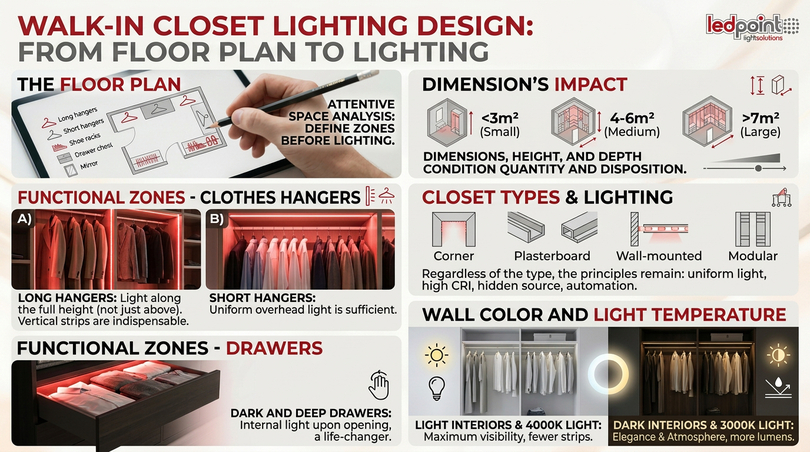
Designing the lighting of a walk-in closet means much more than gluing a strip of LED under a shelf. A well-designed walk-in closet is born from a careful analysis of the space, functional areas and habits of those who use it every day. Before even choosing the lights for the walk-in closet, it is convenient to draw a simple floor plan: where are the long hanging clothes, where the short ones, where the drawers, where the shoe shelves, where any mirror.
Every area of the walk-in closet has different lighting needs, and the lighting of the walk-in closet must respond to each of them in a targeted way:
- The first area to consider in any walk-in closet is that of long hanging clothes, where garments hang for over a meter: here the lighting of the walk-in closet must descend along the entire height of the garment, which is why LED strips installed only under the top shelf are not enough and must be integrated with vertical strips on the sides.
- The second typical area of the walk-in closet is that of short hanging clothes, where shirts and jackets occupy half the height: in this case the light for the walk-in closet coming from above is generally sufficient, provided it is uniform.
- The third area of the walk-in closet are the drawers, often dark and deep: here internal walk-in closet lights, activated by opening, make an enormous difference in daily life.
Once the areas are mapped, the lighting design for walk-in closets continues with the choice of the type of light for each area. For hanging clothes the light of the walk-in closet must be diffuse and with high CRI, for drawers a punctual but soft light, for the mirror area a frontal light that does not create shadows on the face. This multi-level approach is what distinguishes a professionally illuminated walk-in closet from a simple niche with a light bulb. Lighting for walk-in closets designed by zones also allows you to create different scenarios: a general light to orient yourself, an accent light for accessories, and even an atmospheric light for special occasions.
The dimensions of the walk-in closet and their impact on light
The dimensions of the walk-in closet directly condition the quantity and disposition of the lights. A small walk-in closet (under 3 m²) is perfectly illuminated with a few well-positioned LED strips, an average walk-in closet, between 4 and 6 m², requires a more articulated system and a large walk-in closet or a true dressing room over 7 m² needs a real multi-zone lighting project. Even the height of the walk-in closet counts: high ceilings require more powerful or additional sources to reach the desired lux at the level of the clothes. The depth of the walk-in closet, finally, determines how many rows of light are needed to avoid shadow zones in the most internal parts.
There are many types of walk-in closet, and each poses different challenges to lighting. The corner walk-in closet exploits the corners and needs specific profiles to illuminate diagonally, the plasterboard walk-in closet allows you to easily recess the profiles and hide the cables in the walls, the wall or linear walk-in closet has a simple geometry that facilitates the installation of strips, the modular walk-in closet allows you to foresee cable passages from the beginning. Whatever your walk-in closet (modern, custom-made, plasterboard, DIY or modular) the lighting principles remain the same: uniform light, high CRI, hidden source and automation.
What color to paint the walls of the walk-in closet
A factor often ignored is the color of the internal surfaces of the walk-in closet. Light walls and shelves reflect light and increase the perceived illuminance, reducing the meters of LED strips needed while dark surfaces absorb light and require more lumens to obtain the same result. For this reason, when designing the lighting of the walk-in closet, it is good to consider the finish of the wood or the walls: a walk-in closet with light interiors and natural light 4000K offers maximum visibility, while a walk-in closet with dark woods and warm 3000K atmosphere aims more at elegance than pure brightness. The choice of the color of the walk-in closet and the temperature of the light must therefore be thought of together, as a single system.
Lighting and fabrics: how light enhances clothes in the walk-in closet
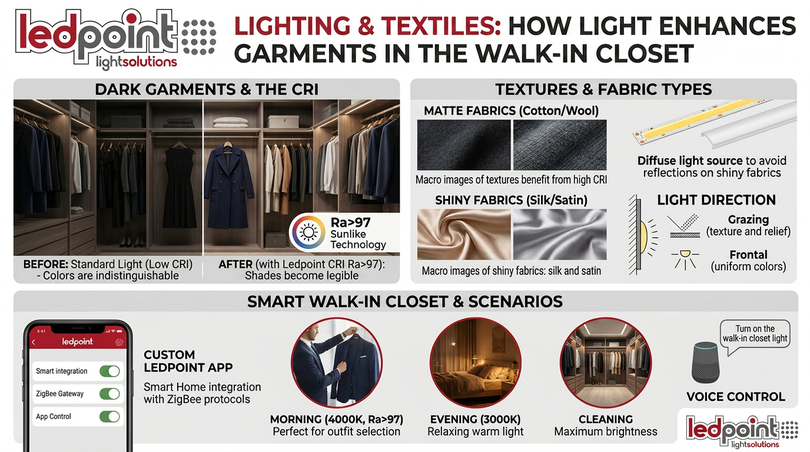
One of the main purposes of walk-in closet lighting is to correctly see the colors and textures of clothes. Every fabric reacts differently to light: opaque fabrics like cotton and wool absorb part of the light and require a high CRI not to appear dull, shiny fabrics like silk and satin reflect light and can create annoying reflections if the source is not well diffused. For this reason quality lighting for walk-in closets prefers diffuse sources (COB strips in profile with diffuser or neon flex) that soften the light and eliminate direct reflections on the most delicate fabrics.
Dark clothes are the real proof of any walk-in closet lighting. A black suit, a navy blue coat, an anthracite sweater: under a light with low CRI these garments become indistinguishable, and the only way to recognize them is to take them to the window. With a high CRI light for the walk-in closet (Ra>90, ideally Ra>97 with Sunlike technology) the shades become readable and matching becomes immediate. It is here that the investment in quality LED strips pays off every day: in the walk-in closet, seeing colors well is not a detail, it is the very function of the space.
Also the direction of light in the walk-in closet influences the perception of fabrics. A raking light, which hits the garment from the side, enhances textures and reliefs, a frontal light flattens details but makes colors more uniform. In the most curated walk-in closets both are combined: diffuse frontal light for reading colors and raking accent light to enhance precious materials. This type of attention, typical of professional lighting of clothing stores, can also be replicated in the domestic walk-in closet with the right orientable spotlights and the right LED strips.
Smart walk-in closet: home automation, scenarios and voice control
The most interesting evolution in walk-in closet lighting is integration with home automation. A smart walk-in closet is not limited to turning the light on and off: it recognizes who enters, adjusts intensity and color temperature based on the time, dialogues with the rest of the house and can be controlled by voice. To obtain all this, the lighting of the walk-in closet must be built on components compatible with smart home protocols, such as Zigbee systems, which allow you to connect LED strips, sensors and controllers to a central gateway.
Luminous scenarios are the heart of the smart walk-in closet. Imagine a walk-in closet that in the morning, detecting your presence, activates a natural 4000K light with high CRI perfect for choosing the work outfit, in the evening recognizing the time it passes to a warmer 3000K light more relaxing while during cleaning, it turns on all sources to the maximum. These scenarios, once programmed, make the lighting of the walk-in closet totally automatic and personalized. Voice control via assistant adds the last touch of convenience: just a command to change the light in the walk-in closet without lifting a finger.
The question that many ask is whether it is possible to control the lights of the walk-in closet via app or voice assistant and this has an affirmative answer, provided you choose predisposed components. Compatibility with other home automation devices allows the walk-in closet to enter broader scenarios: the walk-in closet lights can turn on together with those of the bathroom in the morning routine, or turn off automatically when "away from home" mode is activated. Smart lighting of the walk-in closet is no longer science fiction, but an accessible reality with a contained investment and a configuration within everyone's reach.
Maintenance and duration of walk-in closet lighting
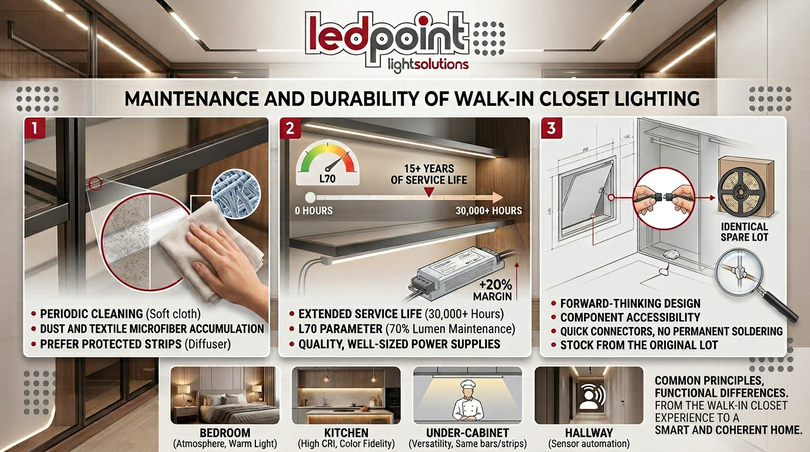
A well-designed walk-in closet lighting system requires very little maintenance, but a few precautions preserve its performance over time. LED strips accumulate dust, especially in a walk-in closet where wool or cotton garments release microfibers: periodic cleaning of diffusers and profiles with a soft dry cloth keeps the brightness of the walk-in closet constant over the years. Strips protected by a profile with diffuser get dirty much less than those in sight, and this is another reason to prefer them in every walk-in closet.
The duration of LEDs in the walk-in closet is one of the great advantages of this technology: with 50,000 hours of useful life, an LED strip installed in a walk-in closet and used on average can function for over 15 years without significant drops. The technical reference parameter is L70, that is, the number of hours after which the strip still emits 70% of the initial flux. Choosing LED strips with high L70 means guaranteeing the walk-in closet a stable light for the entire life of the system. Even quality power supplies, if well sized with the 20% margin, last as long as the strips, making the entire walk-in closet system practically exempt from failures.
When, rarely, a component of the walk-in closet lighting breaks down, repair is simple if the system has been well designed: providing an access point to the components, using quick connectors instead of permanent solder joints and keeping a small spare of strips from the same batch facilitates every future intervention on the walk-in closet. This foresight in the design phase transforms the walk-in closet lighting into a truly durable and time-proof system.
From the walk-in closet to other environments: common principles and differences
The lighting principles that govern the walk-in closet apply, with due adaptations, to many other environments in the house. Bedroom lighting, for example, shares with the walk-in closet the need for warm and relaxing light, but focuses more on atmosphere than on chromatic rendering. Kitchen lighting, on the contrary, requires natural light with high CRI for work plans, similarly to what is needed in the walk-in closet for choosing clothes. Even the under-cabinet lighting of the kitchen uses the same LED strips and LED bars that we find in the walk-in closet, confirming the versatility of these products.
Those who install lighting in the walk-in closet soon discover they can extend the same approach to the rest of the house. An under-cabinet LED bar born for the walk-in closet can illuminate the kitchen plan, an LED strip designed for the shelves of the walk-in closet can backlight a living room piece of furniture or a bookcase and a motion sensor used in the walk-in closet can automate the corridor or bathroom light. This consistency of components simplifies purchases and guarantees a uniform luminous language throughout the home, with the walk-in closet as the natural starting point.
The differences, however, count. In the walk-in closet lighting is almost always internal and hidden while in the living room it can become a visible decorative element, in the walk-in closet maximum color fidelity is needed while in a relaxation area comfort is privileged, in the walk-in closet sensor automation is almost mandatory while elsewhere it can be optional. Knowing these distinctions allows you to calibrate every environment to its functions, starting from the experience gained in designing the walk-in closet.
Electrical safety and regulations for walk-in closet lighting
Even if low-voltage walk-in closet lighting is intrinsically safe, it is good to know the fundamental rules for a compliant system. 12V and 24V systems used in the walk-in closet are powered by transformers that separate low voltage from the 230V network, drastically reducing risks: even touching the contacts of a 24V LED strip there is no danger. However, the connection of the power supply to the fixed 230V line of the walk-in closet must always be performed by an authorized electrician, in compliance with current plant regulations and with adequate protection devices.
Lighting fixtures installed in the walk-in closet must respect product regulations, in particular IEC 60598 on lighting fixtures, and bear the CE marking. Choosing certified components for the walk-in closet (LED strips, power supplies, controllers) guarantees compliance, safety and the right to warranty. Quality power supplies integrate protections against short circuit, overload, overvoltage and overheating, fundamental for a system that stays on for years in a closed space like the walk-in closet.
Another safety aspect concerns heat: high-power LED strips installed in the walk-in closet must be able to dissipate heat, and this is precisely one of the functions of the aluminum profile, which acts as a heat sink. Avoid covering the strips with fabrics or confining them in totally closed spaces without dissipation preserves the safety and duration of the walk-in closet lighting. With these precautions, the walk-in closet system remains safe, reliable and compliant for its entire long life.
How much does it cost to light a walk-in closet: budget and return
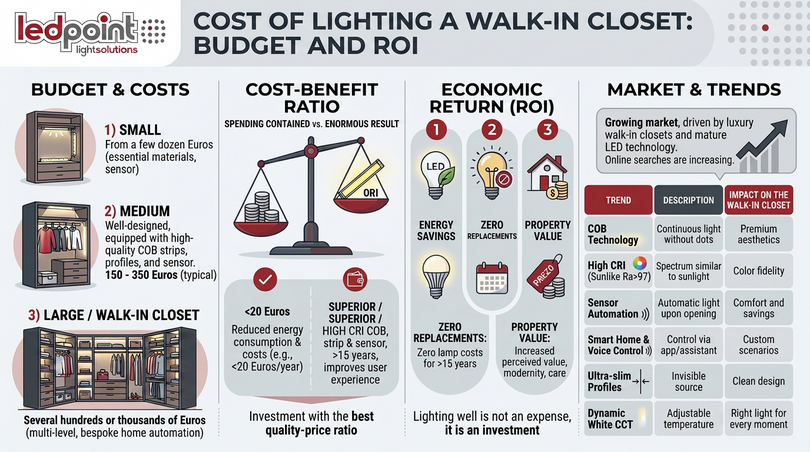
The cost to light a walk-in closet varies a lot based on dimensions, chosen technology and level of automation. For a small walk-in closet with essential LED strips and sensor, the budget starts from a few tens of euros in materials: for a medium walk-in closet well designed with COB strips, profiles, power supply and sensor you typically stay between 150 and 350 euros, for a large walk-in closet or a designer dressing room with multi-level system and home automation you can reach several hundreds or thousands of euros. In all cases, lighting represents a contained fraction of the overall cost of the walk-in closet, but it enormously affects the final result.
It is useful to reason in terms of cost per benefit. Spending a few tens of euros more to switch from an economical strip to a high CRI COB strip in the walk-in closet means improving every single use of the space for over fifteen years: it is one of the investments with the best quality-price ratio of the entire walk-in closet furnishing. Similarly, adding a motion sensor to the walk-in closet costs little and pays off in convenience and energy saving from the first day.
On the economic return front, walk-in closet LED lighting pays off on three fronts: energy saving compared to obsolete technologies, zeroing the costs of replacing lamps, and increasing the perceived value of the property. A walk-in closet with quality integrated lighting is an element that buyers and guests immediately notice, contributing to that sensation of care and modernity that enhances the entire home. In short, lighting the walk-in closet well is not an expense, but an investment that pays off every day.
The market for walk-in closet lighting: data and trends
The walk-in closet lighting segment has experienced constant growth in recent years, driven by two converging phenomena: the spread of the walk-in closet as an aspirational furnishing element and the maturity of LED technology, which has made solutions once reserved for the professional sector accessible. More and more residential projects provide for a dedicated walk-in closet, and with it grows the demand for walk-in closet lights capable of combining aesthetics, functionality and efficiency. The walk-in closet is no longer an optional extra but a recurring request, and its lighting has become a chapter in itself in interior design.
Research dedicated to "how to light the walk-in closet", "lights for walk-in closet", "LED strips for walk-in closets" and "walk-in closet lighting" show growth, sign of a widespread and transversal interest: from the private individual renovating the house to the architect designing a dressing room, from the student looking for an economical solution to the store owner who wants to enhance clothes. This interest reflects a new awareness: a walk-in closet without good lighting is a half walk-in closet, and the difference between a dark wardrobe and a well-lit walk-in closet is perceived every single day.
Current trends in walk-in closet lighting
| Trend | Description | Impact on walk-in closet |
|---|---|---|
| COB technology | Continuous light without dots | Premium aesthetics in the walk-in closet |
| High CRI (Sunlike Ra>97) | Spectrum similar to the sun | Chromatic fidelity of clothes |
| Sensor automation | Automatic light on opening | Comfort and saving |
| Home automation and voice | Control via app/assistant | Personalized scenarios |
| Ultra-slim profiles | Invisible source | Clean design |
| Dynamic white CCT | Adjustable temperature | Right light for every moment |
The direction is clear: the walk-in closet of the future will have increasingly integrated, intelligent and high chromatic quality lighting. Those who design their walk-in closet today making the right choices (COB strips with high CRI, profiles that hide the light, sensor automation) find themselves already aligned with these trends, with a system that will remain current and functional for many years. Good walk-in closet lighting is an investment that never goes out of fashion.
COB technology in detail: why it is ideal for the walk-in closet
We have repeatedly indicated COB technology as the choice of election for the walk-in closet, and it is useful to understand in detail why. COB stands for Chip On Board: instead of mounting single spaced LEDs on a circuit, numerous LED chips very close to each other are deposited, covered by a single uniform layer of yellow phosphor that converts blue light into white light. The result, applied to the walk-in closet, is a continuous luminous line, without the distinct dots typical of traditional strips, which would project annoying dotted shadows on the clothes hanging in the walk-in closet.
In the walk-in closet this characteristic is precious for two reasons. First: the proximity of the strip to the clothes. Under a shelf of the walk-in closet, the strip is a few centimeters away from the clothes, and a dotted source would create an evident alternation of light and shadow on the fabrics. The continuous light of COB eliminates this problem, illuminating the clothes in the walk-in closet in a perfectly homogeneous way. Second: the possibility of using very thin profiles. Ultra-high density COB strips work well even in ultra-slim profiles, allowing you to light the walk-in closet without visible bulk.
There are COB versions for every need of the walk-in closet: warm light 3000K for wooden closets, natural light 4000K for maximum fidelity, in CCT version to adjust the temperature, and in the precious Sunlike variant with CRI Ra>97 for those who want the best. The chip density, expressed in number of LEDs per meter, can reach very high values, guaranteeing the walk-in closet a line of light comparable to that of a neon tube but with all the advantages of LED: very low consumption, long duration, no excessive heat and no harmful substances. For the walk-in closet, COB truly represents the state of the art.
COB vs SMD: the definitive comparison for the walk-in closet
Traditional strips use SMD type LEDs (Surface Mounted Device), small components soldered at regular distances on the circuit. They are efficient and versatile, and in a profile with a good diffuser they offer excellent results even in the walk-in closet. The difference with COB emerges in situations where the source is close to the clothes or visible from the side: there COB wins for uniformity. For the general lighting of the walk-in closet from above, a good 120 LED/m SMD strip in a profile with an opal diffuser is more than adequate; for installations where the light of the walk-in closet is close or in sight, COB is the best choice. Knowing this distinction allows you to optimize the walk-in closet budget without sacrificing quality.
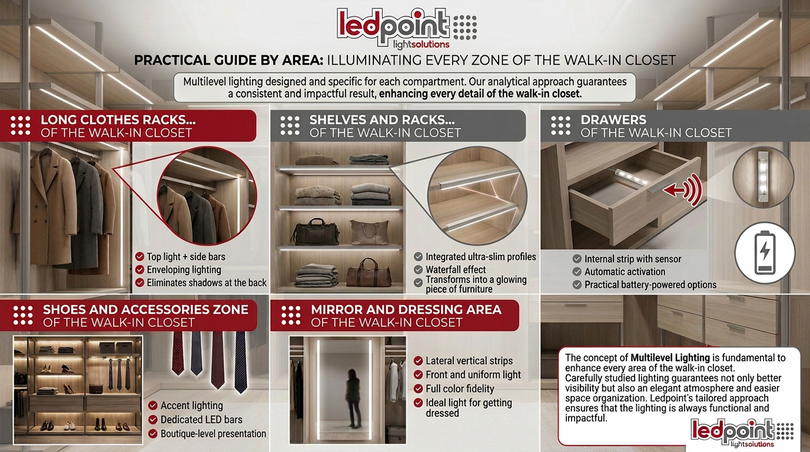
Lighting every zone of the walk-in closet: practical guide by area
Let's now see, zone by zone, how to best illuminate every part of the walk-in closet. This analytical approach is what allows you to obtain a complete result, where no area of the walk-in closet remains in shadow and every function is supported by the right light. It is the practical translation of the multi-level lighting concept applied to the real walk-in closet.
Long hanging clothes of the walk-in closet
In the long hanging clothes of the walk-in closet, where coats and dresses descend for over a meter, the challenge is to illuminate the entire height of the garment. The ideal solution combines an LED strip under the top shelf with vertical strips on the side uprights of the walk-in closet: in this way the light envelops the garment from multiple directions, eliminating shadows at the bottom. It is the area of the walk-in closet where lighting only from above shows more limits, and where lateral integration makes the most evident difference.
Shelves and shelves of the walk-in closet
On the shelves of the walk-in closet, where folded sweaters, bags and accessories are placed, the best light is the one that comes from the front edge of the upper shelf, illuminating the lower plan. With ultra-slim profiles integrated into the edge of every shelf, each shelf of the walk-in closet becomes a source of light for the one below, creating an elegant and functional cascade effect. This solution transforms the walk-in closet into a luminous piece of furniture in all respects.
Drawers of the walk-in closet
The drawers of the walk-in closet are among the most difficult spaces to illuminate and, paradoxically, among those where light is most useful. A small internal LED strip, activated by a micro-switch or an opening sensor, illuminates the contents of the walk-in closet drawer at the exact moment you open it. For drawers, battery solutions are often the most practical, because they avoid cabling every single extractable element of the walk-in closet.
Shoe and accessory area of the walk-in closet
The shoe area and the tie rack of the walk-in closet benefit from more intense accent lighting. Here dedicated LED bars create points of light that enhance shoes, bags, jewelry and accessories, making the choice more pleasant and similar to that of a boutique. It is the touch that elevates the walk-in closet from functional space to small personal gallery.
Mirror and dressing area of the walk-in closet
If the walk-in closet includes a mirror or a dressing area, lighting must be frontal and uniform, to illuminate the face and body without shadows. Vertical LED strips on the sides of the walk-in closet mirror, like in fitting rooms, offer the most flattering and faithful light, indispensable for evaluating the complete outfit before going out.
Lumens, watts and consumption: understanding the numbers of the walk-in closet
To consciously choose the lighting of the walk-in closet it is useful to master some key numbers. Lumen measures the total quantity of light emitted, lux measures how much of that light arrives on a surface (lumens per square meter), watt measures electrical consumption. In the walk-in closet we are interested in lux on the vertical surfaces of the clothes (target 300-400) and efficiency, that is, how many lumens we obtain for every watt consumed. The best LED strips for walk-in closet exceed 120 lm/W, against the about 15 lm/W of old halogens: at the same light, they consume almost ten times less.
Indicative lumens and consumption for lighting a walk-in closet
| Walk-in closet size | Recommended lumens | Indicative LED power | Annual consumption (2h/day) | Annual cost (0.25€/kWh) |
|---|---|---|---|---|
| Small (2-3 m²) | 1,500-2,000 lm | 15-18W | ~12 kWh | ~3.00 € |
| Medium (4-6 m²) | 3,000-3,800 lm | 25-30W | ~20 kWh | ~5.00 € |
| Large (7-10 m²) | 5,000-7,000 lm | 45-60W | ~38 kWh | ~9.50 € |
| Luxury dressing room (>10 m²) | 8,000+ lm | 80-130W | ~70 kWh | ~17.50 € |
These numbers show how economical walk-in closet LED lighting is: even a large dressing room costs a few euros a year in energy, and sensor activation further reduces consumption by turning on the walk-in closet light only when needed. When we talk about energy saving in the walk-in closet, LEDs have no rivals: maximum light, minimum consumption, very long duration. It is another reason why anyone designing a walk-in closet should turn without hesitation to LED technology.
Energy class and sustainability of the walk-in closet
Modern LED strips for walk-in closet belong to the most efficient energy classes and are free of dangerous substances like the mercury present in old fluorescent lamps. Choosing LEDs for the walk-in closet therefore also means making a sustainable choice: less consumption, less waste (thanks to the long duration), no toxic substances. For those who advise solutions to clients, the sustainability of LEDs is a strong argument: the walk-in closet illuminated with LEDs is the most ecological possible, and environmental benefits add to economic and aesthetic ones.
From domestic walk-in closet to retail: lighting sales spaces
The principles of walk-in closet lighting find natural application in commercial spaces, particularly in clothing stores, where display cabinets and fitting rooms must enhance clothes just like a high-quality domestic walk-in closet. The needs are the same, amplified: high CRI to faithfully show colors, uniform light to avoid shadow zones, and a curated aesthetics that communicates quality. The same LED strips and LED bars that illuminate a walk-in closet perfectly illuminate displays, shelving and fitting rooms of a retail point.
In retail, however, additional factors come into play compared to the domestic walk-in closet. Flexibility is fundamental: electrified track systems allow you to reposition them at every collection change, something not necessary in a private walk-in closet. The required power is greater, because spaces are larger and the required illuminance levels are higher. Management must be simple even for non-technical personnel, which is why plug-and-play systems and intuitive controls, already appreciated in the walk-in closet, become a requirement here.
The store owner who knows the principles of walk-in closet lighting starts at an advantage: they know that high CRI highlights colors and details of clothes reducing returns due to differently perceived colors, they know that light at 3500-4000K is the best compromise between fidelity and comfort and they know that high-density or COB LED strips offer the cleanest light. Applying the same care reserved for a premium walk-in closet to the point of sale means creating an environment that sells, where every garment appears at its best exactly as in the most curated of walk-in closets.
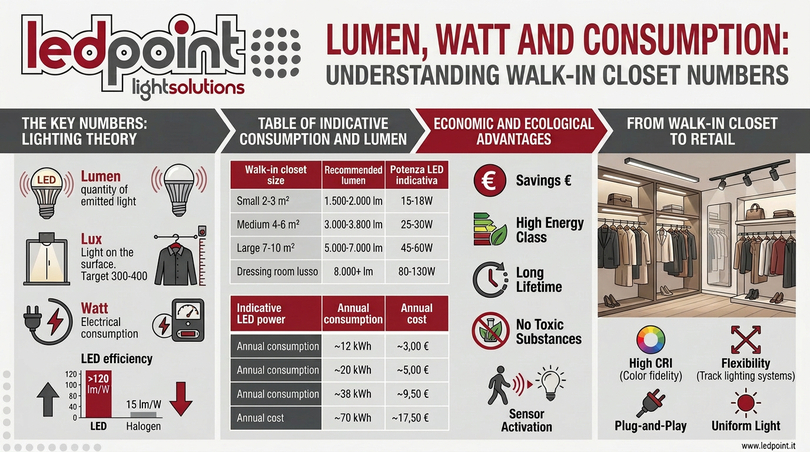
Final checklist for lighting the walk-in closet
Before concluding, here is a summary checklist that condenses everything we have seen on walk-in closet lighting. Use it as an operational reminder before buying and installing your system: if you can tick every item, your walk-in closet will have professional, efficient and durable lighting.
- Lux: aim for 300-400 lux on the vertical surfaces of the walk-in closet.
- CRI: never below Ra>80, ideally Ra>90/97 for dark clothes in the walk-in closet.
- Temperature: 3000K for warm woods, 4000K for fidelity; CCT if you want to adjust it.
- LED density: at least 60 LED/m, COB for maximum uniformity in the walk-in closet.
- Profile: always use aluminum profiles with diffuser to hide the source.
- Position: under shelves, on sides, in drawers and on the mirror area of the walk-in closet.
- Automation: motion or door opening sensor for every walk-in closet.
- Power supply: 24V flicker-free with 20% margin on the load.
- Voltage: 24V for long lengths, 12V only for small installations.
- Safety: CE components, 230V connection by electrician, guaranteed heat dissipation.
Following this checklist, lighting the walk-in closet becomes a clear and surprise-free path. Every choice is motivated by a precise technical principle, and the result is a walk-in closet that works better, lasts longer and looks splendid every time you open the door. With the right products and a bit of design attention, the walk-in closet of your dreams is within your reach.
Materials and technologies of walk-in closet lights
Modern walk-in closet lights use materials and technologies designed to last and integrate harmoniously into furnishings. The body of walk-in closet LED strips consists of a flexible copper circuit on a plastic support, protected in some cases by a layer of silicone or resin that increases its resistance. The profiles that house the walk-in closet lights are in anodized aluminum, a light, robust and excellent heat dissipating material, available in different finishes to adapt to every walk-in closet: natural aluminum, white, black or wood color.
The diffusers of walk-in closet lights are made of opal or transparent polycarbonate: opal softens the light and eliminates dots and is ideal when the walk-in closet source is in sight, transparent maximizes efficiency, preferable when the strip is hidden. The control technologies of walk-in closet lights range from simple switches to infrared and radar sensors, up to touch systems and wireless protocols for home automation. This variety of materials and technologies allows you to build walk-in closet lighting tailored to every aesthetic and functional need.
Materials and technologies of walk-in closet lights
| Walk-in closet component | Material/Technology | Advantage |
|---|---|---|
| LED strip | Flexible copper circuit, SMD/COB chips | Flexible, cuttable, durable |
| Profile | Anodized aluminum | Dissipates heat, various finishes |
| Diffuser | Opal/transparent polycarbonate | Softens or maximizes light |
| Sensor | PIR infrared / microwave radar | Automatic activation |
| Control | Touch, remote control, Zigbee | Versatile and smart command |
| Power supply | Certified flicker-free switching | Stability and safety |
The quality of materials directly affects the duration of walk-in closet lighting. LED strips with adequate copper section keep losses and temperature low; thick aluminum profiles guarantee effective dissipation; resistant polycarbonate diffusers do not yellow over time. Investing in quality materials for the walk-in closet means having lighting that remains beautiful and efficient for over fifteen years, without drops in performance or premature failures.
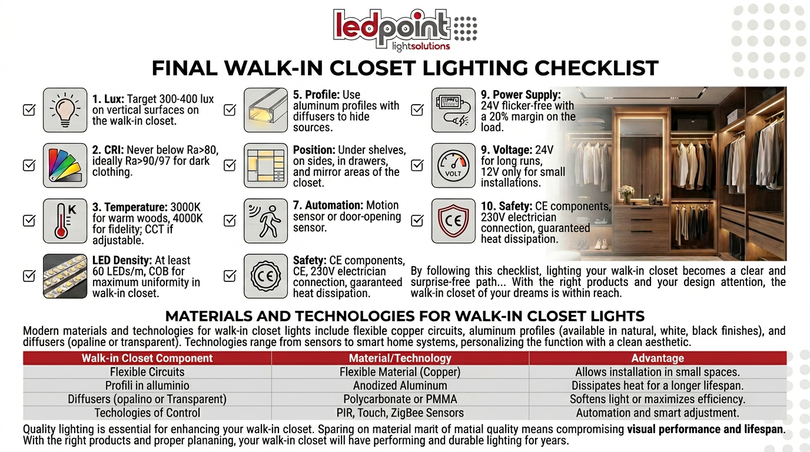
Sensor installation in the walk-in closet: detailed guide
Correct installation of sensors in the walk-in closet is what makes lighting truly automatic and pleasant to use. A poorly positioned sensor may not detect entry, turn on late or turn off while you are still inside the walk-in closet. Let's see how to correctly install and adjust the different types of sensors, because the difference between perfect automation and an annoying one lies entirely in the positioning and calibration details.
Positioning the motion sensor in the walk-in closet
The PIR motion sensor of the walk-in closet must be positioned so that its detection cone covers the entrance and the passage area. The ideal height is around 180-200 cm, with the sensor oriented towards the point from which you enter the walk-in closet. It should be avoided to point it towards heat sources or drafts, which could cause unwanted activations. For a good-sized walk-in walk-in closet, a single well-positioned sensor covers the whole area, for very large or L-shaped walk-in closets a second sensor may be needed.
Installation of the door opening sensor in the walk-in closet
The door opening sensor of the walk-in closet is installed on the edge of the door or on the upright, so that it detects the opening movement. For walk-in closets with multiple doors, dedicated controllers allow you to manage multiple sensors in a coordinated way. Adjusting the turn-off time is important: too short and the walk-in closet light turns off while you are looking for a garment, too long and it stays on unnecessarily. A typical value is 30-60 seconds after the last motion detection or after the door is closed.
Installation of the radar sensor in the walk-in closet
The microwave radar sensor of the walk-in closet is the most sophisticated: it can be hidden behind wood or glass panels, because microwaves cross non-metallic materials. It is therefore installed in an invisible position, behind a shelf or a panel of the walk-in closet, and the sensitivity is adjusted to cover exactly the desired area without activating for movements external to the walk-in closet. It is the solution that offers maximum aesthetic cleanliness, perfect for designer walk-in closets where no component must be visible.
Whichever sensor you choose for your walk-in closet, the final test is fundamental: enter, exit, open and close the doors several times verifying that the walk-in closet light responds as you wish, and refine the sensitivity adjustment and time until the automation is natural and invisible. When the sensor works well, you stop thinking about it: the walk-in closet light is there when needed and disappears when you leave, exactly as it should.
All the advantages of a well-lit walk-in closet
We organically summarize the advantages of quality lighting in the walk-in closet, because having them clear helps to justify the investment and make the right choices. The benefits of good walk-in closet lighting are articulated on four levels (functional, aesthetic, economic and emotional) and reinforce each other, making the walk-in closet illuminated with LEDs one of the best decisions in home furnishing.
On the functional level, walk-in closet lighting drastically improves visibility: you find clothes faster, distinguish colors correctly, avoid matching errors and move safely in the walk-in closet even at night, without turning on the main bedroom light. On the aesthetic level, a well-lit walk-in closet appears larger, tidier and more curated: light enhances the materials of the furnishings and clothes, transforming the walk-in closet into a pleasant environment to live in and show.
On the economic level, walk-in closet LEDs consume very little, last over fifteen years and are never replaced, generating concrete savings and increasing the perceived value of the property. On the emotional level, finally, opening a splendidly illuminated walk-in closet transforms a banal gesture into a small daily pleasure: it is the detail that makes you feel your home is cared for and modern. All these advantages converge in a simple conclusion: lighting the walk-in closet well is always convenient, from every point of view.
Advantages of LED lighting in the walk-in closet
| Level | Advantage in the walk-in closet |
|---|---|
| Functional | Visibility, quick search, faithful colors, night safety |
| Aesthetic | Greater perceived space, order, material enhancement |
| Economic | Low consumption, long duration, property value |
| Emotional | Daily use pleasure, perception of care and modernity |
How to choose and buy lights for the walk-in closet
We arrive at the decisive moment: how to choose and buy the right lights for the walk-in closet. With so many options available, a method that leads to the decision without errors is useful. The choice of walk-in closet lights should follow a logical order, starting from needs and arriving at products, never the opposite. Here are the factors to consider and the order in which to evaluate them for your walk-in closet.
The first factor is the size and configuration of the walk-in closet: measure the space, identify the areas to be illuminated and calculate the meters of strip needed. The second is light quality: choose high CRI and temperature adequate to your walk-in closet. The third is automation: decide if you want a motion sensor, door opening or smart control. The fourth is budget: balance quality and expense, remembering that on walk-in closet lights saving too much is paid in performance and duration. The fifth is ease of installation: evaluate whether to proceed independently or with a technician.
Factors to consider when choosing walk-in closet lights
| Factor | Question to ask yourself for the walk-in closet | Indication |
|---|---|---|
| Size | How many meters and zones does the walk-in closet have? | Calculate lumens and meters of strip |
| Light quality | Do I need to see the colors of clothes well? | CRI Ra>90, 3000-4000K |
| Automation | Do I want automatic light in the walk-in closet? | Motion/door sensor or smart |
| Budget | How much do I invest in the walk-in closet? | Balance quality and expense |
| Installation | Do I do it myself or with an electrician? | Battery/plug-in or wired |
When you buy lights for the walk-in closet, prefer specialized retailers that offer complete technical specifications, downloadable datasheets and assistance: the walk-in closet is a long-term investment and deserves reliable components, with the possibility of asking for advice to configure the lighting of your walk-in closet in the most suitable way for your needs, your style and your budget. Choosing well today means enjoying a perfectly illuminated walk-in closet for the next fifteen years and beyond.
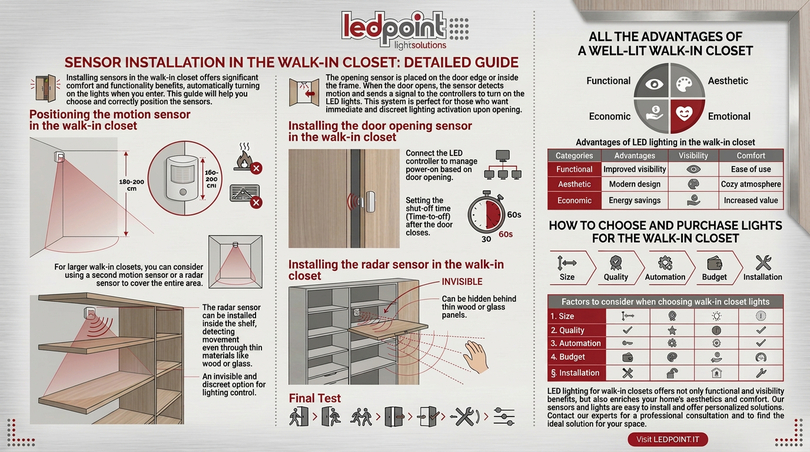
Types of walk-in closet and dedicated lighting
Not all walk-in closets are the same, and the choice of walk-in closet lighting changes according to the structural typology. Before buying LED strips, profiles and sensors it is convenient to understand what type of walk-in closet you are dealing with, because geometry, dimensions and materials directly influence the quantity of light needed, installation points and the most convenient type of power supply. In this section we analyze the most widespread configurations and for each we indicate the most suitable walk-in closet lighting solution among Ledpoint products.
Wall walk-in closet
The wall walk-in closet exploits a niche or a portion of wall closed by sliding or hinged doors. It is the most compact type and, precisely for this reason, the light must be particularly efficient: the reduced space makes every shadow more evident. For the wall walk-in closet the ideal solution is a COB LED strip installed on the internal upper edge of the door, combined with an ED-C opening sensor that turns on the light when opening. In this way the wall walk-in closet lighting is automatic, invisible and does not require switches. A COB LED strip housed in an ultra-slim profile distributes uniform light on the entire height of the compartment.
Plasterboard walk-in closet
The plasterboard walk-in closet is one of the most requested DIY creations, because it allows you to create a wardrobe space in the bedroom with contained costs. Plasterboard offers a great advantage for lighting: it is a non-metallic material, therefore it allows you to hide microwave radar E1-M sensors behind the walls, which detect movement through the plasterboard without being visible. During the construction of the plasterboard walk-in closet it is convenient to immediately predispose the trunking for the LED strip cables and a hidden power point. The plasterboard valences are the perfect place to house LED strips that illuminate from top to bottom, creating an effect of diffuse and soft light throughout the walk-in closet.
Corner walk-in closet
The corner walk-in closet exploits the corner of a room and is characterized by a corner area often poorly lit and difficult to reach. In the corner walk-in closet it is fundamental to bring light precisely into the corner, the darkest point, using profiles that follow the perimeter and angular connectors to make the LED strip continue without interruptions. Connectors for LED strips allow you to bend the luminous path at 90° maintaining continuity. For the corner walk-in closet we recommend a 24V LED strip, which limits voltage drops even on long lengths that turn around the corner.
Modular walk-in closets and modules
Modular walk-in closets are made up of modules (columns, shelves, chest of drawers, hanging rails) that can be freely combined. Their modularity perfectly matches an equally modular lighting. For modular walk-in closets the best strategy is to equip each module with its own LED strip, connecting all segments to a CV0 junction box controller that synchronizes up to six lengths. Thus, by adding or moving a module, you simply add or move a segment of light, keeping the walk-in closet lighting always consistent and balanced.
| Type of walk-in closet | Lighting criticalities | Recommended Ledpoint solution |
|---|---|---|
| Wall (niche with doors) | Reduced space, marked shadows | COB strip + ED-C door sensor |
| In plasterboard | System predisposition | Strip in valence + hidden E1-M radar sensor |
| Corner | Difficult dark corner | 24V strip + angular connectors |
| Modular | Variable configuration | One strip per module + CV0 controller |
| Custom walk-in | Large surfaces to uniform | Mixed system: perimeter + shelves + island |
Walk-in closet, wall closet and wardrobe: differences and lighting
Often the terms walk-in closet, wall closet and wardrobe are used as synonyms, but they indicate different solutions, each with specific lighting needs. Understanding the difference helps to choose the correct light system and not to oversize or undersize the system. Let's clarify the concepts and see how the lighting approach changes in each case.
What is the difference between walk-in closet and wall closet
The walk-in closet is an environment in which you physically enter, a walkable space dedicated to the wardrobe, while the wall closet is a closed container, however recessed, in which you do not enter. This difference has direct consequences on the light: in the walk-in closet you need to illuminate a volume in which the person moves and looks in the mirror, while in the wall closet it is enough to illuminate the inside of the compartments when the doors are opened. For the walk-in closet multiple light points are designed (perimeter, shelves, any central island); for the wall closet an LED strip with opening sensor for each door is often sufficient.
What is the difference between wardrobe and walk-in closet
The wardrobe, in the classic sense, is the room or the portion of the room dedicated to the storage of clothes, of which the walk-in closet is the modern and organized evolution. Lighting a wardrobe means applying the same principles as the walk-in closet: high CRI for real colors, color temperature 3000K-4000K, uniformity and absence of flicker. Whether it is called a wardrobe, dressing room or walk-in closet, the quality of light required is the same: distinguish colors, avoid shadows, enhance fabrics.
What is a well-lit walk-in closet really for
A walk-in closet serves to store and organize clothes, shoes and accessories in an orderly and accessible way. But a well-lit walk-in closet serves something more: it allows you to see the true colors of clothes, match them correctly, find what you need in a few seconds and live the dressing moment as a pleasant experience rather than frustrating. Light transforms the walk-in closet from a simple storage room into a functional and rewarding space. This is why investing in walk-in closet lighting is investing in the quality of daily life.
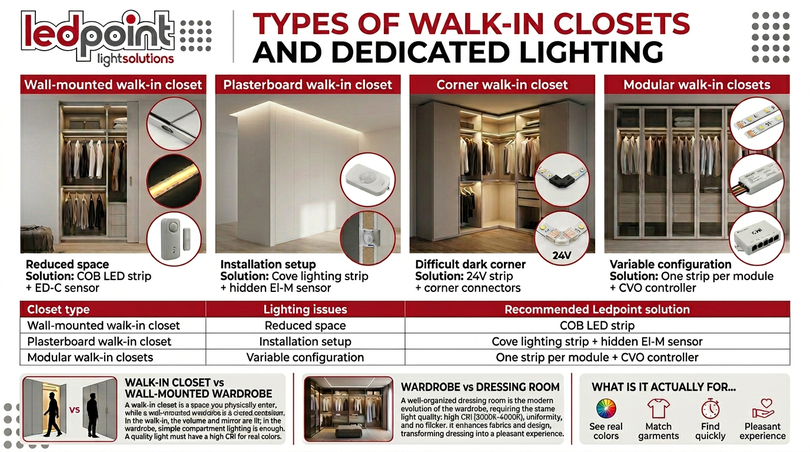
Dimensions of the walk-in closet and light needs
The dimensions of the walk-in closet directly determine how much light is needed and how many meters of LED strip to buy. Knowing the minimum measurements and typical needs allows you to correctly size the system right from the design phase, avoiding both shadow zones and useless waste. Let's see the reference measurements and how to translate them into meters of strip and lumens.
What measurements must a walk-in closet have
The minimum depth of a walk-in closet in which you enter is about 120-150 cm, while the minimum useful width starts from about 100 cm for a single-wall linear walk-in closet. A comfortable walk-in walk-in closet, in which to move freely, requires at least 160-180 cm of width to allow a central passage corridor between the two side hanging rails. The depth of the hanging modules is typically 60 cm, that of the shelving 35-40 cm. These measurements are used to calculate the linear development of the LED profiles to be installed along the perimeter and under the shelves of the walk-in closet.
Minimum dimensions and corresponding lighting
The larger the walk-in closet, the more the total luminous flux need increases. A small walk-in closet of 2 m² requires about 600-1000 lumens, an average walk-in closet of 4-6 m² requires 1500-2500 lumens, while a large walk-in walk-in closet of 8-10 m² can require 3000-4000 lumens distributed on multiple sources. The practical rule for the walk-in closet is to aim for 300-400 lux on work and consultation plans, a value higher than that of a bedroom because here you need to distinguish details and colors with precision.
| Walk-in closet dimension | Surface | Recommended total lumens | Indicative LED strip meters |
|---|---|---|---|
| Small / wall | 1.5-2 m² | 600-1000 lm | 3-5 m |
| Medium linear | 3-4 m² | 1200-2000 lm | 6-9 m |
| Medium U-shaped | 4-6 m² | 2000-2800 lm | 9-13 m |
| Large walk-in | 8-10 m² | 3000-4500 lm | 15-22 m |
The meter values presuppose an LED strip of about 200-250 lm/m real in profile; with high-density strips the need in meters can be reduced. In any case, for the walk-in closet it is always convenient to apply the 20% margin on the power supply compared to the calculated load.
How to design the lighting of a walk-in closet
Designing the lighting of a walk-in closet means deciding, even before buying, where the light will go, how it will be activated and how the components will be hidden. Good design avoids costly errors and guarantees a professional result. Here is the step-by-step method to design the lighting of your walk-in closet.
Starting from the walk-in closet floor plan
The first step is to draw the plan of the walk-in closet with all the modules: hanging rails, shelves, chest of drawers, any central island and mirror. On this floor plan the work areas (where clothes are searched and chosen) that require more light are identified, and the passage areas that require only service lighting. Marking the points where the current passes and where the power supply can be hidden is essential to design the walk-in closet system in a clean way.
Defining light scenarios
A modern walk-in closet can have multiple scenarios: an intense and neutral light to choose and match clothes, a warmer accent light for display shelves, a soft night light for quick access without dazzling. With CCT controllers it is possible to adjust the color temperature of the walk-in closet from warm white to cool white, adapting the atmosphere to the time of day. To manage these scenarios you can use CCT controllers and dynamic white LED strips.
Choosing the activation system
The last step in the design is to decide how the walk-in closet light turns on: door opening sensor, hidden radar motion sensor, PIR sensor, touch command or app control. The choice depends on the presence or not of doors and the desired level of automation. In most walk-in walk-in closets without doors, the motion sensor is the ideal solution: the light turns on when you enter and automatically turns off after a few minutes, without you having to touch anything.
How to light the walk-in closet without an electrician and without drilling
One of the most frequent questions concerns the possibility of lighting the walk-in closet independently, without calling an electrician and without drilling walls or furniture. The good news is that today it is absolutely possible, thanks to low-voltage solutions. Let's see how to make a safe and clean DIY installation.
Can LEDs be attached to the wall? How to fix lights without drilling
Yes, LED strips attach to the wall or furniture thanks to the double-sided tape they are already equipped with on the back, without the need to drill. For an even more solid and tidy fixing you can use aluminum profiles with double-sided tape or with special clips. On delicate surfaces or where you want to be able to remove everything in the future, there are non-permanent fixing solutions. The key to fixing walk-in closet lights without drilling is to clean and degrease the surface well before applying the adhesive, so the LED strip stays firmly in place for years.
How to put an LED inside a wardrobe step by step
Putting an LED inside a wardrobe or walk-in closet is simple: you measure the length of the section to be illuminated, you cut the LED strip on the appropriate cutting points, you remove the film from the double-sided tape and you apply it in the chosen point (under the top shelf or along the side). Then you connect the strip to the power supply via quick connectors without soldering and you insert, if desired, an automatic ignition sensor. All at low voltage, in total safety, without interventions on the home electrical system.
How to light the walk-in closet without mains power
When there is no power outlet available in the walk-in closet, the solution is battery lighting. Battery LED strips and rechargeable LED bars with motion sensor allow you to light the walk-in closet without power and without any cabling: they are applied with double-sided tape or magnet and are recharged via USB every few weeks. It is the perfect solution for those who rent, for the walk-in closet of a student or for those who want an immediate service light without masonry work. Walk-in closet lighting without mains power is today reliable, bright and low cost.
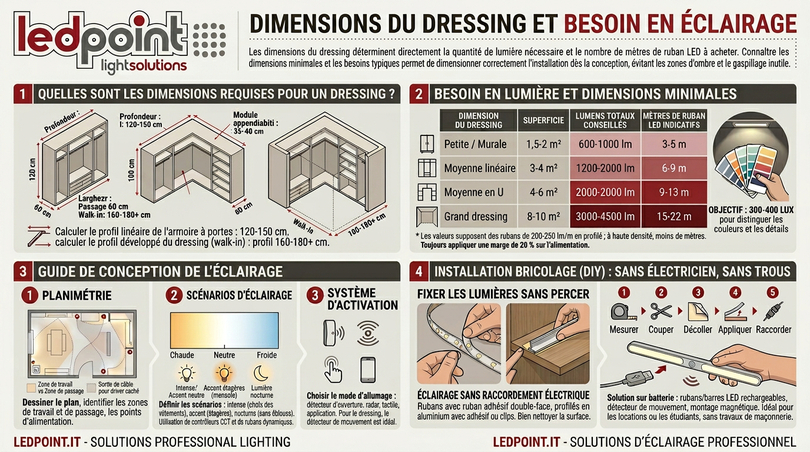
Frequent technical questions about LEDs in the walk-in closet
Those who install LEDs in the walk-in closet for the first time ask themselves some recurring technical questions, related to operation, consumption and safety. We answer the most common ones here, with clear and practical explanations, to face walk-in closet lighting with full awareness.
Why do LEDs stay on even with the switch off
It happens that an LED strip remains weakly lit even after turning off the switch. The phenomenon is almost always due to a small residual current that crosses the circuit, often caused by a switch that cuts the neutral instead of the phase, or by disturbances on nearby wiring. In the walk-in closet, working at low voltage with quality power supplies and dedicated sensors, this problem generally does not occur. If it happens on a 230V system, the solution is to verify the switch connection or insert a component that discharges the residual current. A brand power supply and an adequate controller eliminate the inconvenience.
Does LED or neon light more? And compared to neon flex?
At the same consumption, LED produces much more light than traditional neon and is today the most efficient technology for lighting the walk-in closet. Modern neon flex, moreover, is not the old neon tube but an LED solution with continuous light covered in silicone, which offers a soft and uniform luminous line, ideal for contours and valences of the walk-in closet. Neon flex thus combines the efficiency of LED with the continuous aesthetics of neon.
Are LED lights harmful to health?
Quality LED lights are not harmful to health, provided you choose certified flicker-free products, that is free of flickering. Invisible flicker is the real factor of visual fatigue, and it is precisely for this reason that in the walk-in closet we recommend flicker-free power supplies and drivers, which deliver a stable and relaxing light. A correct color temperature (3000K-4000K) and a high CRI complete a healthy and comfortable walk-in closet lighting for the eyes.
How much does an LED always on in the walk-in closet consume
An LED strip of about 10-15 W per meter, on for the few real hours of daily use of a walk-in closet, has a very contained annual consumption, in the order of a few euros. Thanks to motion sensors, the walk-in closet light stays on only when needed, reducing consumption practically to zero in the long periods in which the walk-in closet is not used. This makes walk-in closet LED lighting one of the most efficient items in the entire home from an energy point of view.
Care, order and lighting of the walk-in closet
A beautiful and illuminated walk-in closet must also be kept tidy and clean, and the light itself plays a role in facilitating these activities. A well-lit walk-in closet invites order and makes it immediate to identify dust and disorder. Let's see how light and organization reinforce each other.
How to keep the walk-in closet clean and avoid dust
To keep the walk-in closet clean it is convenient to prefer closed containers for the least used clothes and good aeration to avoid humidity. A well-distributed light helps to immediately see where dust accumulates and which areas need cleaning, making the walk-in closet easier to care for. LED strips installed in a profile, moreover, accumulate less dust compared to protruding sources and are simple to clean with a cloth.
How to make the most of the walk-in closet with the right light
Making the most of a walk-in closet means making every garment visible and reachable. By illuminating the high zones (usually dark), the corners and the drawers, you recover space that would otherwise remain unused because it is poorly visible. Light, in other words, increases the useful capacity of the walk-in closet: what you see well, you use. For this reason the capillary lighting of every compartment is the secret to making the most of even the smallest walk-in closet.
How to furnish a DIY walk-in closet with little money
Creating an economical DIY walk-in closet is possible by combining accessible modular structures and low-cost but effective LED lighting. Even with a limited budget, a few tens of euros of COB LED strips and a motion sensor transform a simple DIY walk-in closet into a professional-looking space. Light is in fact the element that, at the same expense, has the greatest perceived impact on the quality of the walk-in closet: it is the most convenient upgrade in absolute terms.
Practical and regulatory aspects of the walk-in closet
Those who create a walk-in closet, especially in plasterboard, often ask themselves questions of a practical and regulatory nature. Although these issues are not directly linked to lighting, it is useful to provide a general framework, remembering that for cadastral and urban planning aspects it is always necessary to refer to an authorized technician. Here we limit ourselves to general indications.
Does the walk-in closet need to be declared or cadastrated?
In general, the creation of a plasterboard walk-in closet that does not modify the walkable surface nor create a new autonomous room is often assimilated to an internal furnishing intervention, but the need for declaration or cadastrating depends on local regulations and the nature of the intervention, for which it is essential to verify with an authorized technician or with your Municipality. For walk-in closet lighting, working at low voltage with LED strips powered by an existing socket, interventions on the electrical system subject to certification are generally not required, but for modifications to the 230V system an authorized electrician is always needed.
The electrical safety of walk-in closet lighting
Walk-in closet LED lighting works in extra-low voltage (12V or 24V), which makes it intrinsically safe for the user. The element to be chosen with care is the power supply, which must be certified, equipped with adequate protections and sized with a 20% margin. Placing the power supply in an aerated and accessible point of the walk-in closet, never in direct contact with fabrics, completes a safe and compliant installation. All Ledpoint power supplies are certified and designed for reliable and durable operation.
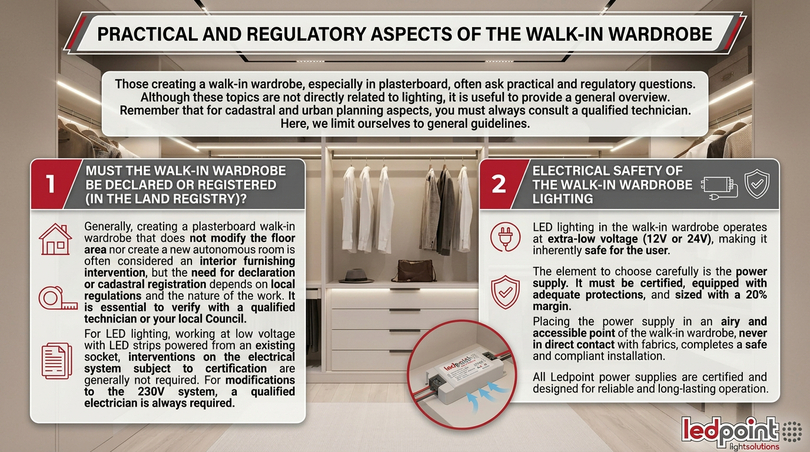
Your walk-in closet deserves the right light
Lighting the walk-in closet is much more than a technical detail: it is what transforms a simple storage space into a functional, elegant and pleasant environment to live in every day. In this guide we have seen why walk-in closet lighting is fundamental, which technologies to choose, how to calculate lumens and meters, where to position the lights, how to install them even without an electrician and how to automate everything. We have addressed every type of walk-in closet and every need, from the limited budget to the designer project.
The common thread is always the same: in the walk-in closet the quality of light counts (high CRI, correct temperature, uniformity), the invisibility of the source (profiles and diffusers), automation (sensors) and reliability (well-sized flicker-free power supplies). Respecting these principles, any walk-in closet (small or large, in plasterboard or custom-made, DIY or design) can have professional, efficient and durable level lighting.