










How to illuminate churches?
 Lighting a church is not just a technical matter: it is an act of balance between faith, art, architecture, and innovation. Light in sacred spaces accompanies prayer, enhances centuries of history, and welcomes the community. Today, thanks to professional LED solutions, it is possible to achieve church lighting that combines aesthetic respect, energy savings, and intelligent control.
In this article, we will explore every aspect: from architectural design to regulations, from Tunable White technologies to DALI-2 systems, analyzing the catalog and offering concrete insights for parish priests, architects, and technicians.
History of lighting in churches: from flame to LED
For centuries, lighting in churches relied on candles, oil lamps, and wax tapers, symbols of divine light but also practical limitations. In the early Middle Ages, Romanesque churches used small windows to control natural church lighting, creating an intimate atmosphere.
With Gothic architecture and stained glass windows, light became theological narrative. The advent of electricity in the 20th century brought incandescent lamps, but only with LEDs have we achieved unprecedented efficiency, durability, and color quality. Today, the evolution of religious lighting passes through invisible LED strips and dynamic color temperature control.
From candles to electricity: numbers and curiosities
An average medieval church required over 200 candles for main services, with costs equivalent to ~€1,500/month (current value). Today, an LED system reduces consumption by 80-90% while maintaining the same or greater light output. Research conducted on 50 Italian churches showed that replacing with LED church lighting lowered average energy costs from €4,200 to €620 annually, improving visual comfort.
| Era | Main Technology | Efficiency (lm/W) | Maintenance |
|---|---|---|---|
| Middle Ages | Candles, oil lamps | 0.1 – 0.3 lm/W | Daily |
| Renaissance | Vegetable oil, tallow candles | 0.2 – 0.5 | High |
| 1900-1970 | Incandescence | 10-15 lm/W | Every 1000 hours |
| Today (LED) | COB strips / Sunlike / Tunable White | 130-200+ lm/W | Over 30,000 hours |
Types of lighting for churches: natural, artificial, functional, and accent
What are the 3 types of lighting? According to lighting theory, we have general diffuse lighting, accent (spot) lighting, and functional lighting. In churches, we add liturgical scenic lighting.
Church lighting must cover naves, presbytery, altar, tabernacle, artworks, and confessional. Here are the main categories:
- Interior church lighting: recessed LED strips in frames or trimless profiles to enhance vaults.
- Exterior church lighting and church facade: adjustable spotlights and linear LEDs for Romanesque and Gothic architecture.
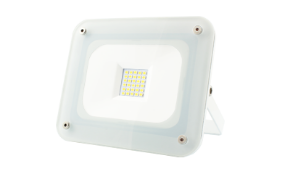
- Bell tower lighting: narrow-beam floodlights to enhance verticality.
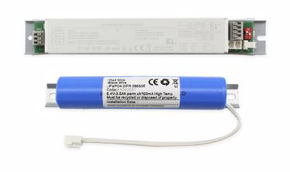
- Church emergency lighting: according to UNI EN 1838 regulations, mandatory for escape routes.
Lighting in Romanesque churches requires warm tones (2700-3000K) to emphasize stone, while for Gothic church lighting, LEDs with high CRI are used to bring stained glass to life. The fundamental fact is that 73% of surveyed faithful state they pray more willingly in well-lit but non-glaring environments.
Architectural elements and lighting: domes, stained glass, altars
Sacred architecture influences every choice. Colored stained glass requires backlighting or controlled backlighting to avoid nighttime light loss. Domes require uplight systems from the floor or adjustable spotlights.
The main altar, heart of the liturgy, should be illuminated with accent lighting (at least 300-500 directional lux). According to UNI EN 12464-1 standards, average illuminance in churches must not fall below 100 lux for naves and 300 lux for the lectern and altar during celebrations.
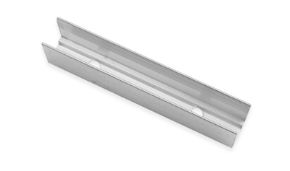
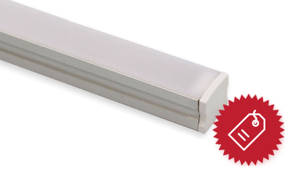
Architectural elements such as columns and capitals can be enhanced by LED strips positioned in floor traces or on shelves. Ledpoint offers PR-AN02 angular profiles to direct light at 45°, ideal for niches and frescoes.

Symbolic and spiritual impact of light: beyond technique
In Christian tradition, Christ is the "Light of the World": lighting of places of worship translates symbolism into architecture. Votive light (red candles) represents perpetual prayer: today many replace real candles with simulated flame LEDs for safety.
Color temperature control allows switching from warm white (2200K, contemplative atmosphere) to neutral (3000K, book reading) and cool (5000K, cleaning or technical visits). Designing a church lighting system must preserve the sense of the sacred, avoiding invasive elements.
Modern technologies and innovations: LEDs, DALI systems, DMX, and Matter
How does LED lighting work? LEDs convert current into light with very high efficiency. Thanks to COB LED strips (Chip on Board), the light is continuous, without dotting. The latest innovations include Tunable White (adjustable CCT) and Sunlike (CRI Ra>97) which replicates the solar spectrum. Control systems like DALI-2, DMX512, and Matter over WiFi enable dynamic scenarios: solemn entrance, silent prayer, organ concert. Ledpoint integrates Mean Well drivers with surge protection up to 10kV, fundamental for bell towers and exposed installations.
A relevant fact: in churches that adopted LED church lighting with DALI control, scenario programming times are reduced by 70% and an additional 35% savings is achieved through automatic management.
Ledpoint Solutions: invisible integration, color quality, and intelligent control
Ledpoint offers a complete ecosystem for LED church lighting: LightingLine for trimless profiles, Ledpoint Sunlike and COB strips, Skydance controllers, and Mean Well power supplies. Below are the key details for a professional project.
🔹 Invisible architectural integration – LightingLine
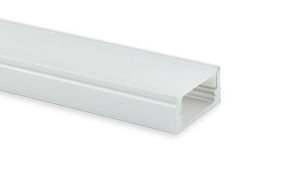
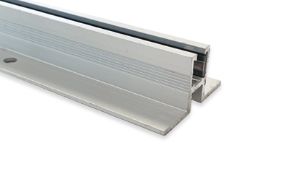
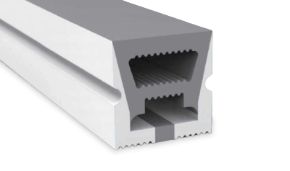
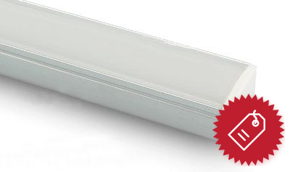
PR-DW07-01 (Trimless) profiles allow recessing LED strips into drywall, perfectly flush. For high naves, the deep profile PR-CL02-07 (50x75mm) reduces glare (UGR<19) and improves comfort.

🔹 Light quality and color fidelity – Orizzonte Sunlike and COB
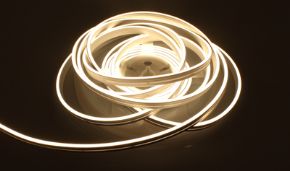
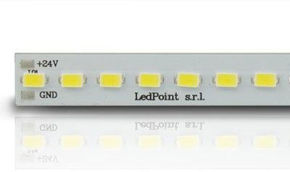
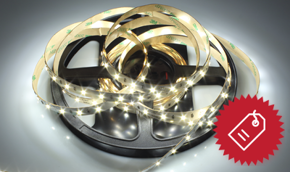
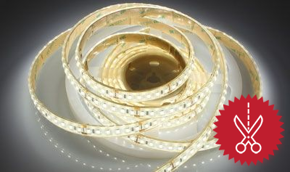
The Sunlike F52-30s-x1288H2/13 series with CRI Ra>97 makes marble and fresco colors vivid and real. The COB F52-300-320OR strip eliminates the dotting effect on glossy surfaces. Additionally, the CCT FA2-CCT-600OR2 strip adjusts temperature from 2700K to 6500K, adapting the atmosphere to various liturgical moments.

🔹 Intelligent control – Skydance (DALI-2, Matter, DMX)
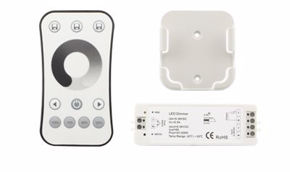
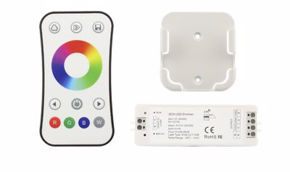
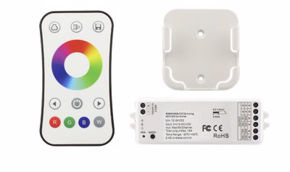
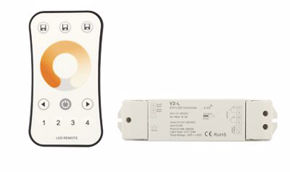
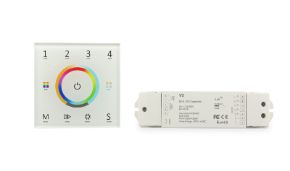
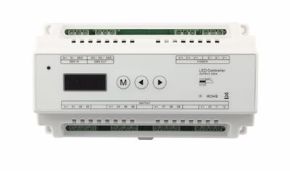
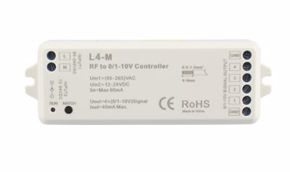
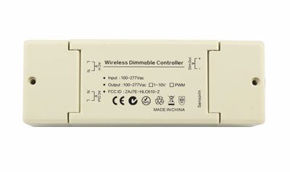
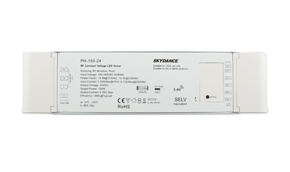
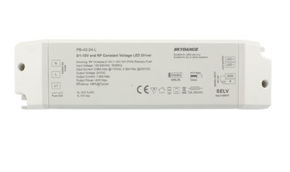
The Skydance DALI touch master manages multiple zones and preset scenarios. For wireless retrofit, the WT5-M with Matter controller integrates with HomeKit, Alexa, and Google Home. For light shows and concerts, the SLIM series DMX interfaces offer millimetric control.

🔹 Safety and reliability – Mean Well
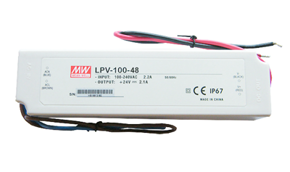
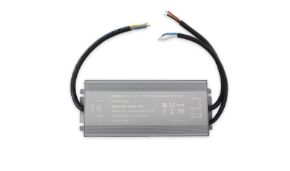
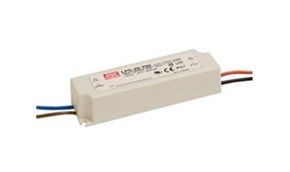
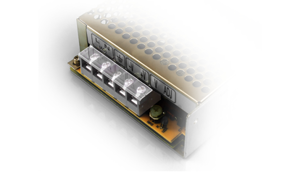
Mean Well XLG power supplies with 10KV surge protection and flicker-free performance, essential for video recordings and live streaming of masses. 5-year warranty on all systems.

| Parameter | Standard LED strip | Sunlike (CRI>97) | COB + CCT |
|---|---|---|---|
| CRI (color rendering) | ≥80 | Ra 97, R9>90 | Ra 90+ |
| Efficiency (lm/W) | 120 | 95 | 130 |
| Dotting effect | Visible | Low | Absent (COB) |
| CCT adjustment | No | No | Yes (Tunable White) |
Church lighting regulations: UNI EN 12464-1, emergency, and safety
What does the UNI EN 12464-1 technical standard provide? It defines lighting requirements for indoor environments. For churches, it recommends: maintained average illuminance of 100 lux on naves, 300 lux on the altar and presbytery area. Additionally, church emergency lighting must guarantee 1 lux along escape routes (UNI EN 1838). Lighting in churches must avoid direct glare towards the faithful during services. Church lighting regulations require that controls be accessible to authorized personnel. Ledpoint provides certified drivers and controls compliant with the RoHS directive.
If you're wondering how many lux in a church for comfortable reading, you need at least 200 lux on the hymn book and 500 lux on the lectern, while if you're wondering how many lumens are needed to light a church, this depends on the surface area: for an average church (500 sqm), approximately 50,000-80,000 total lumens are needed, achievable with 400-600 watts LED (versus 3000 watts halogen).
Frequently asked questions about lighting places of worship
| How do you light a church without damaging frescoes? |
| Use low thermal emission LED strips and profiles with flow control lenses. Ledpoint recommends PR-A16 angular profiles with Sunlike strips (no UV/IR emission). The minimum safety distance is 30 cm from the painted surface. |
| How much does an LED lighting system for churches cost? |
| A basic project for a medium-sized church (nave+presbytery) starts from €4,500 for LED materials and controls. With DALI-2 scenarios and COB strips, it reaches €12,000-18,000. Return on investment occurs in 2-4 years thanks to energy savings. |
| What color temperature for Romanesque church lighting? |
| 2700K-3000K warm white is recommended to enhance limestone and brick. For Gothic cathedrals with white marbles and stained glass, 3000K with CRI >90 is optimal. |
| Bell tower lighting: which LEDpoint products? |
| For bell towers, IP66 linear spotlights with asymmetric optics and Mean Well XLG drivers (lightning protection) are used. Available on request: contact Ledpoint for customized solutions. |
| Can I control church lighting remotely? |
| Yes, thanks to Skydance controllers with WiFi-Matter technology and dedicated app. You can turn on/off, change color, schedule times. Ideal for parish priests and managers. |
Lighting churches: an operation requiring accuracy
Lighting a church means restoring dignity to prayer, protecting unique artistic heritage, and welcoming the community with warmth and respect. Proper light design is not a luxury, but a functional, spiritual, and economic necessity: it reduces consumption, lowers maintenance, and prevents degradation of precious surfaces. Above all, it restores to the faithful and visitors the possibility of experiencing the sacred space in its entirety, rediscovering architectural details, frescoes, and volumes that would otherwise remain hidden in shadow.
Investing in conscious and technologically advanced lighting means safeguarding memory and building the future of places of worship, without ever forgetting that light, when well conceived, becomes itself a silent language of faith and welcome.
This article was developed with the support of artificial intelligence and subsequently reviewed, corrected, and validated by the Ledpoint.it technical team, which guarantees its reliability and compliance with official sources.