










How to design lighting for a vertical garden
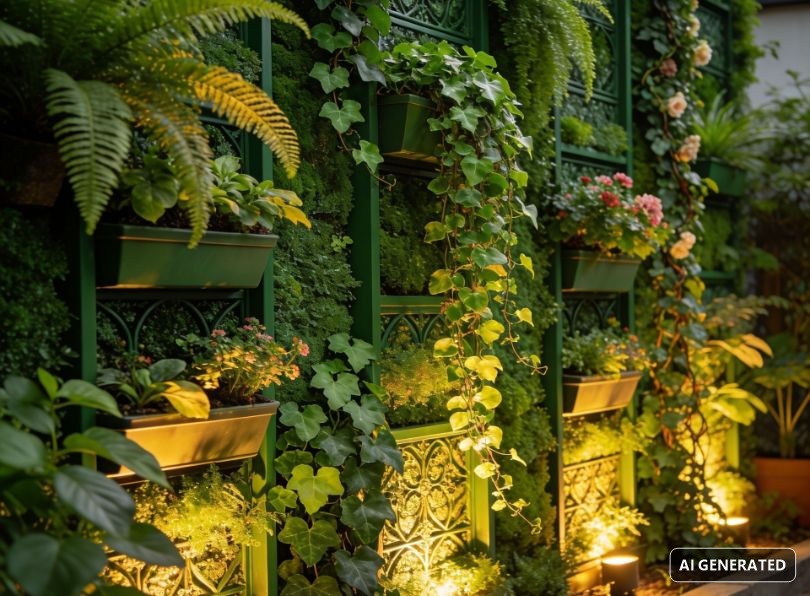
Designing the lighting of a vertical garden means blending nature and technology in a perfect balance. Lighting is not just a detail: it enhances the texture of the leaves, creates unique atmospheres, and allows the vertical garden to live on even after sunset. A carefully illuminated green wall becomes a living work of art, improving the quality of indoor and outdoor spaces. In this comprehensive guide, designed for architects, DIY enthusiasts, wellness entrepreneurs, and owners of eco-sustainable restaurants, we will cover every aspect: from choosing IP67 LED strips to professional Skydance controllers, including integration into outdoor vertical gardens or indoor vertical gardens. Get ready to discover how to transform a vertical garden wall into a highly efficient, durable, and impactful luminous ecosystem.
In this article...
How much is the vertical garden market growing? Data and projections
According to a recent report by Grand View Research, the global vertical garden market (vertical green) reached a value of 2.8 billion dollars in 2024, with a projected CAGR of 12.3% until 2030. Urbanization is increasingly pushing towards outdoor vertical garden and indoor vertical garden solutions. In Italy, cities like Milan, Bologna, and Ravenna are seeing a proliferation of green walls: the Ravenna vertical garden has become a model of urban renaturalization. More and more companies and individuals are looking for outdoor vertical garden ideas and DIY vertical gardens to enhance balconies and terraces. Ledpoint responds to this demand with professional IP67 LED solutions, designed to withstand constant humidity and water splashes.
What is a vertical garden?
A vertical garden (or living wall) is a structure that allows plants to grow on vertical surfaces, indoors or outdoors. Conceived by botanist Patrick Blanc, today it comes in dozens of forms: natural vertical garden with soil and integrated irrigation, artificial vertical garden (suitable for low-light areas), cassette modules, pre-cultivated panels, and felt pocket structures. For an indoor vertical garden or a small vertical garden picture, artificial lighting is crucial. Especially in vertical garden walls indoors without direct sunlight, full-spectrum LED technology (with adjustable color temperature) keeps plants healthy.
Main types: outdoor vertical garden (resists rain and wind), indoor vertical garden (offices, shops, restaurants), balcony vertical garden, and terrace vertical garden (compact solutions). Many enthusiasts choose the DIY vertical garden using pots, metal structures, or pallets. In any case, for a scenic nighttime effect and optimal growth, correct lighting with an IP67 protection rating is necessary.
Benefits of vertical gardens: insulation, wellness, and environmental impact
Vertical gardens improve air quality by filtering fine dust and absorbing CO₂. In summer, they reduce indoor temperature by up to 5°C, lowering air conditioner consumption. A recent study by the University of Bologna showed that a 10 sqm vertical garden wall produces as much oxygen as an adult tree. For wellness centers and restaurants, the presence of vertical greenery lowers customer stress levels (an effect demonstrated by environmental psychology). Vertical garden lighting with IP67 LEDs ensures the system is durable and safe, without blackouts or short circuits caused by humidity from automatic irrigation.
How to design lighting for a vertical garden with IP67 protection rating
Lighting design for a vertical garden must solve three challenges:
1) uniform light distribution on the plants;
2) resistance to water and fertilizers;
3) dynamic control of color temperature (from warm 2700K to cool 5000K) to enhance the foliage.
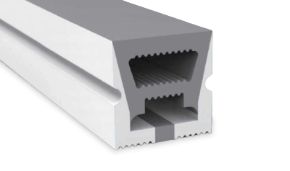
The IP67 standard guarantees total protection against dust and temporary immersion up to 1 meter. This is essential when placing LED strips inside the supporting structure or near irrigation nozzles. In an outdoor vertical garden exposed to heavy rain, IP67 becomes mandatory. For underwater applications (e.g., basins at the base), IP68 is recommended. Ledpoint offers solid silicone strips that also resist pressurized water jets during cleaning.
Light parameters for plants and recommended spectrum
Many houseplants and indoor vertical garden plants prefer a balanced spectrum (natural white 4000K) with red and blue peaks. The L52 series and K52 COB IP67 LED strips guarantee high color rendering (CRI>90) to make leaf colors vivid. If you want a scenic effect for a restaurant or showroom, RGB and RGB+CCT models allow for infinite color palettes.
IP67 LED strips for vertical gardens
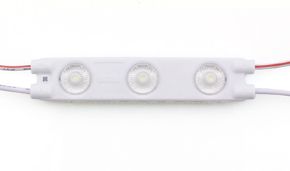
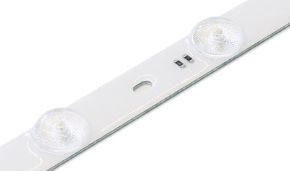
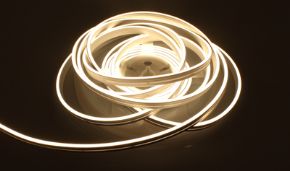
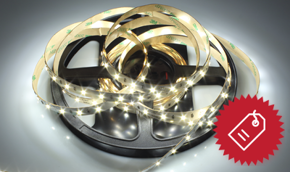
Ledpoint offers a range of LED strips sealed in solid silicone, ideal for vertical gardens, green walls, and DIY structures. Here are the most suitable models:
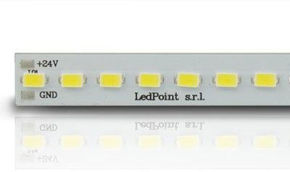
- L52-300T-120822 Series (IP67) – strip with 120 LED/m, power 14W/m, ideal for continuous linear lighting on vertical garden walls of medium size.
- L52-RGB-070G12-W8 IP67 – pure RGB, perfect for events, clubs, and office vertical gardens with dynamic atmospheres.
- K52-COB IP65 – continuous light effect without dots, ideal for close distances on vertical garden picture or integrated pot vertical garden.
Aluminum profiles, waterproof Skydance controllers, and Mean Well IP67 power supplies
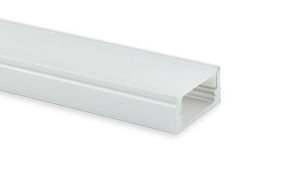
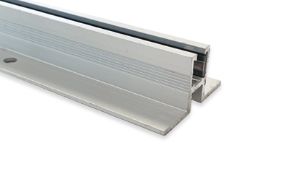
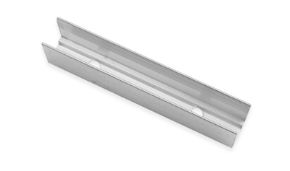
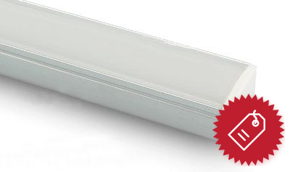
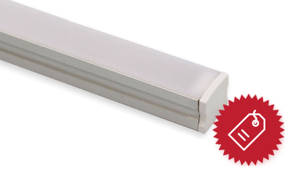
For an outdoor vertical garden or even an indoor vertical garden with high humidity, using aluminum profiles (LightingLine) ensures heat dissipation and mechanical protection. Recommended models: PR-RE07-12-S3 waterproof and PR-RE08-13-S3, both compatible with waterproof diffusers.
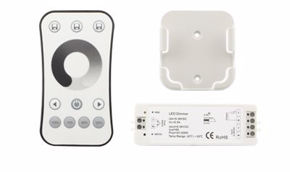
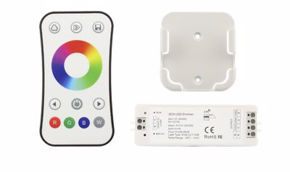
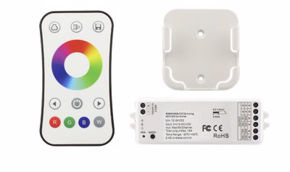
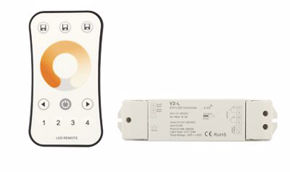
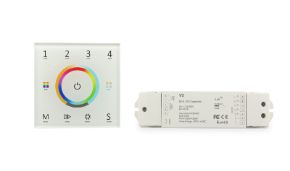
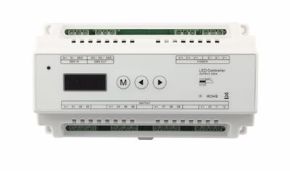
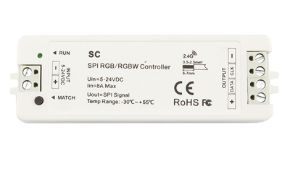
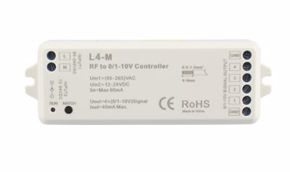
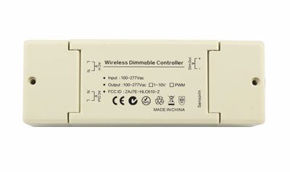
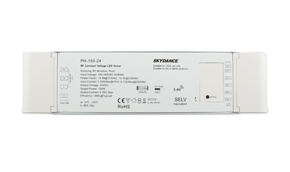
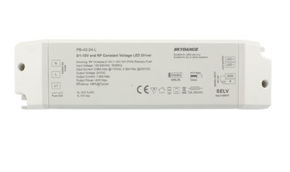
Intensity and color adjustment is done using Skydance WPM IP67 controllers: V1 for single dimming, V3-WPM RGB and V5-WPM RGB+CCT for adjustable white. For advanced home automation systems, the D4-WPS (DMX) and DA4-WPS (DALI) decoders allow management from building automation control units.
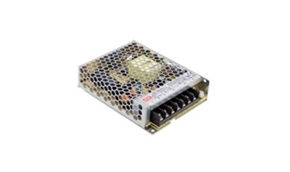
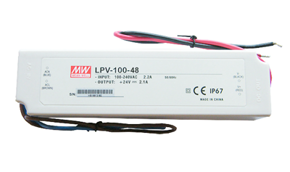
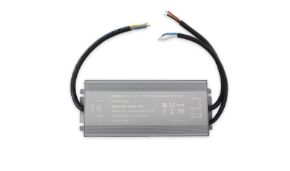
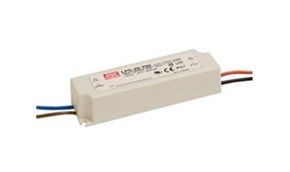
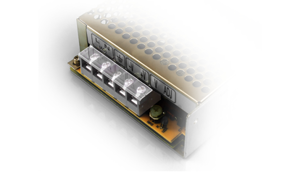
Finally, Mean Well XLG, PWM, and XLN power supplies with IP67 certification protect the entire system from overvoltages up to 10kV. To install a vertical garden to perfection, the combination of Ledpoint LED strip + Mean Well driver + Skydance controller is the most technically reliable solution on the market.
| Component | Recommended product | IP rating / advantage |
|---|---|---|
| Single-color LED strip | L52-300T-120822 | IP67, solid silicone, high color rendering |
| RGB+CCT LED strip | V5-WPM dedicated controller + L52 RGB-CCT strip | Adjustable white 2700-6500K, IP67 |
| Uniform COB strip | K52-COB IP67 | Linear light effect, no dots |
| External power supply | Mean Well XLG-200-H-AB | IP67, 10kV surge protection |
Ideal plants for vertical gardens, irrigation, and maintenance
Which plants to choose for your indoor or outdoor vertical garden? For indoors, ferns (Nephrolepis), Pothos, Peace lilies, Peperomias, and spider plants are the most rustic. For outdoor vertical garden (in Mediterranean climates), Sedum, Festuca, Ivy, Heuchera, and geraniums are used. IP67 LED lighting accelerates photosynthesis and allows you to place the vertical garden even in totally shaded areas.
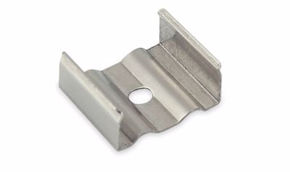
For the balcony vertical garden, many users create DIY modules with non-woven fabric pockets or modular pots. Irrigation frequency varies: automatic drip systems with timers reduce maintenance. The LED strip should be positioned on the front of the panel or along the sides; it is recommended to fix the profiles with stainless steel clips to avoid rust.
Practical tips for installing a DIY vertical garden: use geotextile felt, water-repellent fabric pockets, and mount a structure made of aluminum or treated wood. For lighting, fix the LED profiles to the upper ends, pointing downwards, at a 30°-45° angle to cover the entire wall.
Frequently asked questions about vertical gardens and IP67 lighting
| How much does a professional vertical garden cost? |
| Costs range from €300/sqm for DIY solutions up to €800-1200/sqm for turnkey systems with irrigation and IP67 LED lighting. Ledpoint offers strips starting from €25 per linear meter. Annual maintenance is around 8-12% of the initial cost. |
| How to integrate a vertical garden into a modern design project? |
| Play with lighting: use warm light LEDs (2700K) for intimate evenings, or cool light (5000K) for offices. Recessed profiles create clean lines, while Skydance controllers allow dynamic scenography. |
| What are the easiest plants for an indoor vertical garden? |
| Pothos, Chlorophytum, Philodendron, Calathea. For optimal growth, add full-spectrum LED strips (4000-5000K) with a 12-hour timer. |
| Is it possible to create a vertical garden on the balcony? |
| Yes, especially lightweight modular structures. Use IP67 LED strips from the L52 series resistant to rainwater. Ideal for aromatic herbs and seasonal flowers. Discover balcony vertical garden ideas on Ledpoint. |
| What's the difference between IP65 and IP67 for vertical garden lighting? |
| IP65 is protected against water jets, but not against immersion. IP67 guarantees temporary immersion (30 minutes at 1 meter). For gardens with frequent automatic irrigation, IP67 is better. |
Vertical garden: a rapidly growing market.
According to the Green Building Observatory 2025, 55% of renovation projects in Italy include the addition of vertical green elements. In parallel, the outdoor LED strip sector is growing by 18% annually. More and more vertical gardens in Ravenna and Emilia-Romagna are using IP67 LEDs to enhance public and private facades. The combination of DIY vertical garden + smart lighting reduces energy consumption by 70% compared to traditional technologies.
A well-designed vertical garden is a statement of style and sustainability. IP67 lighting enhances every leaf, every flower, every detail, ensuring longevity and safety. Whether you are an architect looking for vertical garden materials, a wellness entrepreneur, or a simple DIY vertical garden enthusiast, Ledpoint offers you the best LED technologies to transform your wall into a luminous ecosystem. Start your project now: choose strips, profiles, and controllers and bring your vertical green to life by contacting our support service.
This article was developed with the support of artificial intelligence and subsequently reviewed, corrected, and validated by the Ledpoint.it technical team, which guarantees its reliability and compliance with official sources.