















What is photobiological hazard?
The European Artificial Optical Radiation Hazard Directive imposes a statutory responsibility upon employers to ensure that employees are not subjected to hazardous exposure levels from lamps and other forms of artificial lighting.
This in turn means that manufacturers and suppliers of lighting products are being asked more and more often to provide exposure limit information in accordance with EN 62471.
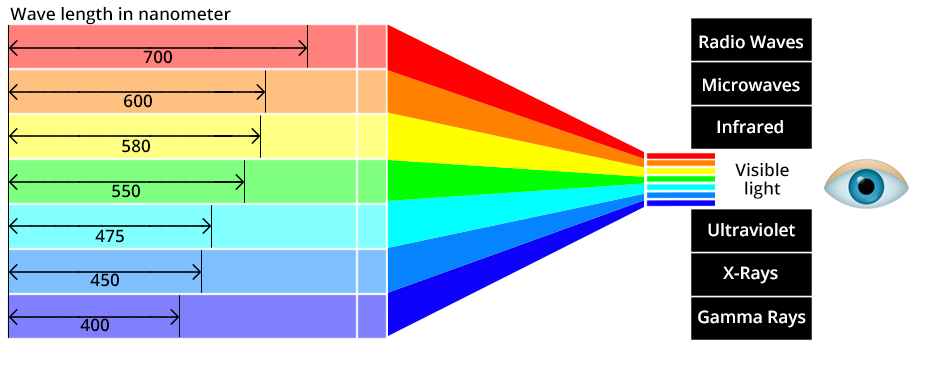
This regulation applies to light sources in a very wide wavelength range, from 200-3000nm.
For LED lights the wavelength range goes from around 400nm to around 780nm, the so called “visible light”.
Sources of optical radiation are classified into four hazard groups taking into account three aspects: skin exposure, corneal exposure and retinal exposure.
Group 0
No photobiological hazard
Group 1
No photobiological hazard under normal behavioural limitations
Group 2
Does not pose a hazard due to aversion response to bright light or thermal discomfort
Group 3
Hazardous even for momentary exposure