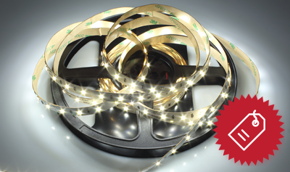
This is a recurring issue far more frequently than many assume. Technicians regularly encounter users asking questions like, "Why does my LED strip get so hot?" or even urgent requests for help after statements such as, "My LED strip started smoking!"
Why does the LED strip overheat? What happens when this occurs?
If an LED strip overheats, it is not a problem to be underestimated—this is not merely a symptom of inefficiency but a genuine safety hazard for your home or commercial project. It can lead to:
- drastic reduction in product lifespan (from 30,000 hours down to just a few hundred);
- premature brightness degradation (lumen depreciation);
- fire ignition in extreme—but unfortunately not rare—cases;
- discoloration of mounting surfaces or furniture;
- malfunctions and light flickering.
In this article—which you can also use as a technical reference—we will examine the issue step by step, identify the physical and electrical root causes, and present a highly effective solution often overlooked in DIY projects: aluminum profiles for LED strips.
Why do LEDs generate heat?
Contrary to popular belief, LEDs are not absolutely "cold" light sources. They are efficient, yes—but not perfect. The operating principle of an LED (Light Emitting Diode) dictates that part of the input electrical energy is converted into light (photons), while a significant portion is converted into heat (phonons).
LED strip efficiency:
- 35–40% of energy → Visible light
- 60–65% of energy → Heat
This heat is generated at the semiconductor junction (the actual LED chip). If not rapidly dissipated from the junction, its temperature rises. This phenomenon is called "Junction Temperature" (Tj)—the critical parameter determining lifespan, color stability, and luminous flux.
Impact of junction temperature (Tj) on LED lifespan| Tj (junction temperature) | Estimated L70 lifetime* | Lumen loss | Color shift risk |
|---|
| ≤ 65°C | > 50,000 hours | < 3% / year | Stable |
| 85°C | ~ 25,000 hours | ~ 7% / year | Slight shift |
| 105°C | ~ 10,000 hours | > 15% / year | Noticeable shift |
| > 120°C | < 1,000 hours | Rapid collapse | High failure risk |
*L70 = Hours after which luminous flux drops to 70% of initial value. Source: DOE & LED manufacturer datasheets.
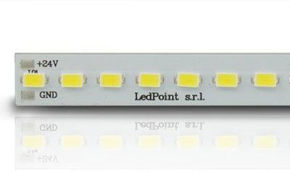
The installer’s responsibility during product selection is to keep Tj as low as possible. Flexible LED strips have a structural weakness: they are mounted on a PVC tape (or very thin FPCB), which is an excellent thermal insulator. Consequently, heat becomes trapped and must be actively dissipated.
Why the LED strip overheats: the 5 main causes
Overheating typically results from multiple combined factors. Here they are:
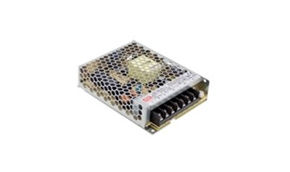
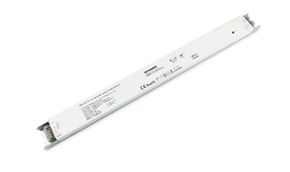
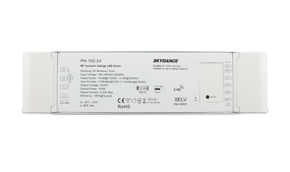
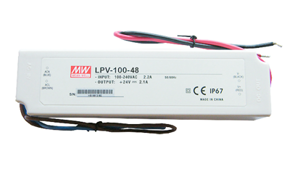
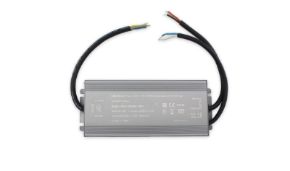
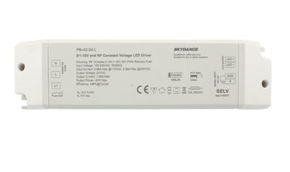
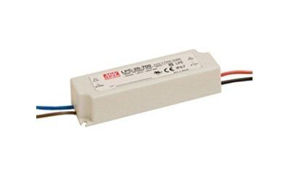
Power density and undersized power supply
Cause #1: Many choose high-brightness strips (e.g., 14.4W/m or higher) for greater output but overlook total power demand.
- Example: 5 meters of 14.4W/m strip → 72W total power.
- Common mistake: Using a 60W power supply because it seems "close enough." A supply operating at its limit runs continuously at maximum capacity, overheats, delivers unstable voltage, and stresses the LEDs—causing further overheating. Always select a power supply with 20–30% more capacity than total load.
Installation in enclosed, unventilated spaces
Routing a channel into wood and embedding the strip, or placing it inside a sealed cabinet, is another key reason for overheating. Heat has no escape path, and trapped air in confined spaces rapidly heats up, enveloping the strip.
Excessive lengths without proper powering
Connecting 10 meters of LED strip in series from a single end is technically incorrect. While the first LEDs receive full voltage, voltage drop across the thin PCB means the last sections may receive only ~10.5V. To compensate and maintain brightness, components operate under stress and overheat. Solution: power from both ends or at intermediate points for lengths >5m.
Poor component quality
Low-quality strips on the market contribute significantly to overheating due to cost-cutting components:
- low-grade current-limiting resistors (high tolerance, low power rating);
- impure LED chips converting less energy to light and more to heat;
- extremely thin copper traces (e.g., 1 oz vs. 2–3 oz), overheating due to high electrical resistance.
An economical strip can be up to 30% less efficient than a premium one, dissipating that excess energy directly as heat.
Total absence of thermal management
This is the structural cause: the flexible tape cannot dissipate heat. Mounting it on wood, drywall, or even bare metal without effective thermal contact is ineffective. What’s required is a material that absorbs heat and dissipates it into the environment: aluminum.
Ignoring even one of these factors can severely compromise an installation. We have observed budget LED strips reaching 105°C on the surface after only 45 minutes of operation. At such temperatures, adhesive melts, the strip detaches, and in certain contexts (e.g., above a kitchen cooktop), it may fall onto flammable materials.
Overheating LED strip: potential risks
A simple showroom test: we power two identical 24W/m LED strip samples—one suspended freely, one mounted on a Ledpoint aluminum profile. After 30 minutes (thermal camera readings):
- Free strip: Tape surface temperature: 78°C. LED chip (estimated Tj): >110°C.
- Strip on profile: Profile surface temperature: 38°C. LED chip (estimated Tj): <60°C.
The difference is dramatic. Risks of the unmounted strip include:
- Accelerated lumen depreciation: Significantly dimmer after just 6 months of daily use.
- Premature failure: Component damage—classic signs include "black spots" (burnt LEDs) or dead sections.
- Adhesive failure: Extreme heat melts double-sided tape, causing the strip to detach and fall.
- Surface damage: Prolonged heat causes yellowing or burns on wood/painted surfaces.
- Fire hazard (real): Sustained temperatures above 80°C near combustibles (curtains, cables, aged wood); integrated fuses may prove insufficient.
The optimal solution: aluminum profiles for heat dissipation
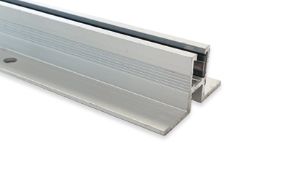
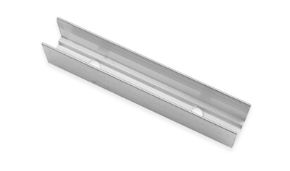
Aluminum is the ideal material for this purpose—which is why our catalog features profiles primarily made from aluminum alloys. Aluminum offers:
- exceptional thermal conductivity (~200 W/mK);
- lightweight and easy to fabricate;
- corrosion resistance;
- aesthetic versatility with multiple finish options.
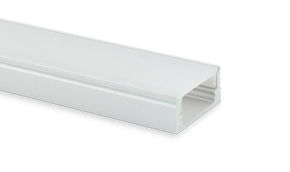
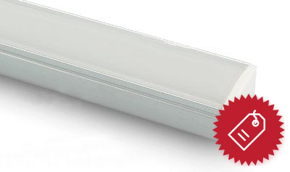
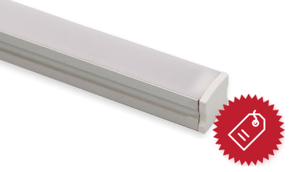
An aluminum profile acts as a heatsink: it absorbs heat from the LEDs via direct contact, distributes it along its length, and transfers it to ambient air through its large surface area.
However, not all profiles are equal. Key considerations:
- thickness and mass: More material = greater heat absorption capacity.
- surface design: Finned profiles increase air-contact surface area, improving dissipation by up to 40% versus smooth profiles.
- continuous thermal contact: The strip must adhere perfectly to the profile base. We always recommend double-sided thermally conductive tape to fill micro-gaps and ensure optimal heat transfer.
Best practices to prevent LED strip overheating
If an LED strip overheats, the root cause lies in inadequate initial thermal design.
Always follow these steps before purchasing and installing LED strips:
- Calculate total power (meters × W/m) and select a power supply with a 20–30% safety margin;
- For lengths >5m, power from both ends or at multiple intermediate points;
- Never install high-power strips (>10W/m) without a heatsink;
- Always choose an aluminum profile with cross-section appropriate to the power load (higher power = more massive/finned profile);
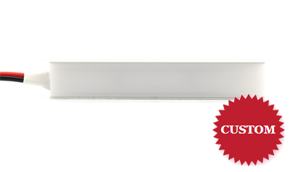
- Use custom cutting to avoid unnecessary joints and waste;
- Apply thermally conductive tape to optimize strip-to-profile contact;
- Ensure minimal ventilation around the profile—avoid fully sealed enclosures;
- For optimal aesthetics and protection, pair the profile with an opal diffuser;
- Test the installation for at least one hour before finalizing;
- Research thoroughly and consult technical support.
Why does the LED strip overheat? The answer is served.
Investing a few extra euros in a quality LED strip, properly sized power supply, and custom-cut aluminum profile is not an expense—it is the only way to protect your LED lighting investment, ensure product longevity, and guarantee the safety of your home or business.