






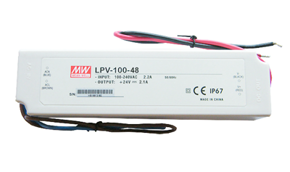
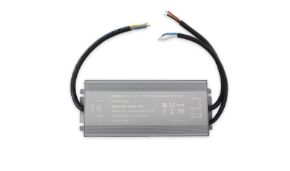
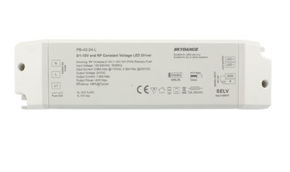
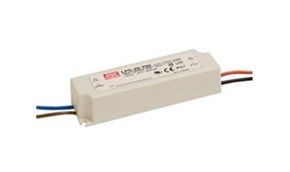



Dimmable LED Strips Dimmable: A Guide to Dimmer Compatibility
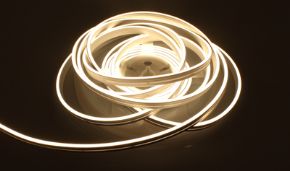
Dimmable LED strips are LED strips whose brightness can be continuously adjusted, from 100% down to a few percentage points, using a compatible dimmer. At 12V and 24V, they are dimmed by inserting a PWM dimmer between the power supply and the strip, or by using a dimmable power supply. At 220-230V, a dedicated driver that accepts a Triac or 0/1-10V command is required. Compatibility always depends on the entire chain: control device, power supply or driver, and strip.
Lowering the light in the living room in the evening, creating a warm atmosphere in a restaurant, reducing energy consumption in a warehouse when natural light is sufficient: behind all these scenarios lies the same technology, dimming. Yet it is also one of the topics that generates the most doubts, returns, and support calls: flickering strips, buzzing dimmers, lights that don't turn off completely, adjustments that "jump" from 30% to 0%. Almost always, the problem isn't the product, but an incorrect pairing of components that speak different languages.
This guide stems from the daily experience of our technical office in Faenza and the questions that installers, lighting designers, interior designers, restaurateurs, facility managers, and home automation enthusiasts ask us every week. You will find clear definitions, how the different types of LED strip dimmers work, a compatibility matrix between dimmers, power supplies, and strips, wiring diagrams, diagnosis of the most frequent faults, and a curated selection of Ledpoint.it products described in detail. The goal is simple: help you choose the right combination at first try and achieve smooth, silent, and flicker-free light regulation.
If you're in a hurry, here's the golden rule: first choose the voltage of the strip, then the type of control you want to use, and only finally the dimmer. The rest of the article explains why, and how to apply this to every real situation.
In this article...
1. What is dimming: meaning and definitions
Before talking about compatibility, it's worth fixing the vocabulary. In technical Italian, terms such as dimming, dimmerization, to dim, dimmed, light variator, and brightness regulator coexist: they all indicate the same idea, but it's useful to know where they come from and what they exactly mean. Having the right words is the first step to correctly reading a datasheet and not buying the wrong dimmer.
Meaning of Dimming
Dimming is the adjustment of the luminous intensity of a light source, obtained by varying the energy the source receives. The term derives from the English to dim, "to attenuate, to lower", and the device that realizes it is called a dimmer. When speaking of LED dimming, it refers to the possibility of bringing a lamp, spotlight, or strip from full power to soft light, continuously or in steps.
We speak of continuous dimming when the adjustment occurs without perceptible steps, generally from 100% to 1% or less; of step dimming when few fixed levels are provided, such as 100%, 50%, and 25%. For quality LED strips, continuous dimming is the standard: it's what makes true light regulation tailored to the environment and moment possible.
What does to dim, dimmed, and dimmable mean?
To dim means to adjust the brightness of a source; to dim the light is therefore lowering or raising it at will. A dimmed light is a light working at reduced intensity at that moment. Dimmable is instead the adjective describing a device designed to accept this adjustment without damage or malfunction: a dimmable light, a dimmable LED, a dimmable bulb, or a dimmable spotlight are products whose internal electronics are capable of "understanding" the dimmer signal and translating it into more or less light.
It's often asked what the difference is between "dimmable" and other variants: there is no difference in meaning, they are simple orthographic variations born from adapting the English word dimmable. The most common spelling in technical catalogs is dimmable. An alternative synonym is "intensity adjustable"; in everyday language, "adjustable light" is also used.
What is the Italian name for a dimmer?
The most used Italian term is varialuce (light variator), common especially in flush-mounted civil series switches (the classic knob or button command on the plate). In technical fields, you also find "brightness regulator" or "luminous intensity regulator". A varialuce for LEDs and a dimmer for LEDs are the same thing: a device that regulates the power supplied to the light source. The real difference isn't in the name, but in the technology with which the device works, as we'll see in chapter 3.
What does "dimmer" mean on a remote control (and air conditioner)?
On remote controls for dimmable LED strips and smart lamps, the "DIM" button or "+/−" arrows indicate the brightness adjustment function. Curiously, the same word appears on air conditioner remotes too: there "dimmer" adjusts or turns off the brightness of the indoor unit display, useful in bedrooms. The principle is identical: attenuating a light.
What is a dimming system?
A dimming system is the set of devices that allows adjusting one or more light sources: the control (knob, button, remote, app, sensor, home automation hub), any receiver or controller, the power supply or driver, and finally the source. In low-voltage LED strips, these elements are almost always separate and must be chosen consistently; in LED bulbs, however, the driver is hidden in the base and the customer only sees the wall dimmer. Thinking in terms of a system, rather than a single component, is the key to reliable dimming.
Table 1 – Essential glossary of LED dimming
| Term | Meaning | Where you find it |
|---|---|---|
| Dimming / Dimmerization | Adjustment of luminous intensity | Datasheets, catalogs |
| Dimmer / Light Variator | Device that adjusts brightness | Wall controls, controllers |
| Dimmable | Device that accepts adjustment without malfunction | Strips, bulbs, drivers |
| PWM | Pulse Width Modulation: turns LEDs on/off at high frequency | Dimmers for 12V/24V strips |
| Phase-cutting (Triac) | Cuts a portion of the 230V mains wave | Flush-mount dimmers, 230V drivers |
| Leading edge / Trailing edge | Cut at the beginning (ascending) or end (descending) of the half-wave | Phase-cutting dimmers |
| 0/1-10V | Analog command signal on two separate wires | Professional drivers, BMS |
| DALI | Digital addressable protocol for lighting | Offices, tertiary buildings |
| DMX512 | Digital protocol for shows and scenography | Theaters, events, dynamic facades |
| Push dim | Adjustment with normally open button: short press on/off, long press adjusts | Flush-mount controllers |
| Flicker | Oscillation of light, visible or detectable by camera | Compatibility issues |
2. Dimmable LED strips: what it means and how to recognize them
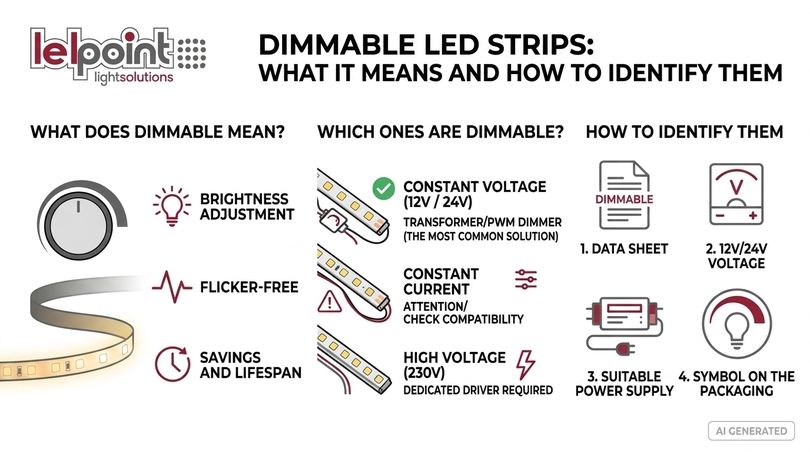
One of the most searched questions is "are all LED strips dimmable?". The short answer is: almost all constant voltage 12V and 24V strips are, but the real question to ask is another, namely with which system they can be dimmed. In this chapter, we clarify what "dimmable LED strip" really means, how to understand it from a datasheet, and why some LEDs are not dimmable.
What does dimmable LED strip mean?
A dimmable LED strip is a strip whose circuit accepts a variation in input energy producing a proportional and stable variation in light, without flickering, abnormal color changes, or damage to components. In 24V LED strips and 12V LED strips at constant voltage, this happens naturally because the LEDs are driven through resistors or small integrated circuits that work well with PWM modulation.
For this reason, Ledpoint declares it explicitly in the datasheets: the wording "dimmable LED strip with 600 LEDs (120 LEDs/m)" or "with 1200 LEDs (240 LEDs/m)" appears on many models in the catalog. Ledpoint low-voltage strips are designed to be dimmed: what changes from one project to another is the dimmer to pair, not the strip.
Are all LED strips dimmable?
Not exactly, and it's worth distinguishing three families:
- Constant voltage strips 12V / 24V / 48V: they are dimmable with a monochromatic PWM dimmer or with a dimmable power supply. It's the simplest, cheapest, and most flexible solution.
- Constant current strips (like those in the line with constant current control system): they are dimmable, but the dimmer must be compatible with the type of power supply indicated in the datasheet.
- 220-230V strips: they can be dimmable, but only through a dedicated driver. Connecting them directly to a random phase-cutting light variator produces flickering and may damage them.
Then come addressable strips (pixel LEDs): the brightness of each pixel is managed by a digital SPI controller, not by a traditional dimmer.
How to tell if dimmable LED strips are truly such
To understand if an LED is dimmable, or if a strip is, four quick checks suffice:
- Read the datasheet: the wording "dimmable" must be explicit, together with the type of dimming supported (PWM, Triac, 0/1-10V, DALI).
- Check the voltage: 12V and 24V DC indicate strips that are dimmed with PWM; 230V AC indicates that a dedicated driver is needed.
- Verify the power supply: if the power supply isn't dimmable, the adjustment must be done downstream with a low-voltage PWM dimmer.
- Look for marking on the packaging: for lamps and spotlights, there's a specific symbol (a light bulb inside a circle with a knob) indicating dimmability.
Why some LEDs are not dimmable
An LED, per se, is always adjustable: just vary the current passing through it. The limit is in the driver. Many bulbs and cheap power supplies integrate a conversion circuit designed to work only at full mains voltage: when the dimmer cuts part of the wave, the circuit fails to keep the output stable and the light flickers, buzzes, or turns off. It's not the LED that isn't dimmable, it's the electronics powering it that aren't designed for adjustment.
What happens if I put a non-dimmable bulb on a dimmer?
In the best cases, the light blinks or turns on only at full power; in the worst cases, the driver overheats and fails within a few weeks, risking damage to the dimmer too. The opposite, however, creates no problems: a dimmable bulb or strip connected without a dimmer works normally at full brightness. Being "dimmable" is an extra possibility, not an obligation.
Are LED lamps dimmable?
LED bulbs are dimmable only if they declare it explicitly. Many cheap lamps aren't, and even those that are require a dimmer suited for LED loads (generally trailing edge, descending phase cut). We'll return to this topic in chapter 15, because it's precisely here that many misunderstandings arise: dimming a bulb and dimming an LED strip follow different logics.
What is a strip and what does RGB CCT mean?
"Strip" is simply the English term for tape: dimmable LED strip and dimmable LED tape are synonyms. In multicolor strips, dimming concerns each channel: a RGB strip has three channels (red, green, blue), a CCT strip has two white channels (warm and cool) to vary color temperature, an RGB+CCT strip has five channels. RGB CCT thus means "colors plus adjustable white": it requires a five-channel controller, not a simple monochromatic dimmer.
Table 2 – Channels and type of dimmer for strip family
| Type of strip | Channels | Adjustment device | Ledpoint category |
|---|---|---|---|
| Monochromatic (white or single color) | 1 | Monochromatic dimmer | Monochromatic dimmers |
| CCT (dynamic white) | 2 | CCT controller | CCT Controllers |
| RGB | 3 | RGB controller | RGB Controllers |
| RGBW | 4 | RGBW controller | RGBW Controllers |
| RGB+CCT | 5 | RGB+CCT receiver | RGB+CCT |
| 230V monochromatic | 1 (mains) | Anti-flicker driver + Triac or 0/1-10V command | 230V Anti-flicker Drivers |
How long do dimmable LED strips last?
A quality LED strip, well dissipated, has a typical useful life of 30,000-50,000 hours, measured as the time after which flux drops to 70% of the initial value (L70). Dimming doesn't reduce lifespan: on the contrary, working at reduced power lowers junction temperature and slows luminous flux decay. What reduces lifespan is heat: for this reason, we always recommend installing strips inside an aluminum profile.
3. How an LED dimmer works
Understanding the operating principle of dimmers is the fastest way to avoid purchase mistakes. There are two major families, working at different points in the system: low-voltage dimmers, which regulate direct current between power supply and strip, and high-voltage dimmers, which act on the 230V before the power supply or driver. Let's see how they work, with accessible but technically rigorous language.
What is a dimmer for?
A dimmer serves to adjust the amount of light emitted by a source, adapting it to the activity, time of day, available natural light, or simply the taste of those inhabiting the space. What does a dimmer adjust? Concretely, it adjusts the average power reaching the LEDs, and with it, the luminous flux. The result is visual comfort, atmosphere, and energy savings, three benefits we'll explore in chapter 12.
PWM Dimming: the principal method for 12V and 24V LED strips
Pulse Width Modulation (PWM) is the heart of dimmers for low-voltage LED strips. The dimmer turns the strip on and off hundreds or thousands of times per second: if the strip stays on for 50% of each cycle, the eye perceives about half the light; if it stays on for 10%, very soft light. The voltage applied to the LEDs always remains nominal (12V or 24V); only the percentage of time it's present changes, called duty cycle.
The advantage of PWM is that light color remains stable at any adjustment level, because LEDs always work at their nominal current. Quality depends on frequency: below a few hundred hertz, flickering may be visible in photography or with moving objects; professional controllers work at frequencies of thousands of hertz, eliminating the problem even in video recordings.
Current Reduction Dimming (CCR)
In Constant Current Reduction (CCR) adjustment, the driver actually lowers the current in the LEDs instead of turning them on and off. It doesn't generate flicker, but at very low levels, it may cause slight hue variations and less uniformity. It's a widespread method in high-end constant current drivers, often combined with PWM to get the best of both worlds.
Phase-cutting dimming: how it works
What is phase-cutting dimming? It's the historical method, born for incandescent and halogen lamps. The dimmer "cuts" a portion of each half-wave of the 50 Hz mains voltage, reducing the average energy reaching the load. The electronic component realizing the cut is typically a TRIAC, hence the widespread expression "Triac dimmer" or "Triac dimmable": when a driver is "Triac dimmable," it means it can interpret this cut wave and transform it into regulated light.
Leading edge and trailing edge phase-cutting: the difference
It's one of the most frequent questions among installers, and the answer determines compatibility with LEDs:
- Leading edge phase-cutting (RL): the cut occurs at the beginning of each half-wave. It's suitable for resistive and inductive loads (incandescent, halogens with ferromagnetic transformer). With LEDs, it tends to generate buzzing and current spikes, because abrupt switching on mid-wave stresses the driver capacitors.
- Trailing edge phase-cutting (RC): the cut occurs at the end of the half-wave, with soft switching on. It's suitable for capacitive loads, i.e., most electronic LED drivers. For dimmable LED lamps and drivers, it's almost always the correct choice.
What does "phase-cutting dimmer" mean practically? It means a dimmer working on 230V that, for LEDs, should preferably be trailing edge or universal (RLC) type, and above all, must be paired with a driver declared compatible by the manufacturer.
Table 3 – Comparison of dimming principles
| Principle | Where it acts | Ideal for | Typical range | Flicker risk |
|---|---|---|---|---|
| PWM | Low voltage DC, between power supply and strip | 12V/24V monochromatic and multicolor strips | 0-100% | Low with high frequencies |
| CCR (current reduction) | Output of constant current driver | Professional drivers, environments with video recording | 1-100% | None |
| Leading edge phase-cutting | 230V AC, upstream of driver | Halogens, inductive loads | Variable with LEDs | Medium-high with LEDs |
| Trailing edge phase-cutting | 230V AC, upstream of driver | Triac dimmable LED drivers and lamps | About 5-100% | Low if driver is compatible |
| 0/1-10V | Separate signal line to driver | Professional projects, BMS | 1-100% (or 0-100%) | Low |
| DALI | Two-wire digital bus | Offices, tertiary, smart buildings | 0.1-100% (logarithmic curve) | Low |
| DMX512 | RS-485 digital bus | Show, scenography, facades | 256 levels or 16 bit | Low |
0/1-10V signal: professional analog adjustment
The 0-10V signal is an analog command traveling on two wires separate from power ones: at 10V, the driver delivers 100%; at 1V (or 0V), minimum. The 1-10V variant is passive (driver provides control current), 0-10V is active. The big advantage is that power and command travel separately: you can command dozens of drivers with a single potentiometer or a building management system output. Ledpoint collects these devices in the 0/1-10V category.
How DALI and DALI push dimming works
The DALI (Digital Addressable Lighting Interface) protocol, standardized in IEC 62386, is a polarity-free two-wire digital bus where up to 64 devices per line receive a unique address. Each fixture can be turned on, adjusted, and queried individually, grouped into 16 groups, and recalled in 16 scenes. Compared to traditional systems, DALI offers individual addressing, feedback on device status, and the possibility to reconfigure scenes without touching cables.
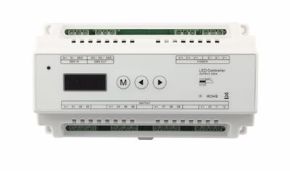
"DALI push" or "touch DALI" indicates the function, present in many drivers and decoders, allowing use of a normal wall button connected to bus terminals: short press to turn on/off, long press to adjust. It's an economical solution for small systems without a DALI master. To connect LED strips to a DALI system, DMX and DALI decoders are used, installed between 24V power supply and strip.
DMX512: light direction
DMX512 was born in the show world: a single cable transports 512 channels, each with 256 intensity levels, updated dozens of times per second. It's the standard for theaters, events, dynamic facades, and setups requiring synchronized effects. Here too, the DMX decoder inserts between power supply and strip, receiving commands from a console or software.
4. Types of dimmers for dimmable LED strips and control systems
What are the different types of dimming and how many exist? Classifying by technology (previous chapter) is useful for designers; classifying by usage mode is useful for those who need to choose what to install at home, shop, or office. In this chapter, we review all families of dimmers for LED strips available today, with pros, limits, and ideal situations.
Manual dimmer (knob)
It's the simplest LED strip dimmer: a small inline controller with a rotating knob, to insert between power supply and strip. It requires no programming and has no wireless parts. It's perfect for under-cabinet light, niche, showcase, or bed headboard, where the command remains within reach. The limit is precisely the position: the command coincides with the controller.
Button dimmer for LED strips (push dim)
The dimmable LED strip with button is one of the most requested solutions in residential areas, because it allows using normal buttons from existing civil series in the house. The controller installs between power supply (which remains always live) and strip, and to its "push" input connects a normally open button: short press to turn on and off, long press to adjust brightness, with memory of the last level. The button LED strip dimmer is the ideal choice when wanting adjustable light without sacrificing coordinated plates' aesthetics.
There are two variants: low-voltage push dim, where the button works on the 12-24V side, and AC push dim, where the button works at 230V and the controller adjusts a Triac driver. We'll see a concrete example in chapter 8.
Dimmable LED strips with remote control (RF and IR)
Dimmable LED strips with remote control use a receiver installed between power supply and strip, synchronized with a portable or wall remote. Infrared (IR) requires direct sight of the receiver and suits simple installations; 2.4 GHz radiofrequency (RF) passes through furniture and walls, allows multi-zone remotes, and enables commanding multiple receivers in sync. For systems with multiple zones or receivers hidden in false ceilings, RF systems are decidedly more reliable.
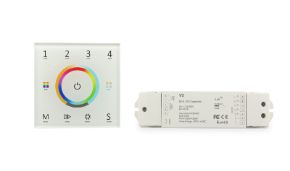
A big advantage of RF systems is the possibility to pair the same receiver with both a portable remote and a monochromatic wall remote, battery-powered or powered, which replaces the switch without masonry work.
Touch dimmer for profile and mirror dimmer
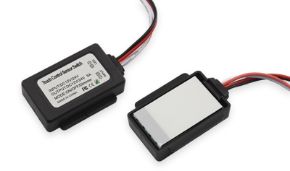
Touch dimmers integrate directly into aluminum profiles, covered by diffuser, and react to touch or hand passage. They're the most elegant solution for furniture, wardrobes, kitchens, and backlit mirrors, where the switch must disappear. Ledpoint dedicates a specific category to mirror dimmers, designed for bathrooms and dressing rooms.
230V wall phase-cutting dimmer
These are classic flush-mount light variators from civil series. With low-voltage LED strips, they work only if downstream power supply is declared Triac dimmable; with 230V strips, they work only through a dedicated driver. Wall phase-cutting dimmer must never be connected directly to a 12V or 24V strip: it works on alternating wave, strip wants direct current.
0/1-10V dimmer
Wall potentiometers or system modules generating analog signal towards one or more drivers. They're the classic choice in commercial systems and offices, because they completely separate power line from command line and allow adjusting dozens of fixtures from a single point.
DALI and DMX dimmers
These are professional addressable systems, described in chapter 3. DALI is the standard for architectural and building lighting; DMX for scenography and shows.
Smart dimmers: Wi-Fi, ZigBee, Bluetooth
The smart dimmer adds connectivity: commanded via app, voice assistant, and automations. Wi-Fi connects directly to router; ZigBee creates low-power mesh network via gateway, more stable in systems with many devices; Bluetooth suits small local systems. Ledpoint proposes solutions in ZigBee category and Wi-Fi dimmers compatible with Tuya / Smart Life apps, Amazon Alexa, and Google Assistant.
Presence and daylight sensors
Sensors transform dimming into automation: they turn light on when someone enters, lower it when environment is empty, adjust intensity based on natural light (daylight harvesting). They're key to energy saving in tertiary and industrial buildings.
Table 4 – Which type of dimmer to choose
| Type of dimmer | Command | Installation | Ideal for | Complexity |
|---|---|---|---|---|
| Manual knob | On controller | Inline, low voltage | Furniture, niches, headboards | Minimal |
| Push dim | N.O. button from civil series | Junction box or false ceiling | Residential, hotels | Low |
| RF Remote | Portable or wall | Receiver between power supply and strip | Renovations without masonry | Low |
| Profile touch | Touch or IR sensor | In profile | Kitchens, wardrobes, mirrors | Low |
| Wall Triac | 230V light variator | Upstream of Triac dimmable driver | Replacement of existing systems | Medium |
| 0/1-10V | Potentiometer or BMS | Separate signal line | Offices, shops, warehouses | Medium |
| DALI | Master, keypads, sensors | 2-wire bus | Tertiary buildings, hotels | High |
| DMX | Console, software | RS-485 bus | Theaters, events, facades | High |
| Wi-Fi / ZigBee | App, voice, automations | Smart controller | Residential home automation | Low-medium |
5. The dimmer – power supply – strip compatibility matrix
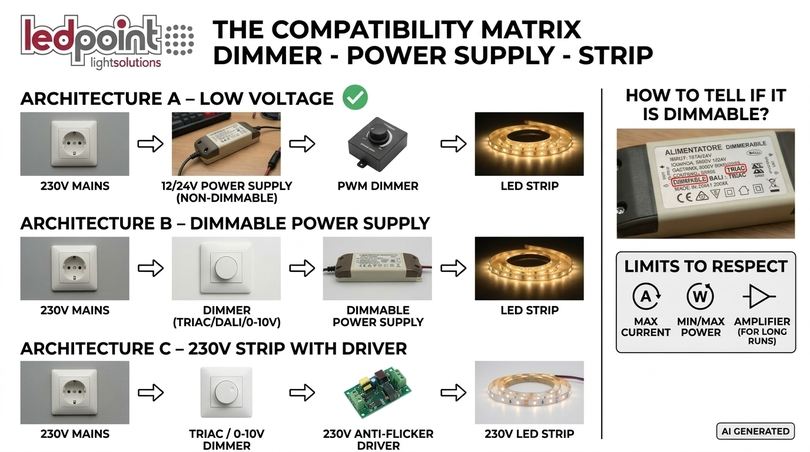
Here's the heart of the guide. How to verify compatibility between dimmer, transformer, and lamp? The answer goes through a simple question: at which point in the system does adjustment occur? If it occurs on 230V, power supply must be dimmable with that signal type; if it occurs at low voltage, power supply can be normal constant voltage one and dimmer must accept its voltage and current. No other rule is equally useful.
The three fundamental architectures
Architecture A – Low-voltage dimming (most widespread)
230V mains → 12/24V constant voltage power supply → PWM dimmer → LED strip. Power supply remains always on and doesn't need to be dimmable; all adjustment occurs downstream. It's the most flexible, economical solution compatible with any constant voltage monochromatic strip. Command can be knob, button, remote, app, or sensor.
Architecture B – Dimmable power supply
230V mains → dimmer (Triac, 0/1-10V, DALI or push) → dimmable 12/24V power supply → LED strip. The dimmable power supply integrates adjustment circuit internally: interprets incoming signal and provides strip with already modulated voltage. Ideal when wanting to reuse existing wall light variator or when project foresees centralized 0/1-10V or DALI command. Advantage is no additional controller needed in chain.
Architecture C – 230V strip with dedicated driver
230V mains → Triac dimmer or 0/1-10V signal → 230V anti-flicker driver → 230V LED strip. It's the only correct way to have a dimmable 220V LED strip: driver levels current eliminating structural flickering of mains voltage strips and simultaneously interprets adjustment command.
Table 5 – Compatibility matrix
| Strip | Power supply / driver | Compatible dimmer | To avoid |
|---|---|---|---|
| 12V / 24V monochromatic | Non-dimmable CV power supply | Low-voltage monochromatic PWM dimmer (manual, push, RF, Wi-Fi, ZigBee) | 230V light variator upstream of power supply |
| 12V / 24V monochromatic | Triac dimmable power supply | Trailing edge or universal light variator indicated by manufacturer | Undeclared compatible leading edge dimmers |
| 12V / 24V monochromatic | 0/1-10V or DALI power supply | 0/1-10V potentiometer, DALI master, sensors | Phase-cutting light variator on power line |
| 12V / 24V CCT, RGB, RGBW | CV power supply | Dedicated multichannel controller | Monochromatic dimmer (would adjust only one channel) |
| 230V monochromatic | 230V Triac and 0/1-10V anti-flicker driver | Triac dimmer or 0/1-10V signal | Light variator connected directly to strip |
| Constant current | Dimmable CC driver | Command indicated in driver datasheet | CV PWM dimmer at driver output |
How to tell if a transformer is dimmable
In common language, what's technically an electronic power supply is called "transformer". To understand if it's dimmable, look for markings like "dimmable", "Triac dimmable", "0/1-10V", "DALI" or "PUSH" on label and datasheet, plus dedicated signal terminals. If none of these markings are present, power supply isn't dimmable and adjustment must be done at low voltage with PWM dimmer. Never try to "test" a light variator on non-dimmable power supply: you can damage it in seconds.
How many lamps or strips can I connect to same dimmer?
It depends on three limits, all to be respected:
- Maximum current of dimmer at low voltage (e.g., 8A): sum of currents of connected strips mustn't exceed it.
- Minimum and maximum power for phase-cutting dimmers: below minimum, LEDs may flicker; above maximum, dimmer overheats. For LED loads, many manufacturers indicate max load equal to fraction of that declared for halogens.
- Number of drivers connectable on bus or 0/1-10V line: depends on signal current command can manage.
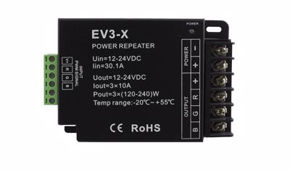
When power to adjust exceeds capacity of single dimmer, signal amplifiers are used, replicating PWM signal on another section with its own power supply. This way, dozens of meters of strip can be commanded from same remote or button, maintaining perfect sync.
6. 24V and 12V dimmable LED strips: how to dim them
The 24V dimmable LED strip is solution we recommend most often for interiors: safe because works in safety extra-low voltage, reaches greater lengths than 12V for same voltage drop, cuts every few centimeters, and adjusts with huge range of dimmers. In this chapter, we see how to dim 24V and 12V LED strips step by step, answering most searched questions: how to make LED strip dimmable, how to connect dimmer to LED strip, and how to reduce brightness when light excessive.
How to make an LED strip dimmable
12V or 24V constant voltage LED strip needs no modifications: it's already dimmable. To make it adjustable, just choose one of two paths described in chapter 5:
- Insert monochromatic PWM dimmer between power supply and strip. Existing power supply stays in place, doesn't need replacement.
- Replace power supply with dimmable one, if wanting to command strip from wall light variator, 0/1-10V signal, or DALI bus.
How to make an LED dimmable, then? For strips, adding adjustment component suffices; for bulbs and spotlights with integrated driver, instead, it's impossible to "transform" them: need product born dimmable.
How to dim a 24V LED strip: procedure
- Calculate power: meters of strip × W/m. Example: 4 m × 14.4 W/m = 57.6 W.
- Calculate current: power / voltage. 57.6 W / 24 V = 2.4 A.
- Choose power supply with 20% margin: at least 70 W. Find solutions in 24V power supplies.
- Choose dimmer with maximum current higher than calculated (e.g., 8A) and desired command type.
- Connect: power supply + and − outputs to dimmer input; dimmer output (+ common and − regulated) to strip, respecting polarity.
- Pair command (button, remote, app) according to manual and verify adjustment over whole range.
How to reduce brightness of LED strip without dimmer
If strip already installed and too bright, correct solution remains dimmer. Alternatives like thicker opal diffusers or deeper profiles reduce glare but not absorbed power. Lowering adjustable power supply voltage beyond indicated tolerance isn't reliable solution: light becomes uneven and color may shift. Better small manual dimmer, costs little and solves problem cleanly.
Dimmer for 24V LED strips: characteristics to verify
- Input voltage: must cover 24V (many controllers accept 5-36V or 12-24V).
- Current per channel: 5A, 8A, 15A or more depending on model.
- PWM frequency: higher it is, less flicker in video.
- Adjustment curve: logarithmic or linear; logarithmic better follows human eye perception.
- Last state memory: useful after power interruption.
- Possibility to synchronize multiple receivers with same command.
Amperes and LED strips: how to size system
Search "ampere led strip" hides important question: how much current does strip absorb? Formula always I = P / V. Strip of 14.4 W/m at 24V absorbs 0.6 A per meter; same power at 12V absorbs 1.2. For same power, 24V halves current and thus losses in cables and stress on dimmer. It's one reasons why, for most interior projects, we recommend 24V.
Table 6 – Dimmable LED strips: absorbed current and recommended dimmer
| Strip power | Length | Total power | Current at 12V | Current at 24V | Minimum dimmer (24V) |
|---|---|---|---|---|---|
| 4.8 W/m | 5 m | 24 W | 2.0 A | 1.0 A | 5 A |
| 9.6 W/m | 5 m | 48 W | 4.0 A | 2.0 A | 5 A |
| 14.4 W/m | 5 m | 72 W | 6.0 A | 3.0 A | 5-8 A |
| 14.4 W/m | 10 m | 144 W | 12.0 A | 6.0 A | 8 A |
| 19.2 W/m | 10 m | 192 W | 16.0 A | 8.0 A | 8 A at limit: prefer 15 A or amplifier |
| 24 W/m | 10 m | 240 W | 20.0 A | 10.0 A | 15 A or two channels |
How to dim a 12V LED strip
Procedure identical to 24V, with two attentions: current doubles, so dimmer must be sized accordingly, and maximum length for single power supply shorter (about 5 m). In installations on furniture, campers, boats, where 12V often imposed by onboard system, quality 12-24V dimmer remains simplest solution.
How to position dimmable LED strip
Dimmable LED strips enhance installation quality. Strip adjusted to 20% makes any unevenness evident, so worth caring three aspects: distance between strip and diffuser, orientation towards surface to illuminate (ceiling, wall, countertop), and powering from both sides for long runs. How to optimally position LED strip? Hidden from direct view, inside profile with opal diffuser, facing surface that must "light up".
7. 220V dimmable LED strips: drivers, Triac and remote control
Mains voltage strips unbeatable on long distances: continuous reels up to 50 meters with single power point, no bulky power supplies, negligible voltage drops. Their dimming, however, requires different approach. 220V dimmable LED strip exists, but adjustment doesn't depend only on strip: depends on entire dimmer – driver – strip chain. Let's deepen here what anticipated in our technical guide to 220V LED strips.
How to dim 220V LED strip
230V strip integrates rectifiers and current limiters making it sensitive to mains waveform. Connected directly to light variator, receives "cut" wave its circuits aren't designed to manage: result marked flickering, irregular adjustment, possible damages. Correct solution interposing 230V anti-flicker driver accepting Triac or 0/1-10V commands: driver receives command, levels current, provides strip stable regulated power.
3000K dimmable 220V LED strip: most frequent case
Most common request regards 3000K dimmable 220V LED strip: warm light for eaves, porticos, historic facades, pergolas, gardens, adjustable to create evening atmospheres. Ledpoint proposes family with 2835 LEDs at 120 LED/m and 16.5 W/m, for example 25m warm white 3000K 230V 16.5W/m IP65 LED strip, with 1,540 lm/m, 105 lm/W, cut every 10 cm. For continuous line without dots there's COB 25m 3000K 230V 11W/m LED strip, indicated in datasheet as dimmable, with 935 lm/m, cut every 12.5 cm.
Attention to detail Ledpoint datasheets clearly report: 230V strips designed for outdoor use, because powered directly from mains subject to flickering. Anti-flicker driver what makes them suitable also for interiors, showcases, environments where photographing or filming.
Remote controlled dimmable 220V LED strip
Remote controlled dimmable 220V LED strip obtained combining anti-flicker driver with Triac radiofrequency controller installed upstream, like monochromatic Triac RF 2.4G controller described in chapter 8. Controller receives commands from remote (portable or wall), adjusts driver with phase cutting; driver, in turn, powers strip without flicker. Alternatively, 0/1-10V module with remote or app usable.
Table 7 – Dimmable 220V LED strip: possible configurations
| Objective | Recommended chain | Advantages | Notes |
|---|---|---|---|
| Existing wall light variator | Trailing edge Triac dimmer → anti-flicker driver → 230V strip | No additional wiring | Verify dimmer minimum load |
| RF Remote | Triac RF controller → anti-flicker driver → 230V strip | Command without masonry, multi-zone | Controller in junction box |
| Push button | Triac push dim controller → anti-flicker driver → 230V strip | Uses civil series buttons | Shielded button cables if near 230V |
| Building management system | 0/1-10V output → anti-flicker driver → 230V strip | BMS and sensors integration | Separate signal line |
| Only on/off | Switch → anti-flicker driver → 230V strip | Eliminates flicker indoors | Dimming addable in future |
How to eliminate flickering of 220V LED strip
Flickering of mains voltage strips has four possible causes: direct mains rectification, producing 100 Hz ripple; incompatible dimmer; loose connections; heat-degraded components. Structural flicker eliminated only with anti-flicker driver, while other causes resolved with diagnosis described in chapter 11. Quick test: frame strip with smartphone in slow motion mode. If dark bands or pulsations appear, flicker present.
Can dimmable 220V LED spotlights and strips be adjusted together?
Frequent situation in shops and restaurants: dimmable 220V LED spotlights and strips on same line. In theory, single Triac dimmer can command both, provided all fixtures declared compatible with same phase-cutting type and sum of loads within dimmer limits. In practice, different drivers respond differently to same cut wave: spotlights may turn off at 15% while strip stays on, or vice versa. For uniform result, preferable divide lines or use 0/1-10V or DALI command.
8. Ledpoint products for dimming, in detail
From theory to catalog. We selected Ledpoint.it products responding to most frequent requests: dimming 24V strip with button and remote, adjusting Triac driver from junction box, making 230V strip dimmable and flicker-free, choosing right strip to adjust. For each, you find declared technical data, correct connection chain, context where gives best. Click images to open product sheet.
Kit remote + monochromatic controller with button 5/36V, 1ch*8A, RF 2.4G
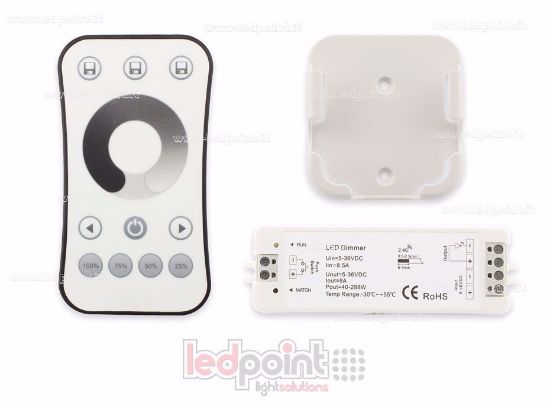
It's most complete answer to "how to dim 24V LED strip from home": single kit uniting monochromatic PWM controller and RF 2.4 GHz remote, plus input for normally open button from civil series. Installs between constant voltage power supply and strip, works with voltages from 5 to 36V, thus covering 5V, 12V, 24V strips and also 48V LED strips up to 36V.
- Input voltage: 5-36V DC
- Maximum current: 8A on 1 channel
- Power: from 40W to 288W depending on voltage (e.g., up to 192W at 24V)
- Input signal: RF 2.4GHz + Push Dim
- Output signal: CV PWM
- Dimensions: 97 x 33 x 18 mm, operating temp -30°C to +55°C
Why choose it: combines in single product two most loved modes, remote for convenience and wall button for habit. Ideal for kitchens, living rooms, hotel rooms, offices. Two precautions from manual: Wi-Fi network may reduce radio range, and if button cables run near 230V, use shielded cables. For runs longer than 8A, pair 8A monochromatic amplifiers or 15A.
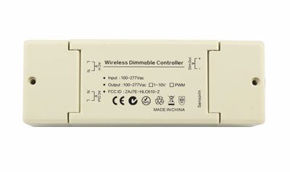
Monochromatic Triac controller 100/230V, push dim AC, RF 2.4G, for junction box
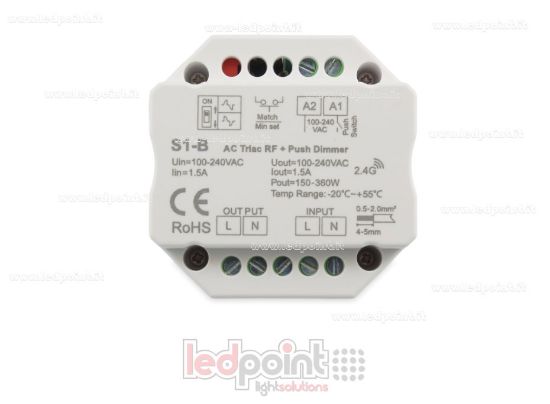
This device to choose when adjustment must occur on 230V. It's phase-cutting dimmer with AC Triac output, controllable via radio and button, compact enough (52 x 52 x 26 mm) to fit in standard junction box behind button. Adjusts Triac dimmable LED drivers, incandescent and halogen lamps, associable with all monochromatic remotes in range, mono or multi-zone.
- Input voltage: 110-240V AC
- Maximum load: 1.5A on 1 channel, max power 150-360W
- Input signal: RF 2.4GHz + Push Dim
- Output signal: AC Triac
- Operating temp: -30°C to +55°C
Why choose it: together with anti-flicker driver described below forms ideal chain for remote controlled dimmable 220V LED strip. Also right solution to make remotely adjustable already installed Triac dimmable 24V power supplies, without replacing plates. Recommended pairings: 86x86mm single zone wall remote or 4 zone 4 scene remote. Version with Wi-Fi exists too, Triac push dim Wi-Fi RF controller, and Triac and ZigBee, for those wanting integrate light in home automation. For electrical panel, finally AC push dim controller for DIN rail.
Anti-flicker LED driver for 230V LED strips 400W, Triac and 0/1-10V

CMP-DR-AC-400W driver is component truly making Ledpoint mains voltage strips dimmable and flicker-free. Manages up to 400W, accepts both Triac adjustment (phase-cutting dimmer) and 0/1-10V signal, high protection degree, thus installable outdoors too.
- Maximum power: 400W
- Output voltage: 220-240V
- Command: Triac and 0/1-10V
- Protection: IP66 (IP65 per spec table)
- Dimensions: 174 x 78 x 24 mm (199 mm with tabs), 20 cm cables
Why choose it: solves in one go two problems, structural flicker of 230V strips and their dimming. With 400W powers, for example, 24 meters of 16.5 W/m 2835 strip. For 50 meters at 825W, three drivers needed, always with safety margin. Other solutions in 230V anti-flicker drivers category.
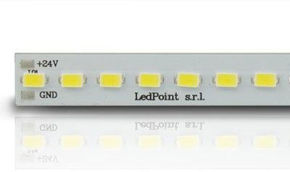
5m warm white 3000K 2835 120 LED/m 24V 14.4W/m LED strip


Among best-selling strips at Ledpoint, reference 24V dimmable LED strip for accent light and residential coves. Mounts 2835 LEDs with "3 step" chromatic tolerance, i.e., hue differences hardly perceptible between sections even when light lowered.
- Flux: 1,410 lm/m, efficiency 110 lm/W
- Power: 14.4 W/m (72W for 5 m), 24V
- Density: 120 LED/m, dimmable strip with 600 LEDs
- Cut: every 6 LEDs (5 cm), width 10 mm
- Adhesive: 3M 9495LE; CRI Ra>80; LM-80 compliant LEDs
If seeking more light with same power, 3000K 240 LED/m 24V 14.4W/m version reaches 2,000 lm/m with 155 lm/W, cut every 3.33 cm: efficiency which, combined with dimming, further reduces consumption. Both adjust with remote + button kit described above (72W at 24V = 3A, well within 8A).
Other useful devices in catalog
- Wi-Fi + IR control KIT dimmer for monochromatic LED strips 1CH*5A 5-24VDC: to command strip from smartphone and voice assistants.
- RF dimmer wall remote for external push button: transforms existing button into radio command.
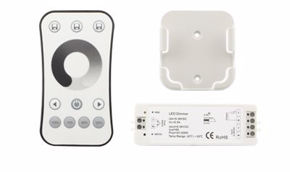
- Monochromatic remote with touch slider single zone: fluid adjustment with finger, magnet on back.
- 8 zone monochromatic remote: to manage up to eight light groups independently.
- Smart power supplies: power supplies with integrated controller, adjustable from remote without additional dimmer.
Table 8 – Ledpoint products by project type
| Project | Strip | Adjustment | Command |
|---|---|---|---|
| Living room cove | 24V 3000K 120 LED/m | Push + RF 8A controller kit | Existing button + remote |
| Kitchen under-cabinet | 24V 3000K or 4000K | Wi-Fi 5A kit or touch dimmer | App, voice or touch |
| Villa eave dimmable | 230V 3000K 2835 or COB | 400W anti-flicker driver | Triac RF controller + wall remote |
| Shop showcase | 230V COB 4000K | 400W anti-flicker driver | 0/1-10V signal with timer |
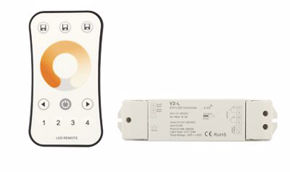
| Multi-zone restaurant | 24V 2700-3000K | RF receivers per zone | 4 or 8 zone remote with scenes |
| Open space office | 24V 4000K | DALI decoder | DALI master + sensors |
9. How to choose suitable dimmer: power, amperes and calculations
Choosing dimmer exercise of method, not intuition. Right questions to ask six: what strip have, what power supply have, how much power to adjust, from where want command light, how many independent zones need, if in future want integrate system with home automation. Answering in this order eliminates 90% purchase errors. This section designed for installers and designers, but perfectly usable also by DIYers.
Criteria for choosing LED dimmer
1. Source type and number of channels
Monochromatic, CCT, RGB, RGBW or RGB+CCT: number of dimmer channels must match strip's (see Table 2).
2. Voltage and power supply type
Constant voltage 12/24/48V, constant current or 230V. Dimmer must accept system voltage and power supply type declared in datasheet.
3. Minimum and maximum power
For low-voltage dimmers, max current per channel matters; for phase-cutting ones, both minimum load (below which LEDs flicker) and maximum load count. Prudent rule not exceeding 80% of dimmer nominal capacity.
4. Command system
Knob, button, remote, app, voice, sensor, BMS. Choice depends on habits of those using system and possibility intervening on walls.
5. Number of light points and zones
Single zone? Simple controller. Multiple independent zones? RF receivers with multi-zone remote, or DALI. Multiple synchronized runs? Signal amplifiers.
6. Required functionalities
Last level memory, scenes, soft start, timer, logarithmic curve, voice assistant compatibility, status feedback.
How to choose power of dimmable LED strips to dim
Think in lumens, not watts. Oversized strip dimmed to 50% offers margin for special evenings, works cooler; undersized strip never give more light than nominal. As reference: 300-600 lm/m for accent light, 800-1,200 lm/m for coves and indirect illumination, 1,400 lm/m and over for countertops and functional light. With dimming, choose upper band and adjust downwards.
Table 9 – Rapid sizing of 24V dimmable LED strip
| Application | Recommended flux | Typical power | Color temperature | Typical dimming level |
|---|---|---|---|---|
| Bedroom, headboard | 300-600 lm/m | 4.8-9.6 W/m | 2700-3000K | 20-60% |
| Living room cove | 800-1,200 lm/m | 9.6-14.4 W/m | 2700-3000K | 30-80% |
| Kitchen under-cabinet | 1,000-1,500 lm/m | 14.4 W/m | 3000-4000K | 60-100% |
| Restaurant, hall | 600-1,200 lm/m | 9.6-14.4 W/m | 2700-3000K | 20-70% at dinner |
| Shop, shelves | 1,200-2,000 lm/m | 14.4-19.2 W/m | 3000-4000K, CRI 90 | 70-100% |
| Office, indirect light | 1,200-2,000 lm/m | 14.4-19.2 W/m | 4000K | Adjusted by sensors |
One dimmer for multiple lamps or dimmable LED strips
When adjusting multiple strips together, options three: connect all to same dimmer if total current allows; use master dimmer with amplifiers on each run; use multiple receivers synchronized on same remote. Third solution often most elegant, because each run has its power supply nearby, command remains unique.
Does universal dimmer exist?
"Universal" (RLC) phase-cutting dimmers automatically adapting to load exist, and multi-voltage 5-36V controllers covering all low-voltage strips. But dimmer good with any source doesn't exist: compatibility always verified on complete chain. Distrust those promising otherwise.
10. Dimmable LED strips: installation and wiring diagrams
How correctly connect dimmer to electrical system? Depends on chosen architecture. In this chapter, describe typical diagrams textually, from 24V strip with PWM dimmer to 230V strip with driver and Triac controller. Indispensable premise: every intervention on 230V performed without voltage, in fixed systems by installer qualified per DM 37/08. To deepen diagram reading, dedicated guide to electrical diagrams for LED systems.
Diagram 1 – 24V strip with PWM dimmer (manual, remote, Wi-Fi)
- 230V line (live and neutral) protected by breaker and RCD → AC input of 24V power supply.
- DC output of power supply (+V and −V) → dimmer input (V+ and V−).
- Dimmer output (V+ common and regulated channel −) → + and − poles of strip.
- Pairing of remote per manual (usually: apply voltage and press button within few seconds).
Typical error: connecting wall switch downstream of power supply. If wanting disconnect system, switch on 230V upstream of power supply; for adjustment use remote or push button.
Diagram 2 – 24V strip with push dim button
- Power supply always live, connected directly to line.
- Power supply output → push dim controller input.
- Normally open button from civil series → "PUSH" terminals of controller (at low voltage or 230V, per model: read manual).
- Controller output → strip.
Multiple normally open buttons paralleled to command same strip from multiple points, like relay system. If button cable runs in same conduit as 230V, use shielded cable to avoid spurious activations.
Diagram 3 – Triac dimmable power supply with existing light variator
- Live from panel → trailing edge (or universal) light variator → L input of dimmable power supply.
- Neutral direct to N input of power supply.
- DC output of power supply → LED strip.
Diagram 4 – Dimmable 230V strip with anti-flicker driver
- Line from panel → Triac controller (push dim + RF) in junction box, or wall Triac light variator.
- Triac output of controller → anti-flicker driver input.
- Driver output → power cable of 230V strip, with dedicated connector, joints in watertight box.
- Alternatively, 0/1-10V signal from command system to driver control terminals, with power line always fed.
Diagram 5 – DALI for 24V strips
- 24V power supply for each group of strips.
- DALI decoder between power supply and strip (up to 4 monochromatic channels or one RGBW strip).
- DALI bus two wires, polarity-free, from master to all decoders.
- Addressing and creation of groups and scenes from master or configuration software.
How to replace switch with dimmer
If system already has dimmable 230V strip with driver, or Triac dimmable 24V power supply, switch replaced with light variator suited for LEDs. In all other cases, simpler leave switch as disconnector, add controller with remote or button. How to remove dimmer? Just restore original connection, removing controller, connecting power supply output directly to strip: strip returns to full power operation.
Table 10 – Most frequent connection errors
| Error | Symptom | Correction |
|---|---|---|
| 230V light variator upstream of non-dimmable power supply | Flickering, buzzing, power supply shutting off | Low-voltage PWM dimmer or dimmable power supply |
| Light variator connected directly to 230V strip | Strong flicker, jerky adjustment | Triac and 0/1-10V anti-flicker driver |
| Inverted polarity on dimmer output | Strip off | Reconnect V+ common to strip + |
| Undersized dimmer | Warm dimmer, shutdowns | Higher current dimmer or amplifier |
| Switch on DC line | Sparks, contact wear, spikes | Always disconnect 230V upstream |
| Button cables near 230V | Spontaneous activations | Shielded cable or separate path |
| Button with neon indicator | Strip faintly lit when off | Button without indicator or separated one |
11. Flickering or buzzing dimmable LED strips: diagnosis and solutions
When dimming doesn't work as should, symptoms almost always same: flickering, buzzing, irregular adjustment, light not turning off completely, warming dimmer. Good news each symptom recognizable cause precise solution. This section organized as diagnostic sheet handy on site.
LEDs flickering with dimmer
Flicker most reported issue. Common causes: incompatible phase-cutting dimmer-driver; load below dimmer required minimum; too low PWM frequency; loose connections; undersized power supply entering protection. How avoid flickering during LED lamp dimming? Pairing declared compatible components, respecting minimum load, for strips adjusting at low voltage with high-frequency PWM controller.
Buzzing dimmer
Mechanical buzzing typical of leading edge phase-cutting dimmers with electronic loads: steep current front vibrates internal coils. Resolved switching to trailing edge dimmer, verifying load in declared range, for 24V strips moving adjustment to low voltage. Slight buzzing at very low load may appear in drivers too: raising minimum adjustment level often sufficient.
Irregular or jerky adjustment
If light abruptly jumps from 30% to off, or half knob stroke produces no effect, dimmer and driver "don't speak same language". Many professional dimmers allow setting min/max levels: tuning on real load greatly improves fluidity feeling. With PWM systems, logarithmic curve makes adjustment more natural at low levels.
Strip doesn't turn off completely (ghosting)
Residual light with dimmer off caused by small leakage currents: buttons with luminous indicators, two-wire dimmers without neutral, long cables parallel to 230V. Resolved removing indicators, using dimmers with neutral, adding compensation load indicated by manufacturer.
Dimmer doesn't work at all
- Verify power supply delivering nominal voltage (measure with tester).
- Check polarity and tightening of terminals.
- Repeat remote pairing procedure.
- Temporarily connect strip directly to power supply: if lights up, problem in dimmer or command wiring.
- Check radio interference (very close Wi-Fi routers), remote battery charge.
Table 11 – Rapid diagnosis of dimming faults
| Symptom | Probable cause | Verification | Solution |
|---|---|---|---|
| Visible flickering | Dimmer-driver incompatibility | Driver datasheet | Compatible dimmer or PWM adjustment |
| Dark bands in video | Low frequency PWM or 230V strip without driver | Smartphone slow motion test | High frequency controller, anti-flicker driver |
| Buzzing | Leading edge dimmer on LED load | Phase-cutting type | Trailing edge dimmer |
| Shutting off below 20-30% | Load below minimum | Total power vs dimmer minimum | Increase load or tune minimum |
| Residual light when off | Leakage currents | Indicators, dimmers without neutral | Remove indicators, use neutral |
| Warm dimmer | Overload | Total current | More powerful dimmer or amplifier |
| End of strip less bright | Voltage drop | Measurement at both ends | Power from both sides, switch to 24V |
| Remote unresponsive | Lost pairing, interference | Batteries, distance from router | Re-pair, move receiver |
Dimmer maintenance
Quality electronic dimmer has typical useful life many years, no periodic maintenance. Only precautions: install in ventilated place not contacting heat sources; check terminal tightening after first months operation; verify remote battery status. Average life of professional dimmer? Depends mainly on operating temperature: component working within declared limits with 20% load margin lasts as long as system itself.
12. Advantages of dimmable LED strips: consumption, comfort, lifespan
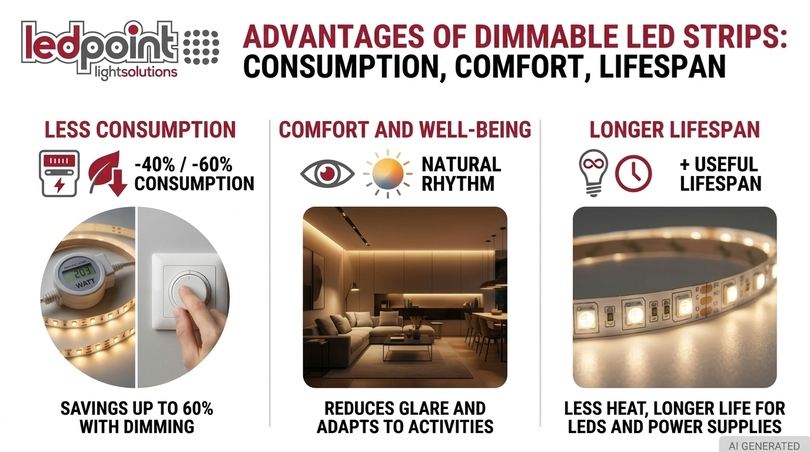
Dimming not aesthetic whim. Tool improving visual comfort, adapting light to activities, reducing consumption, extending source life. In this chapter quantify benefits realistic numbers, useful also justify investment to client or purchasing manager.
Do dimmable lamps consume less electricity?
Dimmable lamp or strip doesn't consume less just for being so: consumes less when actually dimmed. With LEDs relation between emitted light absorbed power almost linear, thus strip adjusted to 50% absorbs about half power, net of power supply dimmer losses. Unlike old dimmed incandescent lamps, efficiency remains high all levels.
Table 12 – Estimated energy saving with dimming (24V strip, 20 m of 14.4 W/m = 288 W)
| Scenario | Average level | Average power | Hours/year | kWh/year | Saving vs 100% |
|---|---|---|---|---|---|
| Always at 100% | 100% | 288 W | 3,000 | 864 | — |
| Restaurant: lunch 80%, dinner 40% | 60% | 173 W | 3,000 | 518 | 40% |
| Office with daylight sensors | 50% | 144 W | 3,000 | 432 | 50% |
| Residential evening | 40% | 115 W | 3,000 | 346 | 60% |
Indicative estimates, not considering component losses. With energy cost €0.25/kWh, restaurant saving about €87 year for just 20 meters of strip.
Visual comfort and wellbeing
Adjusting light means reducing glare, adapting illumination to activity, respecting natural rhythms: brighter neutral light daytime, lower warmer evening. CCT strips, combining intensity color temperature, allow following this cycle; Ledpoint Circadian Light line born precisely for this. How choose color temperature together with luminous intensity? Generally, lower intensity, warmer light should be to remain pleasant: it's "dim to warm" effect of old incandescent lamps.
Lamp lifespan with dimmer
Each degree less on LED junction slows luminous flux decay. Working average at 60-70% nominal power reduces operating temperature contributes extending useful life of strip power supply. Benefit hard quantify precisely, consistent in all reliability tests.
Personalized illumination flexibility
Same space become scenario different activities: living room passing reading cinema, meeting room becoming projection room, shop changing light day evening. Dimming transforms static system into space design tool, minimal additional costs respect base system.
Disadvantages and possible problems
For honesty remember limits too: compatibility carefully verified, electronic dimmers small standby consumption, some systems require configuration, wireless devices suffer interference. All manageable limits with correct design, shown previous chapters.
13. Home and professional dimming: solutions for every sector
Restaurateur needs differ from facility manager, interior designer don't coincide with industrial purchasing manager. In this chapter answer, sector by sector, questions these figures ask us most often, indicating most suitable dimming solution products consider.
For electrical installer
Installer seeks reliable compatible easy configure solutions, not forcing return site. Our indications: prefer low-voltage adjustment for 12/24V strips; for 230V strips always use anti-flicker driver; document chain (dimmer, power supply, strip, powers) in compliance declaration; leave client remote pairing manual. Standardized chain, repeated each site, drastically reduces warranty calls.
For lighting designer
Which dimming systems suit professional lighting project? Single or premium residential environments suffice multi-zone RF systems with scenes; tertiary buildings, hotels museums DALI offers addressing, grouping, scenes integration presence daylight sensors, guaranteeing illuminance levels required UNI EN 12464-1 minimal consumption. DMX remains standard dynamic scenography. DALI advantages vs traditional systems reconfigurability without rewiring, feedback device status, complex scene management single two-wire line.
For restaurant owner
Ideal dimming system for restaurant lighting? Multi-zone RF system scene remote: button lunch service, one dinner, one cleaning. Create warmer welcoming atmosphere during dinner lower cove strips 30-40%, leave table accents intense, choosing 2700-3000K temperatures. Possible control all venue lights single point multi-zone wall remote or app. LED spotlights decorative lamps adjust dimmers compatible respective drivers, better separate lines from strips.
For facility manager
Objective reduce management costs, improve occupant comfort centralize control. Dimming integrates building management system (BMS) via DALI or 0/1-10V signals; presence daylight sensors allow significant energy savings vs always-on-at-100% system; hourly programming enable different scenarios each area. Reliable scalable dimming system must be addressable, documented, based open protocols monitorable in consumption.
For interior designer
How use dimming enhance furnishings materials? Adjustable grazing light textured walls, shelf boiserie backlighting, hidden coves. Separately adjust multiple light groups multi-zone remotes or multi-zone wall keypads, even glass, like 2-zone glass wall remote, coordinate design plates. Design flexible lighting living rooms bedrooms living areas, winning combo adjustable intensity color temperature CCT strips.
For industrial purchasing manager
Industrial environments need robust convenient low maintenance systems. 230V strips anti-flicker drivers 0/1-10V command cover long runs few power points; surge protections (SPD) upstream panel protect electronics; industrial automation integration via 0/1-10V or DALI signals. Evaluate return on investment? Comparing additional cost dimmers sensors annual kWh saving (see Table 12) reduced replacement interventions. Many cases ROI measured few years.
For scenographic lighting
Theaters, events, setups dynamic facades require rapid synchronized adjustments many channels: here DMX512 dedicated decoders standard. Dimming becomes narrative language.
Table 13 – Dimming solutions by context
| Context | Recommended system | Command | Priority |
|---|---|---|---|
| Home | RF or Wi-Fi/ZigBee | Button, remote, app, voice | Simplicity, aesthetics |
| Restaurant, bar | Multi-zone RF with scenes | Wall remote | Atmosphere, speed |
| Shop | 0/1-10V or DALI | Timers, scenes | Merchandise enhancement, consumption |
| Office | DALI with sensors | Automatic + manual | Comfort, regulations, saving |
| Hotel | DALI or RF | Room scenes | Guest experience |
| Industry, warehouse | 0/1-10V, 230V + driver | BMS, sensors | Robustness, ROI |
| Scenography, events | DMX512 | Console | Effects, synchronization |
14. Dimmable LED strips and home automation: apps, voice assistants, scenes
Home automation made dimming accessible everyone: today adjust LED strip voice, program gradual morning wake-up, lower lights movie starts. Good news no need redo system: most cases suffice insert smart controller existing chain.
Which smart dimmer compatible Google Home, Alexa Apple HomeKit?
Wi-Fi controllers based Tuya / Smart Life apps integrate Amazon Alexa Google Assistant; ZigBee devices connect gateways compatible main platforms. Apple HomeKit verify certification single product use compatible bridge. Ledpoint catalog filters allow select devices smart compatibility.
Install smart dimmer without neutral wire?
Low-voltage LED strips problem doesn't arise: controller powered 12/24V power supply. Flush-mount smart dimmers 230V, however, many models require neutral feed own electronics; "no-neutral" ones exist, but very low LED loads may cause flickering ghosting. Where possible, bring neutral command box always most reliable choice.
Control light dimming via smartphone
Wi-Fi kit like Wi-Fi + IR dimmer KIT for monochromatic strips install controller between power supply strip, add app, thereafter adjust light anywhere, timers, scenes automations. Included IR remote remains available local command.
Automatic scenes sensors
Set automatic scenes light adjustment: night 20% on corridor movement detection, gradual wake-up light, auto-off leaving house. Install Wi-Fi or ZigBee dimmer safely? Removing voltage, respecting indicated maximum current, positioning controller reachable radio signal away heat sources, following manual pairing.
15. Dimmable LED bulbs spotlights: differences with strips
Many readers arrive guide with bulb spotlight question. Worth clarifying differences, because LED bulb compatibility logic differs strip's, confusing them common cause wrong purchases.
Understand if LED lamp dimmable
Look packaging lamp itself: "dimmable" wording specific symbol must present. Absent, lamp not dimmable. Dimmable bulbs designed phase-cutting dimmers, preferably trailing edge.
Make LED lamp dimmable
Impossible make non-dimmable bulb dimmable: driver integrated sealed base. Replace bulb. Different case furnishing lamps strip or LED module powered 12/24V: there insert low-voltage PWM dimmer, exactly like strip.
Transform light into dimmable
12/24V strip: adding PWM dimmer. 230V strip: adding dimmable anti-flicker driver. Bulb: replacing dimmable installing compatible dimmer. Spotlight external driver: replacing driver dimmable model.
Dimmable LED bars
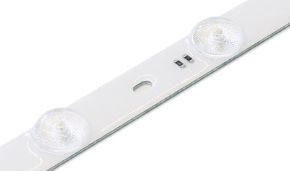
Rigid dimmable LED bars work like strips: 12/24V ones adjust low-voltage PWM dimmer. LED bars useful structural rigidity needed, e.g., showcases displays. Point sources find bulbs spotlights category.
Table 14 – Strips, bars, bulbs: how they dim
| Source | Where adjustment occurs | Typical dimmer | Can make dimmable? |
|---|---|---|---|
| 12/24V strip | Low voltage | Monochromatic or multichannel PWM | Yes, adding dimmer |
| 230V strip | 230V via driver | Triac or 0/1-10V on anti-flicker driver | Yes, dedicated driver |
| 24V LED bar | Low voltage | PWM | Yes |
| E27/GU10 LED bulb | 230V | Trailing edge | No, replace |
| Spotlight external driver | Driver | Per driver | Yes, change driver |
16. Safety regulations
Dimming involves components working mains voltage, thus safety not accessory chapter. Respecting norms means not only avoiding risks: also ensuring system works well time component warranties remain valid. Here essential precautions regulatory references.
Electrical safety of dimmers
- Every intervention performed without voltage, verifying absence with tester.
- Lines feeding dimmers drivers power supplies protected RCD 30 mA sized breaker.
- Dimmers not installed saturated boxes near heat sources: dissipation part their functioning.
- 230V strips joints made watertight boxes, ends closed caps sealant.
- Bathrooms wet interiors prefer safety extra-low voltage systems (SELV) 12/24V power supply outside respect zones.
Risks wrong connection
Wrong dimmer not just flickering light: may overheat components, damage drivers power supplies, worst cases create dangerous situations. Protections needed against surges overloads? Correctly sized breaker, possibly curve C lines many drivers (inrush current), surge protector (SPD) panel outdoor industrial systems.
CE conformity certifications
Dimmers drivers power supplies must bear CE marking, attesting conformity applicable European directives. Certifications dimmer destined company? Besides CE marking, RoHS conformity, complete technical documentation, manufacturer declaration conformity, professional use info correct WEEE disposal, Ledpoint reports each product sheet.
Table 15 – Reference standards dimmable lighting systems
| Reference | Scope | Practical implication |
|---|---|---|
| IEC 60364 | Low voltage user electrical systems | Protections, sections, installation; sect. 701 bathrooms |
| Local building codes | System installation buildings | Fixed systems by qualified companies |
| Directive 2014/35/EU (LVD) | Electrical equipment low voltage | Product safety |
| Directive 2014/30/EU (EMC) | Electromagnetic compatibility | Dimmers drivers must disturb other appliances |
| Directive 2011/65/EU (RoHS) | Hazardous substances | Limits lead, mercury, cadmium |
| Regulation EU 2019/2020 | Ecodesign light sources | Min efficiency, flicker stroboscopic requirements |
| IEC 62386 | DALI protocol | Interoperability DALI devices |
| EN 12464-1 | Indoor workplace lighting | Illuminance levels light quality |
Energy label info strips find dedicated Ledpoint blog section ErP regulation.
17. Practical examples
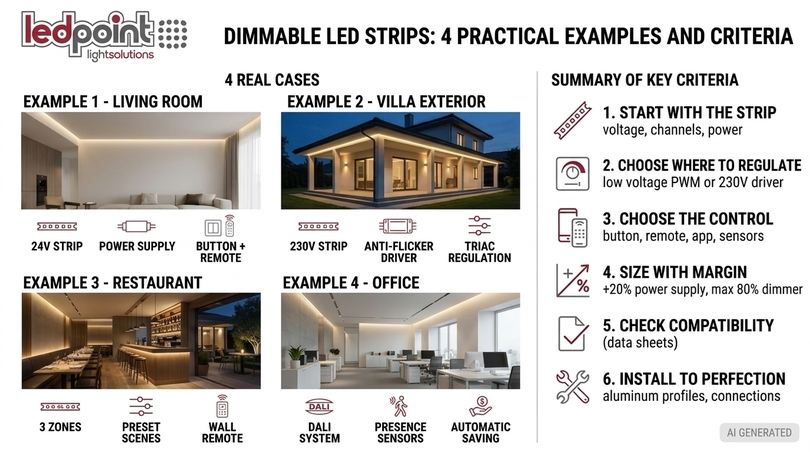
Conclude four real cases, representative daily requests, synthesis fundamental criteria. Each example shows complete chain: strip, power, adjustment command, replicate your project.
Example 1 - Living room dimmable cove button remote
12-meter perimeter drywall cove. 24V 3000K 120 LED/m 14.4 W/m strip: 172.8 W total, 7.2 A. 200W 24V power supply or two 100W power from two points. 8A monochromatic controller kit button + RF remote: use civil series button living room entrance, remote sofa. Result: soft light 30% evening, full cleaning, last level memory.
Example 2 - Villa eave dimmable 230V strip
22-meter perimeter. Cut-to-size 230V 3000K 2835 25m strip: 363 W. One 400W anti-flicker driver, Triac push dim RF controller junction box, wall remote house. Result: single reel intermediate joints, garden evening adjustment, no photo flickering.
Example 3 - Restaurant three zones scenes
Hall, counter covered terrace, 24V 2700-3000K strips. Three RF receivers, each own power supply, 4-zone scene wall remote: "lunch" (80%), "dinner" (35%), "closing" (100% cleaning). Result: atmosphere changed second single point, ~40% reduced consumption vs always-max system.
Example 4 - Office DALI sensors
Open space indirect light 24V 4000K strips. DALI decoders between power supplies strips, DALI master, presence daylight sensors. Window-near strips auto-lower sunny hours. Result: constant occupant comfort, norm-compliant illuminance levels, measurable energy saving consumption reporting.
Best light adjustment solution: synthesis
- Start from strip: voltage, channels, power.
- Decide where adjust: low voltage (PWM) 12/24V, dedicated driver 230V.
- Choose command: button, remote, app, voice, sensors, BMS.
- Size with margin: 20% power supply power, 80% max dimmer capacity.
- Verify compatibility complete chain datasheets.
- Install properly: aluminum profiles, secure connections, upstream protections.
In summary, dimmable LED strips most versatile solution give character light: right chain obtain fluid silent flicker-free adjustments home venues professional buildings. Project compatibility verification wanted, technical office helps: contact Ledpoint explore controller dimmer LED strips catalog.
18. Frequently asked questions dimmable LED strips
How make LED strip dimmable?12V or 24V strip becomes dimmable inserting monochromatic PWM dimmer between power supply strip, or replacing power supply dimmable model. 230V strip becomes dimmable only dedicated driver, like Ledpoint anti-flicker driver accepting Triac 0/1-10V commands. |
Are all LED strips dimmable?Almost all constant voltage 12V 24V strips dimmable PWM dimmer. Constant current strips require datasheet indicated dimmer, 230V ones dedicated driver, addressable pixel strips adjust digital SPI controllers traditional dimmers. |
How tell if LED strip dimmable?Check datasheet: must explicitly indicate "dimmable" supported adjustment type. Verify voltage: 12V 24V DC dim PWM, 230V AC dedicated driver. Power supply lacking Triac, 0/1-10V DALI markings, adjust low voltage. |
Which dimmer 24V LED strip?Need monochromatic PWM dimmer accepting 24V input higher current strip, 20% margin. 5 meters 14.4 W/m (3 A) suffice 5-8 A controller, knob, button, RF Wi-Fi command choice. |
Use wall light variator LED strip?Yes, only downstream Triac dimmable power supply (12/24V strips) dimmable anti-flicker driver (230V strips). Never connect non-dimmable power supply directly strip: would get flickering, buzzing possible component damage. |
Difference leading edge trailing edge dimmer?Leading edge (ascending phase-cutting) cuts beginning each half-wave, suits halogens inductive loads. Trailing edge (descending) cuts end half-wave soft on, correct choice most dimmable LED drivers lamps. |
How eliminate 220V LED strip flickering?Structural flicker 230V strips eliminated interposing anti-flicker driver, leveling current LEDs. Then verify dimmer compatibility, connection quality, operating temperature. Smartphone slow motion test confirms result. |
How many strips one dimmer?As many dimmer maximum current allows, staying 80% capacity. 8 A dimmer 24V adjust ~150 W safely. Beyond use signal amplifiers multiple synchronized receivers same remote, each own power supply. |
Dimming save energy?Yes. LEDs absorbed power almost proportional emitted light: 50% adjusted strip absorbs about half. Combining dimmers scenes presence daylight sensors, professional environments 40-60% savings vs always-full-on system. |
What happen dimmable strip without dimmer?Nothing negative: strip works normally full nominal brightness. Being dimmable extra possibility, not functioning requirement. Dimmer added anytime between power supply strip, without replacing strip. |
Command dimmable LED strips Alexa Google?Yes, inserting Wi-Fi or ZigBee smart controller between power supply strip. Tuya / Smart Life app compatible controllers integrate Amazon Alexa Google Assistant, enabling voice adjustment, timers, scenes automations, keeping existing system. |
Better DALI or 0/1-10V building?0/1-10V simple economical groups fixtures commanded together. DALI offers individual addressing, groups, scenes device status feedback two-wire bus: preferable offices, hotels large buildings needing flexibility, sensor integration monitoring. |
19. Right dimming comes right chain
Dimmable LED strips today most versatile tool give character light, home professional spaces alike. Final result however doesn't depend single component: fluid silent flicker-free adjustment born only coherent chain command, power supply or driver, strip. 24V or 12V dimmable LED strip simplest path low-voltage PWM dimmer, preferred command: knob, button, remote, app voice. 220V dimmable LED strip always need anti-flicker driver accepting Triac 0/1-10V commands. Professional projects, DALI 0/1-10V add centralized control, sensors measurable energy saving.
Remember method one only: first strip, then adjustment point, then command, finally dimmer, always 20% power margins verifying compatibility datasheets. Thus avoid flickering, buzzing returns, obtain lasting system consuming less adapting every day moment. Find suitable combination project explore Ledpoint monochromatic dimmers, 230V anti-flicker drivers 24V LED strips. Technical configuration verification wanted, contact our technical office.
This article developed AI support subsequently revised, corrected validated Ledpoint.it technical team, guaranteeing reliability official source conformity.